

Handover is the day the developer gives you possession of the apartment and you sign a protocol that records its condition. Do it well and you start from a clean, documented position. Rush it and you may spend the first year chasing repairs without proof. This guide covers what has to be ready before the day, how to inspect, what the protocol must say, what to do about defects, and what the law gives you if delivery is late.
A finished-looking apartment is not necessarily a deliverable one. The approvals come first. Municipal licensing authorities, such as the one in Tel Aviv-Yafo, explain that occupancy approvals and completion certificates are issued only after construction inspections and after the permit holder submits the required documents.
In practice that means three things to ask the developer about, in writing, before you book a handover date:
If the building is still a construction site on the handover date, with open scaffolding, unfinished lobbies or no working elevator, you are entitled to ask why. Missing common-area work belongs in the protocol too, not only the work inside your door.
Treat handover as an appointment you prepare for, like a closing. A week before:
If you live abroad, this is where a representative matters. A trusted agent or lawyer holding your power of attorney can attend, but they should receive your documents and your checklist in advance.
Never allow the day to start with signing. The Nadlan Center reports that before possession is handed over and the protocol is recorded, a buyer who asks must be allowed to check the apartment against the contract, specification and plans, and the developer or its representative should record your comments and defects. Ask for that time.
Work in a fixed order so nothing is skipped. Using a printed property inspection schedule with time blocks per area helps you stay methodical, and you can adapt one to a new apartment with your own list.
Look along each wall with the torch held flat to the surface: bumps, cracks and bad plaster show up. Check ceilings for stains, which may signal leaks from above. Tap tiles individually. A hollow sound or a visible crack is a defect, and so is grout that is uneven or missing. A lawyer’s practical guide to receiving the key also recommends inspecting each tile for cracks or breakage.
Open and close every window, door and shutter several times. Check they lock, slide smoothly and seal. Look for scratched glass and damaged frames. Test the entrance door and the locks with every key you were given.
Run every tap, flush every toilet, and fill sinks and the shower tray, then let them drain. Check the fixtures for cracks, check water flow and check drainage speed. Look under sinks and around fixtures for damp. Check that hot water works where it should.
Test every socket and switch. Open the panel and see that circuits are labeled. Note the meter numbers and photograph the readings.
Compare cabinets, countertop and fittings with the specification, including brand and model where the specification states them. Open every drawer and door. Check hinges, alignment and surfaces.
Check that the infrastructure for air conditioning, pipes, drainage points and electrical supply, is where the plans place it. Test bathroom and kitchen ventilation. If you are buying a unit with a system installed, run it.
Check the balcony slope: water should run toward the drain, not pool. Open and close the door of the protected room (mamad) and its window, and see that the finish matches the specification. Then visit the storage room and parking space and confirm their number, size and location match your contract.
Photograph each defect along with a wider shot showing exactly where it is. Number your photos to match your list. This is what turns a complaint into evidence.
The protocol is the one document that will be used if there is a later dispute. A good one:
Two habits make a difference. First, write defects into the protocol itself rather than accepting a verbal promise to fix them. Second, attach a numbered list and your inspector’s report if you have one, and keep a signed copy. The handover checklist says the same: every defect belongs in the protocol, with photographs and the inspector’s report attached where available.
On the day, also count what you receive: keys, remotes and cards, and any manuals and warranties for installed equipment, plus emergency contact numbers for the developer’s service department. Keep a folder with the contract, dated attachments, payment records, notices, photographs and all correspondence. You will want it later.
It is normal to find defects in a new apartment. What matters is how you respond.
If the developer is a registered contractor and does not respond, there is an official route. The Ministry of Construction and Housing’s buyer guide says the Registrar of Contractors handles technical complaints against registered contractors, including construction defects, dampness and unfinished works during the applicable inspection period. It does not decide monetary disputes, which go through a lawyer and the courts.
The Sale (Apartments) Law is the framework. Under its text, a mismatch with the specification, an official standard or the building regulations is a non-conformity, and the buyer should report non-conformities that could be discovered within one year from possession. Hidden defects must be reported within a reasonable time after you discover them, and the seller must be given a reasonable opportunity to repair anything repairable.
The 2011 amendment adds two protections worth knowing:
The lesson: report early, report in writing and keep the paper trail. Do not wait to batch up complaints.
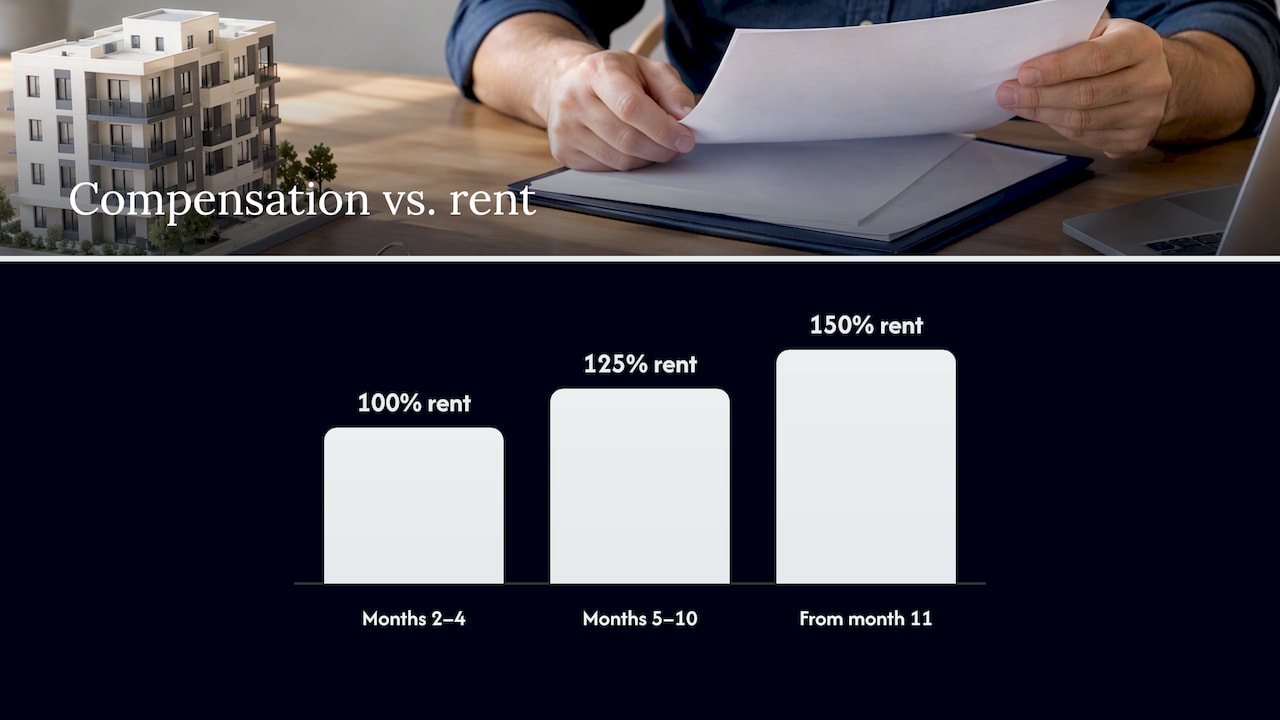
Delay is the other half of the handover story. For contracts covered by the 2022 amendment, compensation starts after one month of delay and is calculated from the rent of a comparable apartment. The amended law sets the following rates:
| Period of delay | Compensation |
|---|---|
| Month 1 | None (grace period) |
| Months 2 to 4 | Comparable-apartment rent |
| Months 5 to 10 | 1.25 times that rent |
| From month 11 | 1.5 times that rent |
The Knesset’s explanation of the 2022 amendment describes the same stages: 100% of comparable rent from the second month, 125% from the fifth and 150% from the eleventh.
There are limits. The rule excludes delay caused solely by the buyer’s own act or omission, or by circumstances falling under section 18(a) of the Contracts (Remedies for Breach of Contract) Law, subject to that section’s conditions. It also does not apply to contracts signed before the amendment took effect. So the first step is always to check your contract date. Our separate guide on compensation for delayed delivery walks through how to build a claim.
We work with buyers of new projects in Beit Shemesh and nearby areas, and the pattern repeats: the buyers who are happiest a year later are the ones who treated handover as a process rather than a ceremony. They arrived with the signed specification, they brought a professional, and they refused to sign anything on the spot that they had not read.
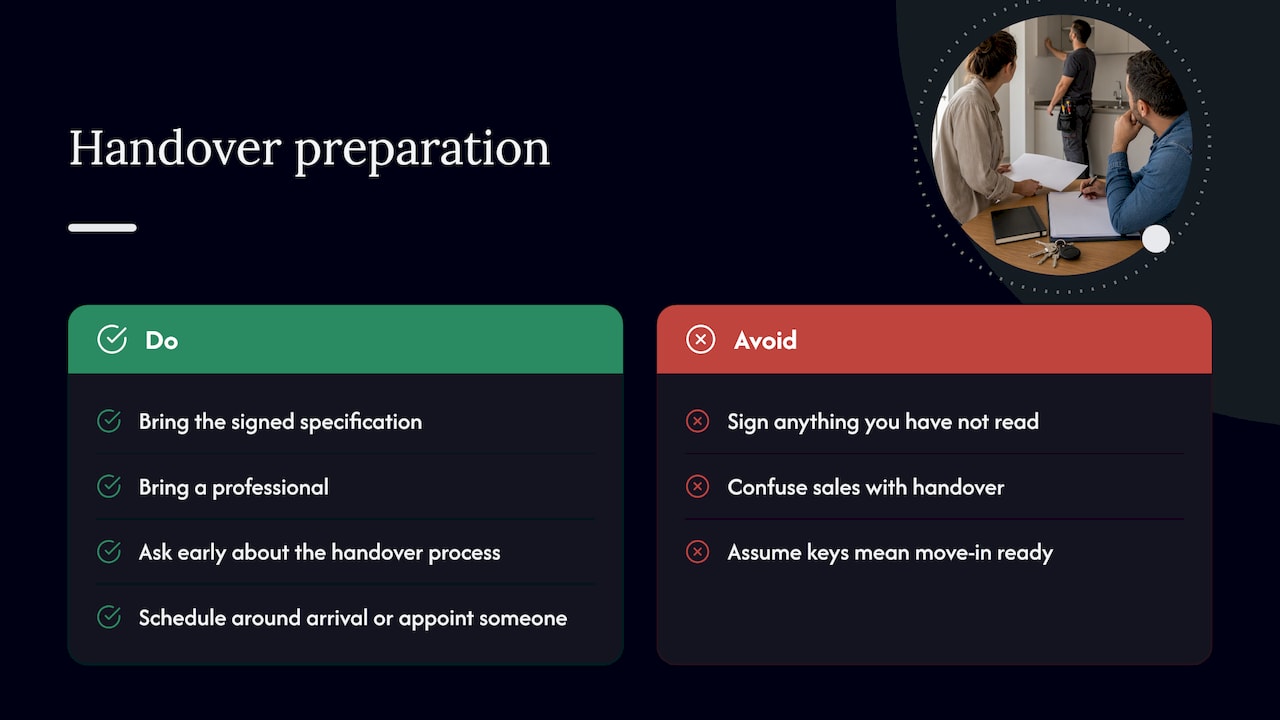
We also tell buyers not to confuse a smooth sales experience with a smooth handover. A friendly sales office does not change what the contract says. Ask early what the handover process is, who attends for the developer, how defects are tracked and who you call afterwards.
For families moving from abroad, we add one more point: schedule the handover around your real arrival, or appoint someone to attend with a full checklist. Keys alone do not mean the apartment is ready to live in. Our approach is to stay with the buyer from project selection through the walkthrough, so the questions you will want answered at handover are raised long before you get there.
— Spiros
The easiest handover is one you planned for at the contract stage. If you are weighing new developments in Beit Shemesh and the surrounding area, our concierge project guidance covers the project, the contract questions and the process through to delivery. You can also browse a current development such as Neve Amim or Rotshtein Heights to see what is on offer.
Before you commit, our due diligence checklist for Israeli buyers and our property inspection checklist are good companions to this guide.
This depends on the contract and the nature of the defects, so ask your lawyer before you refuse. In most cases, the safer path is to record every defect in the protocol with repair deadlines and keep your documentation. Serious problems, such as no Form 4 or missing utility connections, are a different matter and worth raising with your lawyer immediately.
Yes, if you can. A protocol records visible defects, while an engineer’s inspection is a broader assessment using measuring equipment and results in a professional report. Doing it before you sign means the findings can be attached to the protocol.
Under the Sale (Apartments) Law, defects you could have discovered at handover should be reported within one year from possession. Hidden defects must be reported within a reasonable time after you discover them. Report in writing and keep proof of delivery.
For contracts covered by the 2022 amendment, compensation begins after one month of delay and is based on comparable rent: 100% from the second month, 125% from the fifth and 150% from the eleventh. Exceptions apply, and the date of your contract matters, so have a lawyer check your case.
Bring the contract, signed specification, plans for the apartment, storage and parking, and change orders. Add a camera, torch, tape measure, spirit level and a phone charger. If possible, bring a building inspector and your lawyer or an authorized representative.