%20(4).png)
![[background image] image of cityscape background (for an architect firm)](https://cdn.prod.website-files.com/68961ade6feff9cbdffc080d/69384e066e0e9a310b6817f8_061f6bac-48bf-44b8-a689-078dacd8009f.avif)
TL;DR:
- Israeli real estate contracts are binding after signing with no contingencies for inspection or financing.
- Thorough due diligence before signing is essential to identify legal, municipal, financial, and physical risks.
- International buyers must verify ownership, permits, taxes, and legal requirements, often with independent legal help.
Buying property in Israel is not like buying in the United States. In the US, you sign a contract, then run your inspections, and if something is wrong, you can often walk away. In Israel, that exit door does not exist. Once you sign, you are bound. 28% of buyers discover significant defects after purchase, leading to tens of thousands of shekels in repairs they never planned for. Whether you are a family relocating from New York or an investor buying remotely, the only protection you have is a thorough, properly ordered due diligence process completed before you put pen to paper.
| Point | Details |
|---|---|
| Finish checks before contract | Israeli contracts lock you in, so do all diligence before signing. |
| Watch for deal-breakers | Hidden issues like He’arat Azhara and illegal additions can ruin a purchase. |
| International buyers need extras | US and overseas buyers should hire independent lawyers and budget for special taxes. |
| Total costs add up | Plan for 7-15% of the price in closing costs, including due diligence expenses. |
Most American buyers arrive in Israel with a mental model built on US real estate norms. You find a property, make an offer, sign a contract with contingencies, and then investigate. That model will hurt you here. In Israel, due diligence must be completed before signing the binding purchase contract, with no post-signing exit contingencies available to protect you.
Once the contract is signed in Israel, you are legally committed. There is no inspection contingency, no financing contingency, and no cooling-off period for standard real estate transactions.
This structural difference is the single biggest trap for international buyers. You feel the urgency of a competitive market, you trust the seller’s disclosures, and you sign. Then the problems surface.
The risks fall into several categories that you need to understand before starting your checklist for US buyers:
The Israeli due diligence process is designed to catch all of these issues, but only if you run it fully and in the right order. Skipping even one step can expose you to serious financial loss. Review the full steps to purchase so you understand the complete timeline before you begin.
Armed with the understanding of the risks, here is your actionable step-by-step checklist to reduce uncertainty. Every item below must be completed before you sign anything.
Pro Tip: Always insist that a licensed Israeli real estate attorney runs these checks independently. A notary or your agent is not a substitute. Attorneys carry professional liability and know exactly what to look for in the Tabu and municipal files. The observant homebuyer checklist adds community-specific items worth reviewing alongside this list.
With your basic checklist in hand, avoid the hidden traps by watching out for these special edge cases. These are the issues that cause the most regret for families and investors alike.
| Issue | How to check | Immediate risk | Typical fix or cost |
|---|---|---|---|
| He’arat Azhara (cautionary note) | Tabu printout | Blocked transfer, legal dispute | Resolve dispute or walk away |
| Incomplete Tabu registration | Tabu printout | Unclear ownership chain | Legal process, months of delay |
| Illegal construction | Municipal file, physical inspection | Demolition order, fines | Retroactive permit or demolition |
| ILA leasehold (short remaining term) | ILA records | Lease expiry risk, renewal cost | Negotiate or budget for renewal |
| Urban renewal status (TAMA 38 or Pinui-Binui) | Municipal planning department | Construction disruption, delays | Negotiate contract terms |
According to the pre-purchase checks data, illegal constructions and zoning violations are among the most common hidden defects found post-purchase. The state owns roughly 93% of land in Israel, so ILA leasehold situations are far more common than foreign buyers expect.
Key deal-breakers to spot immediately:
Pro Tip: Always request the full municipal file printout and the most current approved building plan. Compare the approved plan to what you see physically in the property. Any room or structure not on the approved plan is a red flag. Check transaction pitfalls for a broader look at what can go wrong during the process.
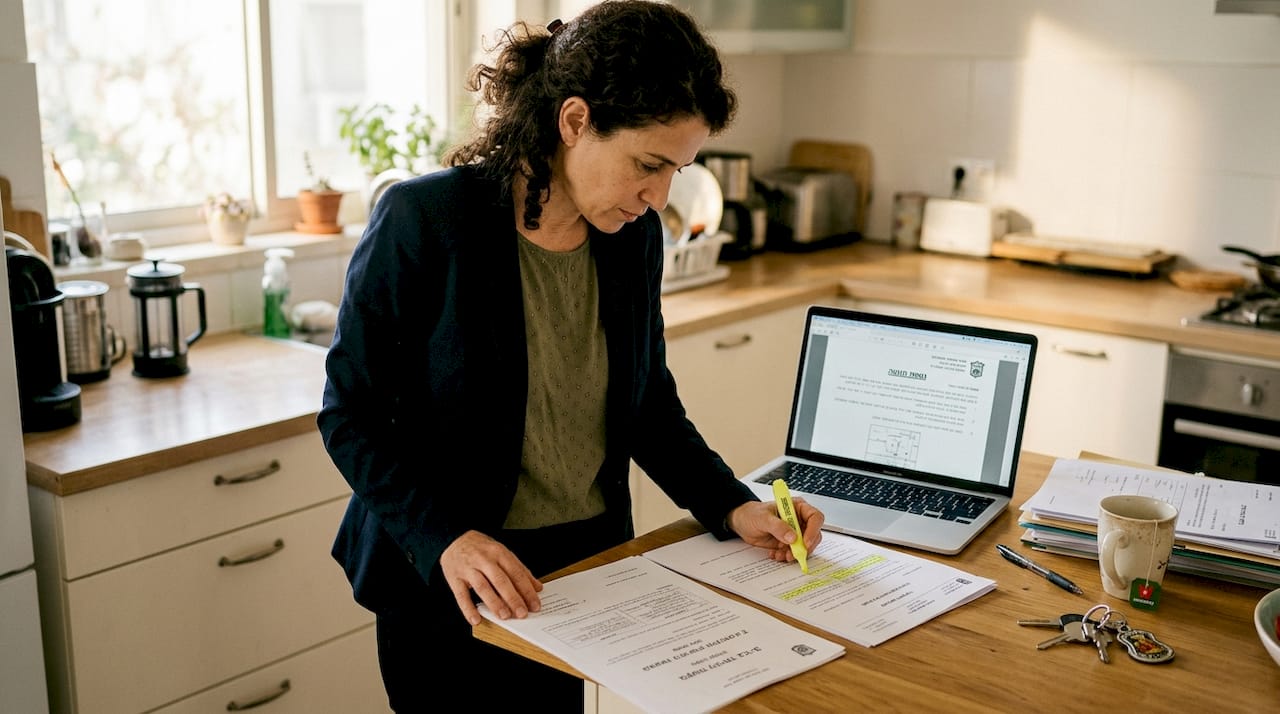
Families and investors carry different risk tolerances here. A family buying a forever home cannot afford a demolition order on their children’s bedroom. An investor may be willing to take on an ILA leasehold at a discount if the numbers work, but only after full legal review.
With those deal-breakers understood, turn to extra steps if you are a family, remote, or international buyer. The process has additional layers that catch many US clients off guard.
| Challenge | What it means for you |
|---|---|
| Higher purchase tax | Non-residents pay 8-10% purchase tax (Mas Rechisha) vs. lower rates for residents |
| Mortgage cap | 50% LTV cap for non-residents, meaning larger down payments required |
| Power of attorney (POA) | Must be notarized and apostilled in the US before use in Israel |
| Independent attorney | You must hire your own lawyer, not share with the seller |
| Vaad Bayit finances | Building committee funds must be verified for family home purchases |
For remote buying in Israel, the POA process is non-negotiable. You cannot rely on verbal instructions to an agent. The POA must be prepared by a US notary, apostilled through your state’s secretary of state office, and then translated into Hebrew by a certified translator.
Here are the additional steps international buyers and families must complete:
Knowing all the steps, make sure you budget realistically for savvy buying. Many buyers focus only on the property price and are blindsided by closing costs.
The numbers you need to know:
Lawyer fees run 0.5-1.5% plus VAT, which translates to roughly ₪8,000 to ₪25,000 depending on the deal complexity. A licensed building inspection costs ₪2,000 to ₪4,000. When you add purchase tax, registration fees, and agent commissions, total closing costs reach 7-15% of the purchase price.
For a ₪2,000,000 apartment, that means ₪140,000 to ₪300,000 in costs beyond the purchase price. Budget for this from day one.
Where buyers try to save money and shouldn’t:
Where you can reasonably save:
The market success guide breaks down how smart buyers approach these costs without cutting corners on protection.
Here is what years of Israeli real estate experience reveal about the reality behind the checklist. The biggest mistake is not missing a specific document. It is letting urgency override judgment.
Agents will tell you the deal will disappear if you don’t sign today. Sometimes that is true. More often, it is a pressure tactic. Legitimate deals withstand 2-3 days of proper checks. If a seller refuses to allow time for due diligence, that refusal is itself a red flag worth taking seriously.
Experienced buyers also watch for issues that don’t appear on standard checklists. TAMA 13 regulations affect coastal properties specifically, and buyers near the coast need to verify compliance separately. Neighbor disputes that never reached court still show up in Vaad Bayit minutes. Building committee deficits that look minor on paper can balloon after a major repair vote.
Our view at Yigal Realty: walk away from any deal where the seller, agent, or timeline makes thorough checking impossible. No property is worth the legal and financial exposure of an incomplete review. Review the investor checklist to see how experienced investors structure their own go/no-go decisions.
If this checklist feels daunting, real help is one click away. Navigating Israeli real estate as a US buyer or family requires more than a list. It requires experienced, English-speaking professionals who know the local market, the legal landscape, and the specific needs of observant communities in Beit Shemesh and surrounding areas.
Yigal Realty works with international and family clients at every stage of the purchase process, from initial property search through final registration. Our team connects you with vetted attorneys, licensed inspectors, and local experts who have handled hundreds of transactions for buyers just like you. Reach out today for a free consultation and get a personalized checklist built around your specific situation.
All due diligence including ownership, liens, municipal, legal, and tax checks must be finished before contract signing, as there are no post-signing contingencies available to protect you.
28% of buyers skip or rush pre-purchase checks, which means hidden structural defects, unpermitted construction, and legal issues surface only after the deal is done and the money is gone.
Budget 7-15% of the price for all closing costs, which includes lawyer fees, building inspection, purchase tax, and registration fees on top of the property price itself.
Yes, but you need an independent Israeli attorney and a notarized, apostilled power of attorney prepared in the US before the process can move forward on your behalf.
Families must verify legal zoning, neighbor disputes, and Vaad Bayit finances, while non-residents face higher purchase taxes of 8-10% and a 50% loan-to-value mortgage cap that requires a larger down payment.