%20(4).png)
![[background image] image of cityscape background (for an architect firm)](https://cdn.prod.website-files.com/68961ade6feff9cbdffc080d/69384e066e0e9a310b6817f8_061f6bac-48bf-44b8-a689-078dacd8009f.avif)
Off-plan property is real estate you purchase before construction is complete, or sometimes before it even begins. You commit to buying based on architectural plans, floor plans, and renderings rather than a finished home you can walk through. Payment comes in stages tied to construction milestones, and you typically take possession only after the developer delivers the completed unit. That gap between signing and moving in can run anywhere from 12 months to 4 years, depending on project size and complexity.
The core appeal is simple: you lock in today’s price on a future asset. Developers offer early buyers favorable pricing because those sales help them secure construction financing. For buyers and investors, that means potential capital growth before the keys ever change hands.
What defines an off-plan purchase:
The financial case for buying off-plan property starts with price. Developers price early-stage units below projected market value to attract buyers who will fund construction. By the time the building is complete, comparable finished units often sell for more, giving early buyers built-in equity.

Beyond price, the staged payment structure genuinely helps cash flow. Instead of a large lump-sum closing, you spread payments across construction phases. That breathing room lets buyers plan finances more carefully than a traditional purchase allows.
Key advantages buyers cite:
For families weighing this path, off-plan benefits for families go beyond price, including the ability to plan a move around a known future delivery date.
Off-plan buying is a bet on the future, and futures are uncertain. The most common problem buyers encounter is construction delays. Projects that promised 18-month timelines routinely stretch to 30 months or longer, leaving buyers in limbo and sometimes scrambling to extend mortgage offers.
Interest rate rises or market downturns during a long build period can erode the price advantage you locked in at signing. If the market softens, your unit may appraise below the contract price at completion, creating a financing gap you have to cover out of pocket.
Risks every buyer should understand:
Pro Tip: Attach a detailed, dated, and signed specification schedule to your purchase contract. Marketing brochures are not binding; only the formal spec document prevents a developer from substituting lower-quality materials after you sign.
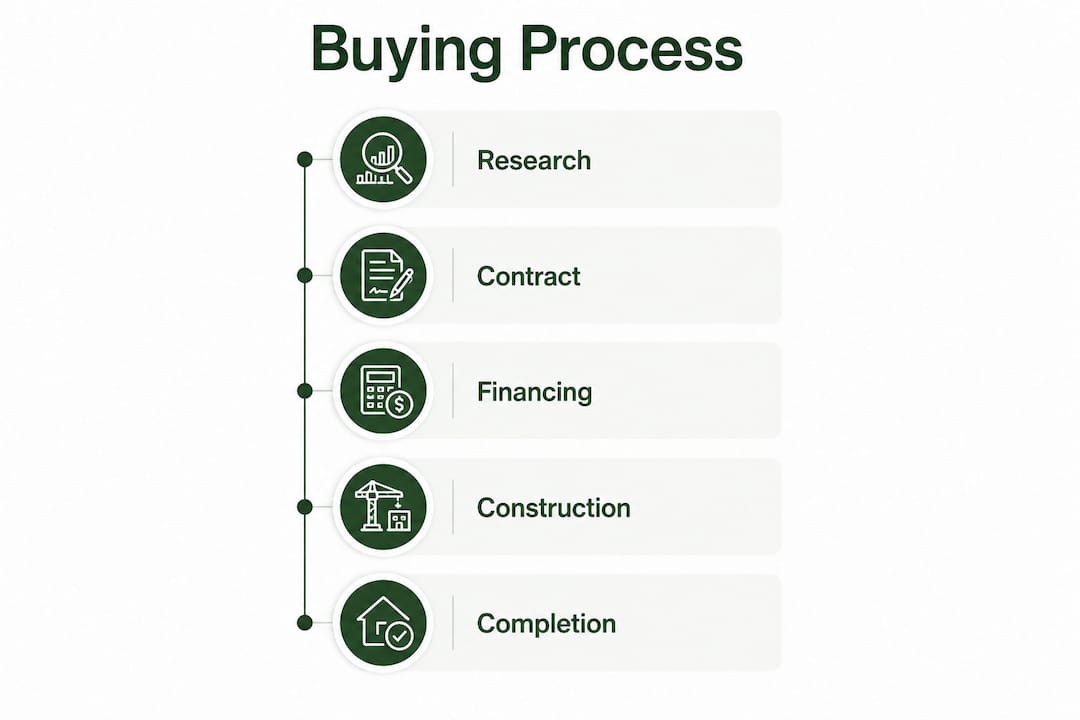
The process follows a predictable sequence, though the specifics vary by developer and state. Understanding each stage before you commit prevents surprises later.
Typical stages of an off-plan purchase:
Construction timelines for off-plan properties run from roughly 12 months up to 4 years. Larger mixed-use developments sit at the longer end. Budget your finances assuming the project runs at least six months past the stated delivery date.
For a detailed walkthrough of the full purchase sequence, how to purchase off-plan property covers financing, market volatility, and rental yield considerations in depth.
US buyers have meaningful federal protections, but those protections have limits. The Interstate Land Sales Full Disclosure Act requires developers selling lots in large subdivisions through interstate commerce to register with federal authorities and provide full disclosures to buyers. The law creates anti-fraud requirements and gives buyers real recourse. The catch: many smaller projects qualify for exemptions, so you cannot assume federal coverage applies to every development.
When the purchase contract resembles a contract-for-deed structure, Regulation Z disclosures under the Truth in Lending Act may apply, requiring the developer to provide specific financing disclosures. Your attorney should confirm which federal and state consumer protection rules govern your specific contract.
Escrow accounts are the single most important financial safeguard in any off-plan deal. A properly structured contract holds your stage payments in an independent escrow account managed by a neutral third party, not the developer’s operating account. The escrow agent releases funds only when construction milestones are independently verified. Without that structure, your deposits are exposed if the developer defaults. Always verify escrow arrangements before signing.
Due diligence checklist for US off-plan buyers:
Pro Tip: Maintain a financial buffer above your expected final payment to cover any appraisal gap at completion. If the completed unit appraises below the contract price, your lender may fund less than anticipated, and you will need cash to cover the gap at closing.
For a step-by-step framework on vetting developers, the real estate due diligence checklist walks through the process methodically.
Your rights as an off-plan buyer live in the contract, which is exactly why the contract needs to be negotiated, not just signed. A well-drafted sales and purchase agreement gives you the right to exit and recover all stage payments if the developer fails to deliver by the sunset clause date. It also gives you the right to defect rectification after handover, typically backed by a statutory or contractual warranty period.
Federal law under the Interstate Land Sales Full Disclosure Act gives qualifying buyers a right of rescission within a defined window after signing, which is a meaningful protection if you change your mind early. State consumer protection laws add another layer in many jurisdictions, so your attorney should review both federal and state exposure before you commit.
What you do not automatically have is protection against specification changes, delivery delays, or developer insolvency unless those protections are explicitly written into your contract. Independent legal counsel is the only reliable way to get them there.
Some warning signs are obvious in hindsight but easy to miss when a sales presentation is polished and the renderings look beautiful. A developer who discourages you from using your own attorney is a serious red flag. So is a contract with no sunset clause, no delay penalties, and no signed specification schedule attached.
Watch the developer’s project pipeline. A builder simultaneously running many large developments may be spreading capital too thin, raising the risk that your project gets deprioritized when cash flow tightens. Developers who cannot show you completed prior projects, or who deflect questions about their financing, deserve extra scrutiny.
Common pitfalls US buyers encounter:
The Canadian pre-construction market faces many of the same dynamics; pre-construction condo risks in that market offer a useful parallel for US buyers thinking through developer vetting and contract terms.
Off-plan property rewards buyers who do their legal homework before signing, not after the deposit clears.
| Point | Details |
|---|---|
| Construction timeline | Off-plan projects run 12–48 months from signing to handover; budget for delays beyond the stated date. |
| Escrow protection | Stage payments should sit in a regulated third-party escrow account, released only on verified milestones. |
| Federal law coverage | The Interstate Land Sales Full Disclosure Act protects buyers in qualifying large subdivisions; smaller projects may be exempt. |
| Financial buffer | Maintain a cash reserve above your expected final payment to cover any appraisal gap at completion. |
| Independent legal counsel | Always instruct your own attorney; contracts without sunset clauses and delay penalties leave buyers with no exit and no leverage. |