%20(4).png)
![[background image] image of cityscape background (for an architect firm)](https://cdn.prod.website-files.com/68961ade6feff9cbdffc080d/69384e066e0e9a310b6817f8_061f6bac-48bf-44b8-a689-078dacd8009f.avif)
TL;DR:
- Buying off-plan property involves purchasing a home before construction completion based on plans and developer specs. Proper research, contract review, and risk management are essential to avoid costly mistakes and protect your investment.
Purchasing off-plan property means buying a home before construction is finished, based on architectural plans and developer specifications rather than a completed structure. This buying method, formally called a pre-construction or off-plan purchase, attracts both first-time buyers and investors because properties sell at a 10–30% discount relative to expected market value at completion. Investors typically target 5–20% capital growth during the 18–36 month build period. That combination of entry price and growth potential makes knowing how to purchase off-plan property one of the most valuable skills a buyer can develop. The process requires careful preparation, contract knowledge, and active risk management.
Buying off-plan property without preparation is the fastest way to lose money or get locked into a bad deal. The groundwork you do before signing anything determines whether the purchase becomes an asset or a liability.
Research the market and the developer
Start with the local market. Study area pricing trends, planned infrastructure, and comparable completed developments. A neighborhood with confirmed transport links or school expansions carries far less risk than one relying on speculative planning approvals. Once you understand the market, scrutinize the developer. Review their completed projects, check for litigation history, and speak to buyers who have already settled in their developments. A developer with a strong track record of on-time delivery is worth paying a small premium for.

Understand your financing options
Off-plan financing differs from a standard mortgage. Lenders cannot approve a mortgage more than 2 years before completion, which creates a timing gap you must plan around. Most buyers pay a staged deposit structure: a reservation fee, then a deposit at contract exchange, with the mortgage drawn down at completion. Budget for the full cost picture, including conveyancing fees, stamp duty or local property taxes, and potential cost overruns.
Hire a solicitor who specializes in off-plan contracts
General conveyancers often miss the clauses that matter most in pre-construction deals. Legal fees for off-plan conveyancing run 20–50% higher than standard purchases because the contracts are longer and more complex. That extra cost is worth every dollar. Your solicitor will review variation clauses, longstop dates, and deposit protection terms before you commit.
Visit the site and surrounding area
Renderings look perfect. Reality rarely matches them. Visit the physical location, assess road access, check proximity to amenities, and speak to local residents. For international buyers, working with a firm like Yigal-realty that offers local market expertise and on-the-ground knowledge removes much of this uncertainty.
Pro Tip: Build a cost buffer of at least 5–10% above your deposit amount to cover down-valuation risk, legal overruns, and unexpected fees at completion.
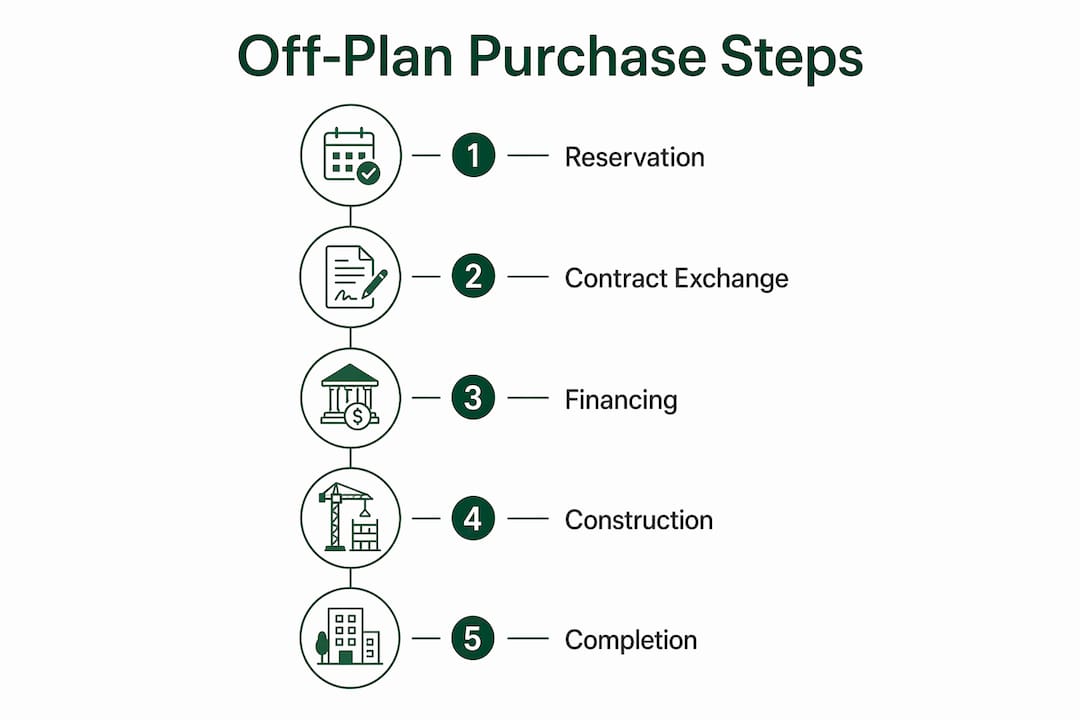
The process to buy off-plan follows a defined sequence. Skipping or rushing any phase creates legal and financial exposure.
Reserve the unit. Pay the reservation fee, typically between £500 and £2,000 in the UK market, to secure your chosen plot. This fee removes the property from sale while contracts are prepared. Get written confirmation of exactly what is reserved, including floor level, aspect, and parking allocation.
Review and negotiate the contract. Your solicitor reviews the full purchase contract before you sign anything. Key clauses to examine include the variation clause, the longstop date, the specification schedule, and the deposit protection terms. Negotiate where possible. Developers expect pushback on variation clauses.
Exchange contracts and pay the deposit. At exchange, you pay the agreed deposit, typically 10% of the purchase price. Deposit funds must be held in a solicitor’s client account or regulated trust account, never paid directly to the developer. This protects you if the developer becomes insolvent during the build.
Manage the construction phase. Request regular written updates from the developer. Many buyers arrange periodic site visits at key construction milestones. Keep records of all communications. If the developer makes specification changes, your solicitor should be notified immediately.
Time your mortgage application correctly. Most lenders will not issue a formal mortgage offer more than six months before completion. Apply too early and the offer expires. Apply too late and you risk missing the completion deadline. Work with a mortgage broker who has experience with off-plan timelines.
Complete a pre-settlement inspection and snagging report. Before you hand over final funds, inspect the property thoroughly. Hire an independent snagging inspector to document every defect. The practical completion notice period can be as short as 10–14 days, so prepare your inspector in advance. A written snagging report gives you legal leverage to have defects corrected before or shortly after settlement.
Complete legally and receive your keys. Your solicitor confirms all conditions are met, the mortgage funds are drawn down, and the title transfers to you. Keep copies of every document, including the warranty certificate.
| Purchase phase | Key action | Timing |
|---|---|---|
| Reservation | Pay fee, confirm plot details | Before contracts |
| Contract exchange | Pay deposit to solicitor’s account | Within 28 days of reservation |
| Construction phase | Monitor progress, track changes | 18–36 months |
| Mortgage application | Submit to lender | 3–6 months before completion |
| Pre-settlement inspection | Hire snagging inspector | Before completion notice |
| Legal completion | Transfer funds, receive title | Per completion notice |
Pro Tip: Ask your solicitor to confirm the longstop date in writing before you exchange contracts. This is the date beyond which you can withdraw and recover your full deposit if the developer fails to complete.
Off-plan buying carries real risks. Understanding them before you commit is what separates buyers who profit from those who regret.
Construction delays. Delays are common. Longstop dates in contracts allow buyers to withdraw and recover their deposit if completion is excessively delayed, typically 12–18 months beyond the expected date. Always confirm your contract includes one.
Developer insolvency. If the developer goes under during construction, buyers without deposit protection lose everything. Deposits held in regulated escrow or solicitor client accounts are protected through the 1–3 year build period. Never accept any arrangement where funds go directly to the developer.
Specification and variation changes. The variation clause often grants developers broad rights to alter floor plans or finishes without buyer consent. Solicitors consistently warn buyers to review this clause carefully. Negotiate limits on material changes, and define “material” explicitly in the contract.
Down-valuation risk. This is the most common financial shock in off-plan purchases. The lender appraises the property near completion, and if the valuation comes in below the purchase price, you must cover the gap in cash. Buyers should maintain a 5–10% financial buffer above the deposit amount to absorb this risk.
Market volatility. Property markets shift over 18–36 month build periods.
Off-plan buying marketed as “guaranteed growth” carries inherent market volatility. Buyers should treat the purchase discount as a risk buffer, not a guaranteed profit. Realistic expectations protect both your finances and your decision-making throughout the build period.
Completion is not the end of the process. The first two years after settlement carry specific responsibilities that protect your investment.
Claim your warranty coverage. Builders’ warranties like the NHBC Buildmark cover 10 years of structural protection, with the first two years typically covered directly by the developer. Register your warranty immediately after completion and keep the certificate in a safe place.
Report defects during the liability period. The defect liability period, usually the first one to two years, is when the developer is obligated to fix construction faults at no cost to you. Document every defect in writing with photographs and submit formal notices to the developer. Verbal reports are not enough.
Understand service charges and estate management. New developments often include shared facilities managed by an estate management company. Review the service charge schedule before completion and budget for annual increases.
Prepare for rental or personal use. If you plan to rent the property, confirm any restrictions in the lease or development rules. Arrange landlord insurance, safety certificates, and a tenancy agreement before the first tenant moves in.
Pro Tip: Schedule a formal inspection at the 11-month mark, just before the developer’s liability period ends. This is your last chance to claim repairs at no cost.
Buying off-plan property successfully requires financial preparation, contract expertise, and active risk management from reservation through post-completion warranty claims.
| Point | Details |
|---|---|
| Prepare finances early | Budget for a 5–10% buffer above the deposit to cover down-valuation and unexpected fees. |
| Protect your deposit | Always confirm funds are held in a regulated solicitor’s account, never paid directly to the developer. |
| Review the variation clause | Negotiate limits on specification changes before exchanging contracts to avoid unwanted surprises. |
| Time your mortgage correctly | Apply 3–6 months before expected completion to avoid offer expiry or last-minute financing gaps. |
| Use the defect liability period | Report all defects in writing within the first two years while the developer is still obligated to fix them. |
Most buyers focus on the property itself: the floor plan, the view, the finishes. The contract gets a quick read and a signature. That is the single biggest mistake I see in off-plan purchases.
The variation clause alone can legally allow a developer to change your kitchen finishes, reduce ceiling heights, or alter the floor plan without your approval. I have seen buyers receive a completed unit that looked nothing like the show apartment they fell in love with, and they had no legal recourse because they signed a contract with an uncapped variation clause. A specialist solicitor would have caught that in 30 minutes.
The other thing buyers consistently underestimate is the financial buffer requirement. Down-valuation is not a rare edge case. It happens regularly when markets cool during a long build period. Buyers who stretched to the maximum deposit and kept no reserve end up scrambling for cash at the worst possible moment. The buyers who come through off-plan purchases well are the ones who treated the process like a business transaction from day one, not an emotional purchase.
Patience matters too. Construction delays are normal. Developers who communicate proactively about delays are actually a good sign. The ones who go quiet are the ones to worry about. Stay engaged, ask for written updates, and document everything.
— Spiros
Navigating an off-plan purchase is far easier with a team that knows the market, the developers, and the legal requirements. Yigal-realty specializes in off-plan developments in Beit Shemesh and surrounding areas, with dedicated support for both local buyers and international clients. The team provides project-specific guidance, flexible payment options, and direct access to new listings before they reach the open market. Whether you are a first-time buyer or an experienced investor, working with professionals who understand the full purchase lifecycle reduces risk and saves time. Contact Yigal-realty to explore current projects and arrange a personalized consultation.
An off-plan property purchase is a transaction where the buyer commits to buying a property before construction is complete, based on plans and specifications. The buyer typically pays a staged deposit with the balance due at completion.
Most off-plan purchases require a 10% deposit at contract exchange, plus a small reservation fee. Buyers should also hold a 5–10% financial buffer above the deposit to cover potential down-valuation at completion.
A longstop date is a contractual deadline that allows buyers to withdraw and recover their full deposit if the developer fails to complete construction within an agreed extended period, typically 12–18 months beyond the expected completion date.
Deposits must be held in a regulated solicitor’s client account or escrow account, never paid directly to the developer. This protection ensures your funds are returned if the developer becomes insolvent during the build.
A snagging inspection identifies construction defects, unfinished work, and specification deviations before or shortly after settlement. Hiring an independent inspector gives you documented evidence to require the developer to make repairs during the defect liability period.