%20(4).png)
![[background image] image of cityscape background (for an architect firm)](https://cdn.prod.website-files.com/68961ade6feff9cbdffc080d/69384e066e0e9a310b6817f8_061f6bac-48bf-44b8-a689-078dacd8009f.avif)
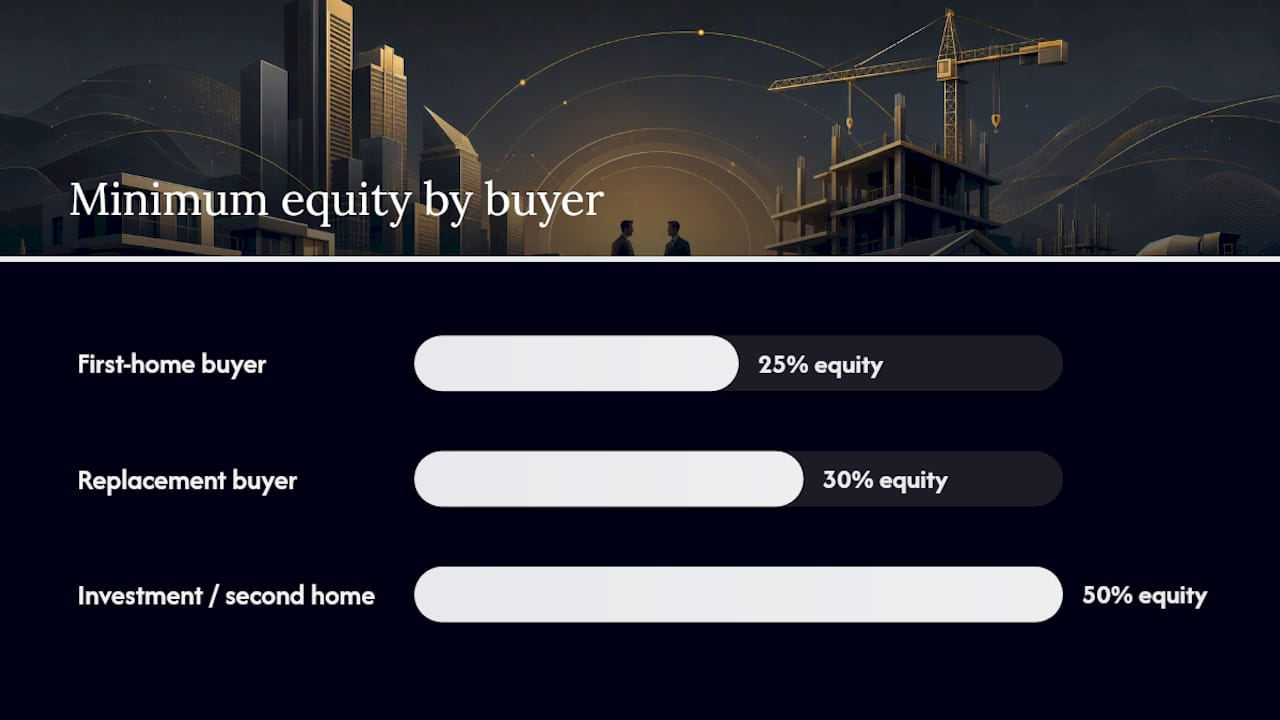
The Bank of Israel sets the legal floor at 25% down for a first home, 30% for a replacement home, and 50% for an investment property. But if you’re buying מקבלן (from a contractor), plan for 5 to 15 percentage points above that floor once appraisal gaps, purchase tax, and staged developer payments enter the picture. Before signing anything, get a preliminary appraisal and a bank pre-approval that accounts for both.
TL;DR:
- Buyers financing a first home can borrow up to 75%, but appraisal shortfalls may require paying the difference in cash, increasing total upfront costs.
- Developer payments are staged and often require deposits or progress payments before mortgage funds are disbursed, risking cash flow issues if timing is misaligned.
- Total cash requirements beyond the down payment can reach 30% to 35% when including purchase tax, legal fees, broker fees, appraisal costs, and insurance.
- Borrowing from family or using a mortgage to fund the down payment is generally not allowed, except for bridging loans linked to existing property sales and with proper documentation.
- Proper planning involves obtaining a preliminary appraisal, securing bank pre-approval, and preparing documented proof of funds before committing to a property.
The 25/30/50 split isn’t a suggestion. It’s a binding loan-to-value ceiling that every licensed lender in Israel has to follow, and it depends entirely on which buyer category you fall into.
A first home buyer with no other property can borrow up to 75% of the purchase price, meaning 25% has to come from your own funds. A replacement home buyer, someone selling an existing home and buying another, gets slightly less room: the ceiling drops to 70% financed, 30% equity. An investment purchase, or any second home bought while the first stays in the family’s hands, caps financing at 50%, so half the price has to sit in cash before the deal closes.
Here’s where it gets tricky for developer purchases specifically: banks don’t lend against the contract price you signed. They lend against the lower of the contract price or the appraised value, determined by an independent appraiser (a shamay) the bank orders. If you agreed to pay around two million shekels for a unit but the appraiser values it lower, the bank calculates your maximum loan off the appraised figure, not the contract price. That appraisal shortfall lands on you, on top of your planned down payment.
Quick math on the gap: at 75% financing, a ₪100,000 appraisal shortfall doesn’t just cost you ₪100,000. It costs you the full difference in cash, because the bank’s loan ceiling shrinks along with the appraised value.
A few things worth knowing before you assume your down payment is the whole story:
A mortgage pre-approval that flags this appraisal risk early saves you from a nasty surprise two weeks before signing.
Buying מקבלן means your cash doesn’t go out the door once. It goes out in stages, tied to construction milestones, and some of those stages arrive before your mortgage is even registered.
A typical developer payment schedule in Israel follows a sequence like this:
The problem is timing. Developer payment schedules frequently require the signing deposit and at least one progress payment before your bank has released a shekel of financing. Mortgage approval, appraisal, and registration take weeks, sometimes months.
This is also where negotiation matters. Developers sometimes accept staggered final payments backed by a bank guarantee or escrow arrangement, which can shrink how much cash you need on hand at any single moment.
Pro Tip: Ask the developer for a written payment schedule with exact dates before you sign anything, then hand it directly to your mortgage banker. Misalignment between when the developer wants money and when your bank can release it is one of the most common reasons deals stall right before handover.
Your down payment percentage is only the headline number.
Purchase tax is the biggest variable. First-home buyers get a lower bracket and often pay little to no tax below a certain threshold, while additional or investment properties face purchase tax starting from the first shekel, according to financing guidance for second-home buyers. If you’re buying a second apartment, budget for this from day one rather than treating it as an afterthought.
Beyond tax, expect:
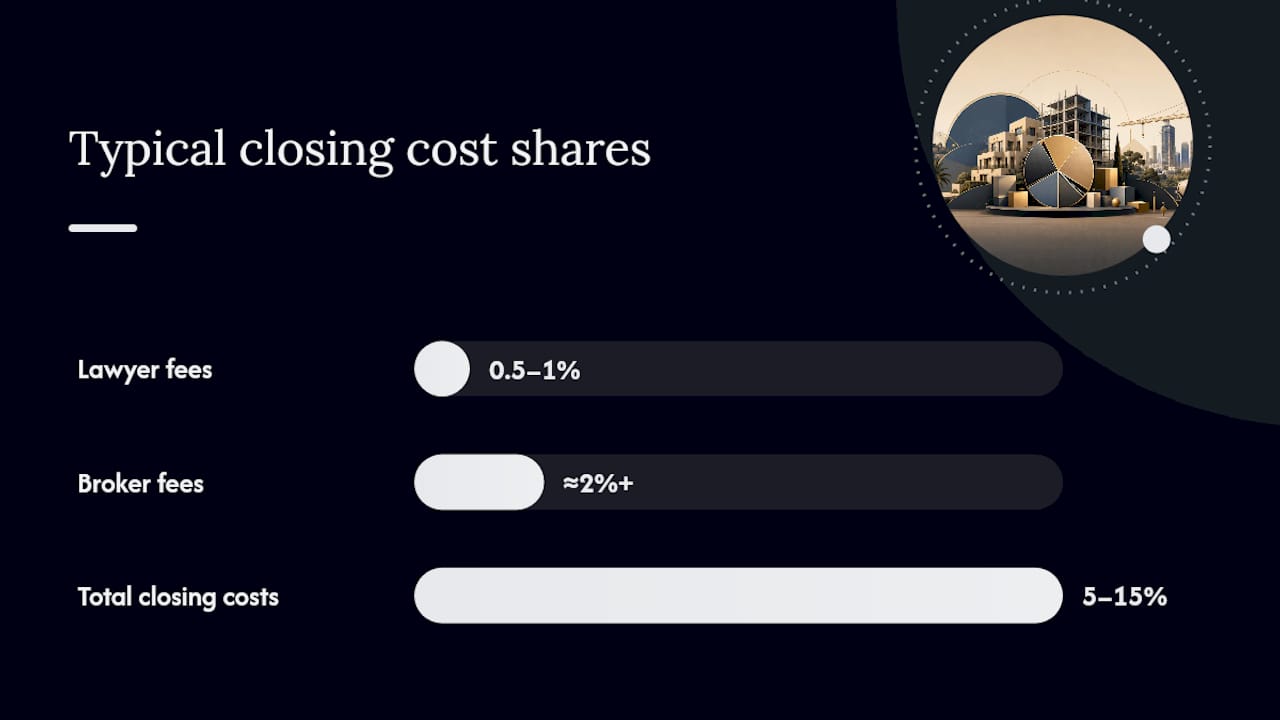
Industry guides converge on a useful rule of thumb: closing costs typically add another 5% to 15% on top of the regulatory down payment, which means a “25% down” first home purchase often behaves like a 30% to 35% cash requirement once every fee is counted.
A full breakdown of local closing costs in Beit Shemesh shows how these percentages play out on actual listings, and a broader national closing-cost guide covers the fee ranges bank by bank.
No, not from the same bank financing your purchase, and not through most conventional loan products. This is one of the more misunderstood rules in Israeli mortgage lending, and it trips up buyers who assume any cash in their account counts the same regardless of where it came from.
Bank of Israel guidance is explicit: banks cannot issue a loan whose stated purpose is covering the equity required for a mortgage. The regulator treats this as a core stability rule, since a buyer who borrows their entire equity effectively holds zero real skin in the deal, which increases default risk across the banking system.
There’s one narrow exception: a bridging loan secured against an existing property you already own, most commonly used by replacement-home buyers who are selling one home to fund another. These are allowed under strict conditions and time limits, not as an open-ended workaround.
Family assistance works differently and is generally accepted, but banks want paperwork, not a verbal promise:
Where this goes wrong: buyers who lean on an informal, undocumented promise from a relative, or an unsecured personal loan from a private lender, often find the bank won’t count that money as legitimate equity at all. BOI’s explanatory guidance on third-party assistance makes clear that undocumented funds can delay or derail an entire approval. A look at legitimate financing options in Israel covers which structures banks actually accept.
Run the numbers in five steps, and you’ll land on two figures that matter: cash at signing and cash at handover.
Here’s how that breaks down on a ₪2,000,000 first-home developer purchase:
This isn’t one lump payment. Your signing deposit (often 10% to 20% under the developer’s staged schedule) comes first, well before mortgage disbursement, while the appraisal buffer and final fees typically surface closer to handover.
Before signing, confirm you have: proof of funds covering the signing deposit alone, a written developer payment schedule, a bank pre-approval letter referencing appraisal timing, and copies of any gift letters or bridging loan documentation. A step-by-step transaction guide walks through exactly when each document needs to be in hand.
Local development timelines in Beit Shemesh follow the national pattern, but there’s more room to negotiate than most buyers assume, especially on timing rather than price.
A few things worth raising before you sign:
International buyers face an added layer: currency timing, wire transfer documentation, and coordinating a foreign bank’s funds with an Israeli mortgage timeline. This is usually the point where working directly with a broker who tracks both the developer’s schedule and the bank’s disbursement calendar prevents a cash crunch nobody saw coming.
Every buyer thinks they understand their down payment until the appraisal comes in low or the developer moves a payment date. The math in this article isn’t theoretical. It’s the gap between what people budget and what actually shows up on their bank statement two weeks before handover.
If you’re preparing to buy מקבלן, do these three things in order: order a preliminary appraisal before you fall in love with a unit, secure bank pre-approval that explicitly accounts for appraisal risk, and assemble documented proof of funds, gift letters included, well before you need them.
— Spiros
Working out your minimum equity is only half the job. The harder part is timing that cash against a developer’s payment schedule while your mortgage moves through appraisal and approval, often on two calendars that don’t naturally line up. The timing involved often requires coordination between developers, lenders, and buyers, especially when managing signing deposits and mortgage disbursements. Assistance with navigating wire transfers, documentation, and currency timing can be helpful for international buyers dealing with an Israeli mortgage process. If you’re weighing a specific project and want your appraisal, pre-approval, and payment schedule mapped against each other before you commit, start a conversation with Yigal Realty.
Regulatory figures shift, so confirm current rates before signing. The Bank of Israel publishes the binding LTV directives and circulars governing equity rules. Gov cover purchase tax brackets and official procurement rules. For market context on pricing trends and population data affecting demand, the Central Bureau of Statistics remains the primary government reference, alongside industry calculators that model closing costs against current listings.