%20(4).png)
![[background image] image of cityscape background (for an architect firm)](https://cdn.prod.website-files.com/68961ade6feff9cbdffc080d/69384e066e0e9a310b6817f8_061f6bac-48bf-44b8-a689-078dacd8009f.avif)
Securing a price break on Israeli real estate is harder than most buyers expect. The average negotiation discount runs just 1 to 5% off asking price, and in high-demand religious hubs like Beit Shemesh, that margin shrinks even further. Unlike markets where aggressive haggling is expected, Israel’s real estate culture rewards preparation, cultural awareness, and strategic timing. This guide walks you through exactly how to approach negotiation in Israel, with specific tactics for observant and Anglo buyers targeting Beit Shemesh and surrounding areas. Whether you are buying your first apartment or adding to a portfolio, the steps below will help you avoid costly mistakes and maximize every shekel.
| Point | Details |
|---|---|
| Israeli negotiation is direct | Expect assertive, fast-paced negotiation but never start with an insulting lowball offer. |
| Do your homework | Research recent comparable sales and seller motivation to plan your opening bid realistically. |
| Leverage agent and lawyer expertise | A local agent and independent lawyer dramatically increase your negotiating leverage and legal safety. |
| Consider community factors | For religious/Anglo buyers, negotiate for amenities and timing that align with your lifestyle needs. |
| Verify before finalizing | Always conduct legal checks on the property (Tabu/lien search) before signing any agreement. |
To see how much room you realistically have to negotiate, let’s examine what shapes pricing power in Israel’s property markets.
Israeli real estate negotiation is not a free-for-all. Sellers price strategically, and buyers need to understand the mechanics before making a move. The gap between listing price and final sale price is narrower here than in many Western markets, and the cultural norms around negotiation are distinct.
Start with the numbers. Initial offers of 5-10% below asking price are considered standard in Israel. Going further than that without strong justification can offend the seller and kill the deal before it starts. The table below shows how negotiation margins vary by region:
| Region | Typical discount range | Market pace |
|---|---|---|
| Tel Aviv center | 0 to 2% | Very fast |
| Jerusalem | 1 to 2% | Fast |
| Beit Shemesh (established) | 1 to 3% | Moderate to fast |
| Periphery cities | 3 to 8% | Slower |
| New neighborhoods (Gimmel, Daled) | 2 to 5% | Moderate |
Beyond the numbers, cultural style matters enormously. Israeli negotiation is direct, fast-paced, and assertive. Sellers expect you to be serious. A lowball offer signals that you are not, and many sellers will simply stop responding.
Several factors determine how much leverage you actually have:
“The best negotiators in Israel don’t come in swinging. They come in prepared, respectful, and with numbers that are hard to argue with.”
For negotiating real estate in Israel, understanding these regional and cultural dynamics is step one. Buyers who skip this research phase almost always leave money on the table or damage the relationship with the seller before talks even begin. When assessing Beit Shemesh properties, pay close attention to how long a unit has been listed and what similar apartments in the same neighborhood sold for in the past three months.
With these drivers in mind, let’s break down the exact steps you should take to prepare, strategize, and submit an effective offer.
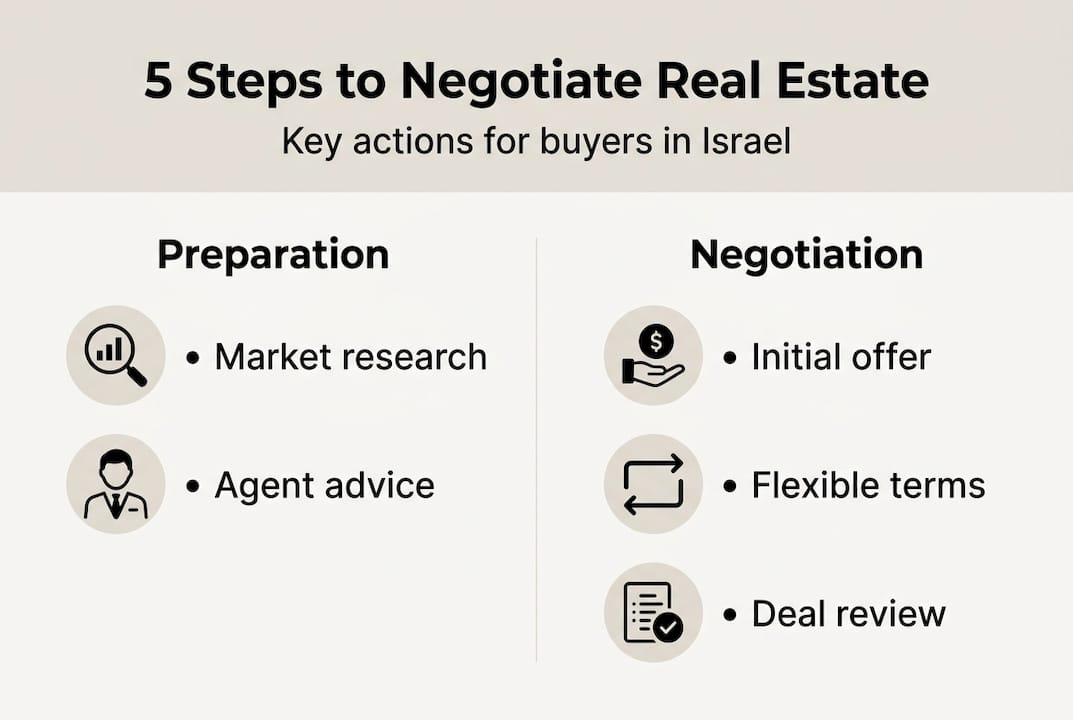
A structured approach separates buyers who get deals from those who overpay. The five-step negotiation process used by experienced Israeli buyers covers market research, strategic offer structuring, agent engagement, counteroffer analysis, and legal finalization. Here is how to work through each stage:
Pro Tip: If you are competing against other buyers, consider offering a faster closing timeline instead of a lower price. Sellers often value speed over a slightly higher number.
The table below shows how different buyer profiles affect negotiation power:
| Buyer profile | Leverage level | Best tactic |
|---|---|---|
| Cash buyer | High | Lead with certainty and speed |
| Pre-approved mortgage | Moderate to high | Emphasize reliability |
| Pending financing | Moderate | Offer flexible terms |
| No pre-approval | Low | Focus on price research |
Always review the questions to ask your agent before submitting any offer. Your agent should be able to tell you how long the property has been listed, whether there are other interested buyers, and what the seller’s timeline looks like. That context shapes every number you put on the table.
For buyers considering Beit Shemesh, especially those prioritizing religious life, tailored tactics are key.
Beit Shemesh is not a uniform market. Ramat Beit Shemesh, with its established Anglo and observant communities, commands firm prices. Three-bedroom apartments in this area typically range from ₪2.2 million to ₪2.9 million, and sellers know their market well. Expect high demand from religious and Anglo communities to keep discounts tight in these zones.
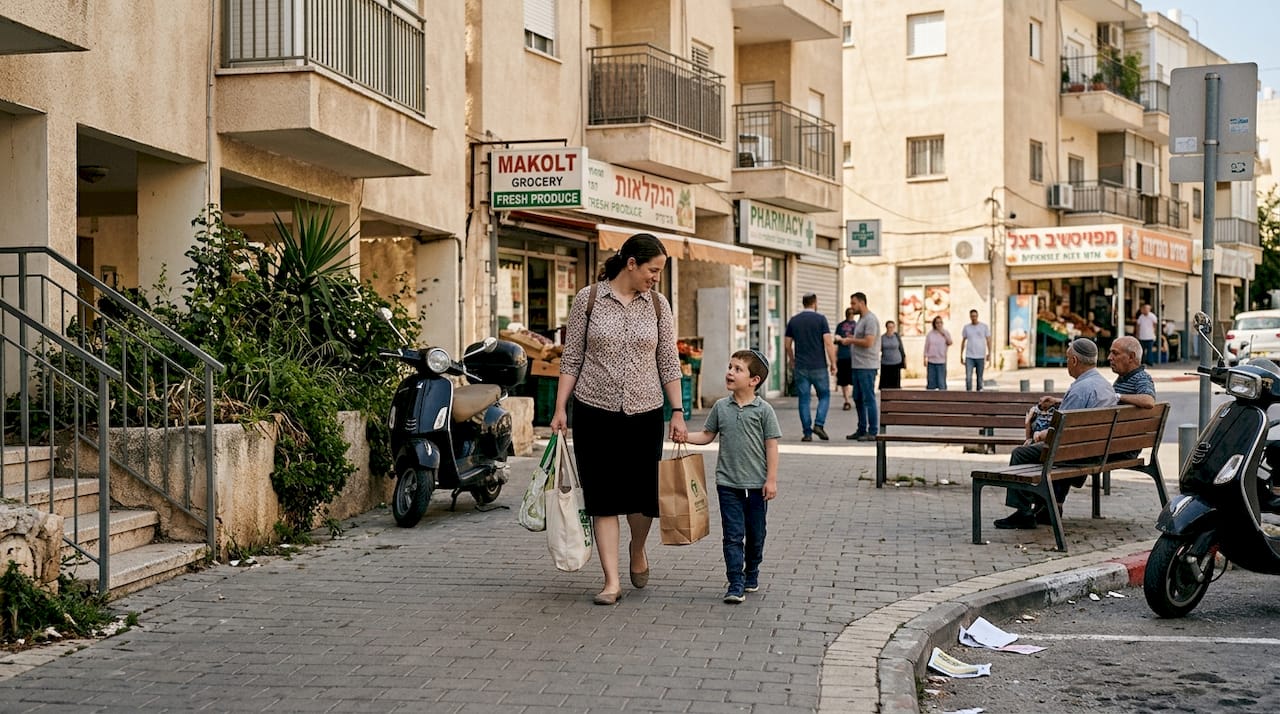
Newer neighborhoods like Gimmel and Daled offer more flexibility. These areas are still developing their community infrastructure, which means sellers are sometimes more motivated and prices have more room to move. Beit Shemesh yields around 3.5% with prices near ₪16,600 per sqm, making it attractive for investors who want both community fit and return potential.
For observant buyers, the negotiation is about more than price. Consider these priorities:
Pro Tip: If the price is firm, shift your negotiation to terms. Ask for a later move-in date that aligns with the school year, request that the seller include appliances, or negotiate a payment schedule that gives you more flexibility before closing.
Using a Beit Shemesh agent who understands these community-specific priorities is not optional. A generalist agent may not know which buildings have sukkah rights or which streets fall inside the eruv. When understanding local listings, these details often determine whether a property is worth the asking price or not.
With your offer submitted and negotiations underway, be careful not to stumble into these common traps or overlook final steps.
Even experienced buyers make avoidable mistakes at this stage. The most common ones cost real money or delay closing by weeks.
New construction is a different game. Developer prices are generally fixed, but that does not mean there is nothing to negotiate. New builds allow negotiation on perks, including upgraded finishes, storage units, parking spaces, and flexible payment schedules tied to construction milestones. Push on these instead of the headline price.
In periphery or slower markets, more aggressive discounts are realistic. If a property has been sitting for several months, a 5 to 8% reduction is not unusual. The key is backing your offer with comparable data, not just a gut feeling.
Here are the most critical mistakes to avoid:
“Due diligence is not a formality in Israel. It is the step that separates buyers who close confidently from those who discover problems after signing.”
The legal stages in Beit Shemesh deals follow a clear sequence: preliminary agreement, lawyer review, Tabu check, final contract, and transfer of funds. The step-by-step purchase process is worth reviewing in full before you submit any offer, so you know exactly what comes after the seller says yes.
Here is the perspective you will not hear often, but it matters more than any single tactic in this guide.
Most buyers from North America arrive in Israel expecting that harder bargaining equals better outcomes. They have been trained to anchor low, hold firm, and grind the seller down. In Israel, this approach frequently backfires. Sellers disengage, agents lose confidence in the buyer, and the deal collapses over a few thousand shekels that could have been recovered through smarter term negotiation instead.
The buyers who consistently get the best outcomes are not the hardest negotiators. They are the most prepared ones. They know the comps. They understand the seller’s timeline. They use an agent who has relationships in the specific neighborhood they are targeting. And for observant buyers in Beit Shemesh, they recognize that community fit is part of the value equation, not separate from it.
Working with local realtors in Beit Shemesh who specialize in Anglo and religious buyer needs gives you a genuine edge. Not because they negotiate harder, but because they negotiate smarter, with cultural fluency and local data that no online research can fully replicate.
Ready to negotiate your next home with confidence? Here is how we can make the process easier.
At Yigal Realty, we specialize in helping observant and Anglo buyers navigate the Beit Shemesh market from first inquiry through final signing. Our team understands the community-specific priorities that matter most, from shul proximity to sukkah-ready balconies, and we know how to structure offers that sellers take seriously. Whether you are exploring established Ramat Beit Shemesh neighborhoods or newer developments, we provide the local insight and negotiation support you need. Take a look at the Sharei Chessed Trilogy as one example of the premium projects we currently represent, and reach out to our team to start your search on the right foot.
Most buyers secure a 1 to 5% discount off asking price, but expect only 1 to 2% in high-demand areas like Jerusalem or Ramat Beit Shemesh where competition is strong.
A standard first offer is 5 to 10% below asking price; going significantly lower than that is often perceived as disrespectful and can end negotiations immediately.
Work with agents who understand observant community needs, stay flexible on move-in timing, and negotiate non-price perks like appliances, storage, or payment schedules when the headline price is firm.
Developer prices are usually fixed, but you can negotiate for upgrades and flexible terms such as better finishes, parking, storage units, or milestone-based payment schedules.
Your lawyer performs the Tabu check and lien review that confirms the property is legally clear before you commit any funds, protecting you from ownership disputes or hidden encumbrances.