%20(4).png)
![[background image] image of cityscape background (for an architect firm)](https://cdn.prod.website-files.com/68961ade6feff9cbdffc080d/69384e066e0e9a310b6817f8_061f6bac-48bf-44b8-a689-078dacd8009f.avif)
TL;DR:
- Skipping due diligence can lead to costly surprises and risks in real estate transactions. A thorough, organized process helps verify seller claims, identify issues, and negotiate effectively before closing. Proper planning, documentation, inspections, and analysis protect buyers and ensure confident property purchase decisions.
Skipping or rushing due diligence is one of the most expensive mistakes a property buyer can make. Whether you’re purchasing your first home or adding to an investment portfolio, a structured, step by step real estate due diligence process is what separates buyers who close with confidence from those who inherit costly surprises. Due diligence, the industry term for this investigative phase, gives you a defined window to verify everything the seller has told you and discover what they haven’t. This guide walks you through each phase with the specificity and sequencing you actually need.
| Point | Details |
|---|---|
| Start with your team | Line up inspectors, attorneys, and specialists before your offer is even accepted. |
| Tie timelines to documents | Your due diligence clock should start only after the seller delivers all required documents. |
| Due diligence is hypothesis testing | Your goal is to confirm or challenge the seller’s claims using real records and third-party reports. |
| Know your exit options | Buyers can proceed, renegotiate, request repairs, extend timelines, or walk away entirely. |
| PCA and home inspections differ | Using the wrong inspection type can delay financing or leave capital needs unexamined. |
Most buyers think due diligence begins after they sign the purchase contract. Technically true, but practically speaking, you need to be ready to move the moment ink hits paper. The due diligence period typically lasts 30 to 60 days, with complex deals requiring 90 days or more. Lose the first week scrambling to find an inspector and you’ve burned irreplaceable time.
Before your offer goes in, build your team:
Once under contract, your first task is understanding real estate contracts well enough to know your exact deadlines. Note the due diligence start date, end date, contingency removal dates, and any provisions around document delivery.
One of the most overlooked contract protections: tying your due diligence start date to the seller’s complete document delivery rather than the contract execution date. Late document delivery shifts critical timelines and can quietly shrink your inspection window before you’ve even begun.
Pro Tip: Ask your attorney to insert contract language that pauses or resets the due diligence clock until the seller has delivered every requested document. This one clause has saved deals.
Use a formal real estate due diligence checklist from day one to track document requests, scheduled appointments, and outstanding items. Without a written tracker, things fall through the cracks and deadlines arrive before findings are complete.
This is where the real work happens. Think of it in four parallel tracks running simultaneously across your diligence window.
Schedule your general home inspection within the first week. For residential properties, this covers structure, roof, electrical, plumbing, HVAC, and visible deficiencies. For commercial or multifamily acquisitions, you need a Property Condition Assessment (PCA) instead. A standard home inspection and a PCA are not interchangeable. A PCA governed by ASTM E2018-24 provides a capital needs forecast and cost projections over a 10 to 12 year horizon. Lenders require ASTM-compliant PCAs for most commercial financing, and ordering the wrong inspection can delay financing or require a full redo at your expense.
Additional specialized inspections to consider:
Key documents for commercial real estate include the title commitment, ALTA survey, zoning confirmation, all executed leases, environmental reports, and engineering records. For residential purchases, you’ll focus on the title report, HOA documents, permits history, and any seller disclosures.
Request everything in writing. Track what arrives and what remains outstanding on your checklist.
For investment properties, this track is the one most buyers underinvest in. Financial due diligence means independently verifying rent rolls, leases, operating expenses, and calculating net operating income yourself rather than accepting the seller’s summary. Cross-reference rent rolls against actual lease agreements, bank deposit records, and operating statements. A single number discrepancy across those three sources tells you far more than any seller’s pitch.

Reconciling rent rolls against operating statements and actual deposits helps you avoid relying on any single document snapshot. This is where overpriced deals get exposed.
Order your Phase I ESA (for commercial) and appraisal as early as possible. PCA reports carry a 12-month validity window, so ordering early protects you. If the deal drags for any reason, you won’t need to pay for a costly refresh before closing.
| Report Type | Who Needs It | Typical Turnaround |
|---|---|---|
| General home inspection | Residential buyers | 2 to 5 days |
| Property Condition Assessment | Commercial and multifamily buyers | 2 to 4 weeks |
| Phase I ESA | Commercial buyers and lenders | 2 to 4 weeks |
| Appraisal | All financed purchases | 1 to 3 weeks |
| Title commitment | All buyers | 1 to 2 weeks |
Pro Tip: Order your appraisal and Phase I ESA in the first 48 hours after the due diligence period opens. Both have long turnaround times, and delays here are the most common cause of missed deadlines.
Think of due diligence as hypothesis testing: your original underwriting assumptions are challenged by real documents and physical inspections, and you either confirm the deal makes sense or you identify gaps that change the math.
Common problems uncovered during this phase include:
None of these findings automatically kill a deal. What they do is shift leverage to you.
“The findings from your property inspection and PCA reports are negotiation tools, not just risk reports. Use the capital needs forecast to request a price reduction, a repair escrow, or seller credits at closing.”
Buyers typically have several options when due diligence surfaces material issues: proceed as-is, renegotiate the purchase price, require the seller to cure defects before closing, request a timeline extension to gather more information, or terminate the contract entirely and recover any refundable deposits.
Timing matters here. Do not wait until day 58 of a 60-day period to surface your concerns. If you need a timeline extension, ask before the deadline passes, not after. Most sellers will grant a short extension when asked professionally with a clear reason. They will rarely grant one when the deadline has already expired.
Once all inspections, reports, and document reviews are complete, your next task is synthesis. Compile everything into a diligence summary that states what was reviewed, what was found, what was resolved or negotiated, and what risk, if any, remains going into closing. This document protects you and creates a clear record for your lender, attorney, and any future ownership entity.
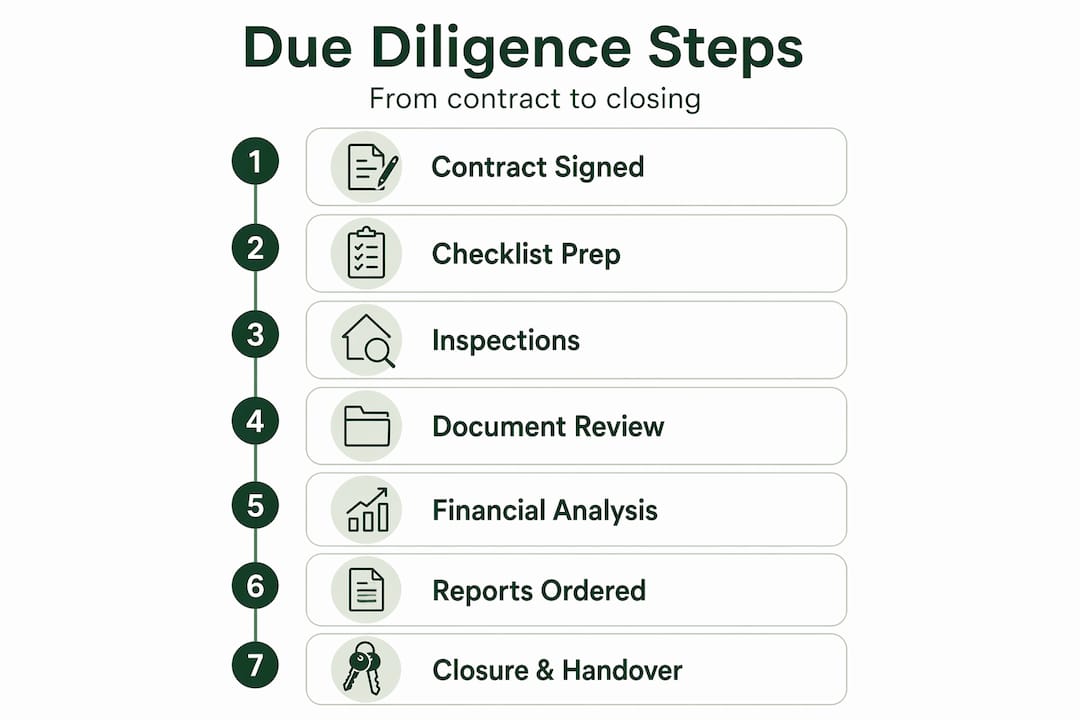
The following table shows the critical tasks in this final phase:
| Task | Who Owns It | Timing |
|---|---|---|
| Compile diligence summary | Buyer and attorney | Before contingency removal |
| Confirm appraisal value meets lender requirements | Lender and buyer | Before contingency removal |
| Remove or waive contingencies in writing | Attorney | Per contract deadline |
| Confirm PCA validity for lender submission | Buyer and lender | 30 days before close |
| Final walkthrough of property | Buyer | 24 to 48 hours before close |
| Wire closing funds and review settlement statement | Buyer and attorney | Closing day |
Contingency removal is the most legally significant moment in this phase. Once you waive your inspection or financing contingency, you are typically committed to the purchase. Your attorney must review every waiver before you sign it.
Understanding property handover expectations before closing day also prevents last-minute conflicts. Know what the seller is responsible for leaving behind, what utilities are being transferred, and what the property condition should look like when you take possession.
Pro Tip: Do not let your PCA age past 12 months before lender submission. If your transaction timeline has extended, check the report date and confirm with your lender whether a refresh is required before you get to the closing table.
In my experience guiding buyers through real estate transactions, the single biggest mistake I see is treating due diligence as a formality rather than an investigation. Buyers who have already fallen emotionally in love with a property tend to minimize findings, rationalize red flags, and push toward closing before they have complete information.
I’ve seen buyers skip the rent roll reconciliation because the seller seemed trustworthy, only to discover post-closing that two anchor tenants had signed below-market renewals two months before the sale. That finding was sitting in the leases the whole time. Nobody read them carefully.
What actually works: building a week by week due diligence rhythm that moves through mobilization, investigation, resolution, and final decision in a structured sequence. Buyers who treat the process like a project, with assigned tasks, deadlines, and daily tracking, find more issues, negotiate better terms, and close with fewer surprises.
The deals that close most smoothly are the ones where the buyer came in organized, asked for everything upfront, and treated every finding as data rather than drama. The real estate due diligence checklist is not paperwork. It is your map.
— Spiros
Buying property in Israel involves a due diligence process with specific legal, financial, and regulatory layers that differ from other markets. Yigal Realty works directly with homebuyers and investors to guide them through each stage, from initial document requests through final property handover. Their team provides local expertise, project-specific guidance, and connections to the legal and inspection professionals you need. Whether you’re purchasing your first Israeli property or expanding an existing portfolio, the firm’s hands-on approach means you never face the due diligence process alone. Reach out to Yigal Realty to start your property search with the support structure already in place.
Due diligence in real estate is the formal investigation period after a purchase offer is accepted, during which the buyer verifies the property’s physical condition, legal status, and financial performance before committing to the transaction.
The typical due diligence period lasts 30 to 60 days, though complex commercial deals often require 90 days or more depending on the scope of inspections and document reviews needed.
A real estate due diligence checklist should include title commitment, physical inspection reports, environmental assessments, lease agreements, rent rolls, operating statements, zoning confirmation, and any applicable lender-required reports like a PCA or appraisal.
A home inspection identifies current visible defects, while a Property Condition Assessment provides a capital needs forecast and projected repair costs over 10 to 12 years. Lenders typically require a PCA for commercial financing.
Buyers can proceed with the purchase, renegotiate the price or terms, require the seller to make repairs, request a timeline extension, or terminate the contract and recover refundable deposits, depending on what findings surface during the investigation.