%20(4).png)
![[background image] image of cityscape background (for an architect firm)](https://cdn.prod.website-files.com/68961ade6feff9cbdffc080d/69384e066e0e9a310b6817f8_061f6bac-48bf-44b8-a689-078dacd8009f.avif)
Moving your family to Beit Shemesh from the U.S. is a moment filled with excitement and deep planning. The paperwork involved in buying a new home can feel overwhelming, especially when you want every document in perfect order for peace of mind and legal certainty. This guide uncovers step-by-step advice to help religious American families organize, validate, and submit all documentation clearly, from collecting financial records to carefully reviewing legal agreements, so you feel fully supported throughout the property acquisition process.
| Key Point | Explanation |
|---|---|
| 1. Gather essential documents | Collect and organize tax returns, pay stubs, credit reports, and other key financial records. |
| 2. Review seller disclosures | Analyze official documents to uncover material defects and other critical property information. |
| 3. Submit timely documentation | Prepare and track the submission of necessary documents to legal and financial parties accurately. |
| 4. Validate documents professionally | Use certified professionals to ensure the authenticity and correctness of all important documents. |
| 5. Finalize agreements carefully | Review all contract details with a legal expert to avoid future issues and secure your investment. |
Preparing to buy a home requires assembling a comprehensive collection of personal and financial documentation. This critical step helps streamline your property acquisition process and demonstrates your financial readiness to potential lenders.
Start by collecting key documents that provide a clear picture of your financial health. Critical documents for homebuyers typically include:
Carefully organize these documents in a secure, easily accessible manner. Resource guides recommend keeping original documents in a safe deposit box while maintaining digital and physical copies at home.
Lenders will scrutinize these documents to assess your financial stability and mortgage eligibility.
Consider creating both digital and physical filing systems. Scan important papers and save encrypted digital copies, while keeping original documents in a fireproof, locked container. This dual approach ensures you’re prepared for any documentation requests during the home buying process.

Here’s how different document storage methods compare for homebuyers:
| Storage Method | Security Level | Accessibility |
|---|---|---|
| Safe deposit box | Very high (bank vault) | Inconvenient, bank hours |
| Fireproof lockbox | High (at home) | Immediate at home access |
| Encrypted digital file | High (encrypted cloud) | Anywhere with internet |
| Basic paper folder | Low (unsecured) | Immediate at home access |
Pro tip: Create a dedicated folder or digital file specifically for home purchasing documents to keep everything organized and easily accessible.
Carefully examining property details and seller disclosures is your crucial defense against unexpected issues and potential financial risks. This step involves meticulously analyzing all available information about the property you’re considering purchasing.
Start by thoroughly reviewing the official seller disclosure documents that outline the property’s condition and known history. These documents are legally required to reveal:
Seller disclosures represent the seller’s legal obligation to provide transparent and accurate information about the property’s condition.
Next, scrutinize the Closing Disclosure provided by your lender, which details critical financial information. Pay special attention to:
Compare the disclosure documents against independent inspection reports and ask your real estate agent to help clarify any confusing or ambiguous information. Careful review now can prevent costly surprises later.
Pro tip: Request digital copies of all documents and create a dedicated comparison spreadsheet to track and cross-reference important property details.
Navigating the documentation submission process is a critical phase in your property purchase journey. This step requires precision, timeliness, and careful coordination with various legal and financial professionals involved in your home buying transaction.
Begin by preparing a comprehensive document package that includes all necessary paperwork for different parties. You’ll need to compile and submit documents to multiple recipients:
Timely and accurate document submission is fundamental to maintaining the momentum of your property purchase.
Real estate closing checklists recommend creating a systematic approach to tracking document submissions. Typically, this involves:
Ensure you have digital and physical copies of all submitted documents. Most financial institutions prefer electronic submissions, but always keep original signed documents in a secure location.
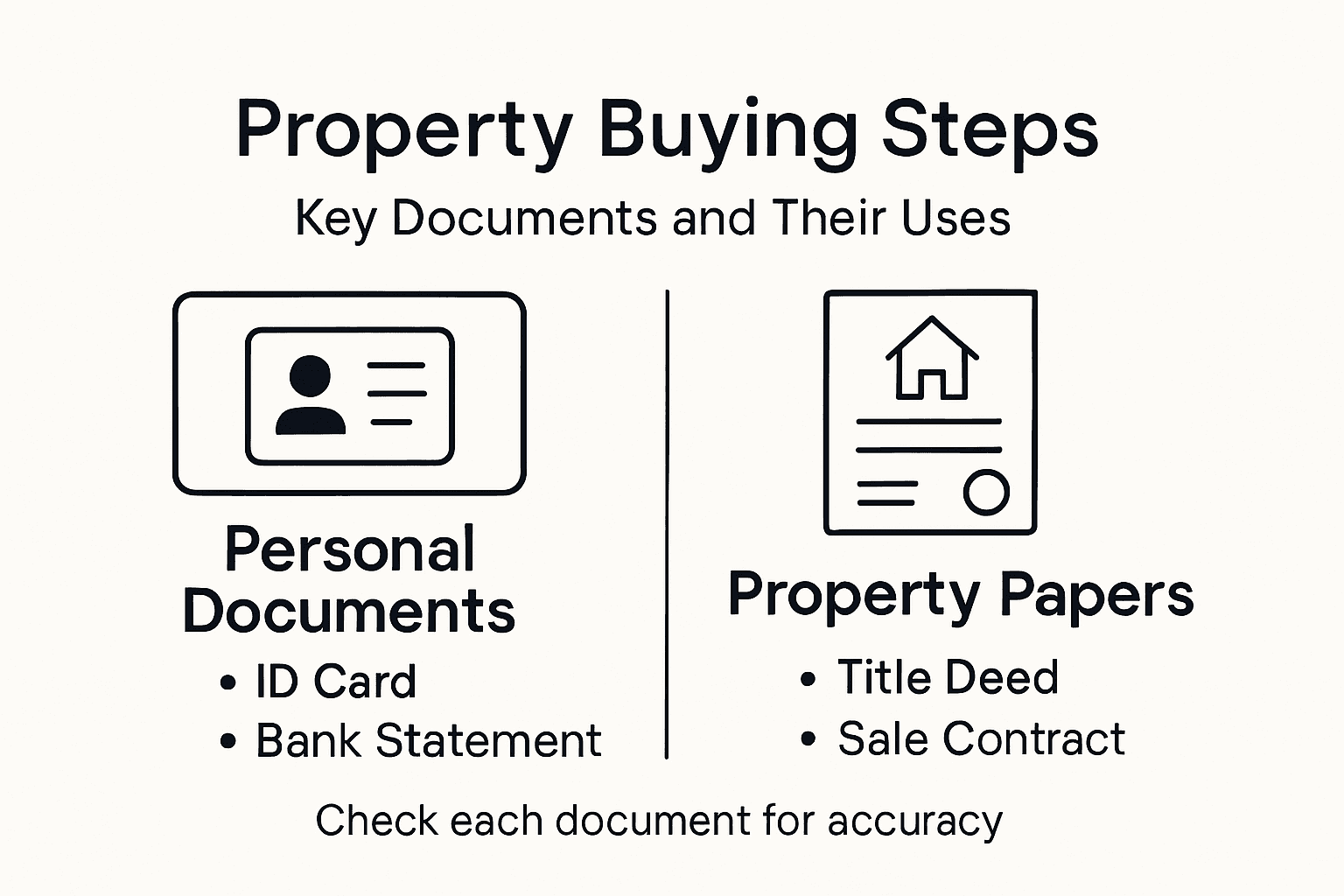
Pro tip: Create a detailed spreadsheet tracking each document’s submission date, recipient, and confirmation status to streamline your document management process.
Verifying the authenticity of your property purchase documents is a critical step that protects your investment and ensures legal compliance. This process involves carefully confirming the legitimacy of every critical document through professional channels.
Start by working with a certified notary who can provide official authentication of your most important documents. Professional verification typically involves:
Professional document verification serves as your legal shield against potential fraud or misrepresentation.
Seek verification from multiple professionals to create a comprehensive validation process. This might include:
The following table clarifies the roles of key professionals in the document verification process:
| Professional | Main Responsibility | Benefit to Buyer |
|---|---|---|
| Notary Public | Certifies signatures and copies | Ensures legal authenticity |
| Real Estate Attorney | Reviews title and contract terms | Prevents legal disputes |
| Title Company | Verifies ownership and liens | Confirms clear property title |
| Legal Doc Specialist | Checks document completeness | Reduces risk of errors |
Remember that each verification step adds an extra layer of protection to your property transaction. Thorough documentation validation can prevent potential legal complications and provide peace of mind during your home purchase.
Pro tip: Request multiple certified copies of key documents and store them in separate secure locations to ensure you always have accessible proof of verification.
Finalizing your property purchase agreements requires meticulous attention to detail and comprehensive legal review. This critical stage transforms your property acquisition from a potential transaction into a binding, legally enforceable commitment.
Purchase agreement guidelines recommend thoroughly examining every aspect of your legal documents. Key areas to scrutinize include:
A carefully reviewed agreement protects your interests and prevents future legal complications.
Work closely with a real estate attorney to review contract terms and ensure comprehensive documentation. Your final review process should include:
Remember that every word in your agreement matters. Small details can have significant legal implications, so take your time and don’t hesitate to ask questions or request clarifications.
Pro tip: Create a detailed checklist of all contract terms and cross-reference it multiple times to ensure nothing is overlooked during the final review.
Navigating the complex documentation process for property buyers can feel overwhelming. From organizing critical financial documents to verifying disclosures and finalizing legal agreements every step demands precision and clarity. This article highlights key challenges like document authenticity, timely submissions, and detailed contract reviews that can create uncertainty and delay your home purchase.
At Yigal Realty, we understand these pain points and provide personalized guidance tailored to buyers in Beit Shemesh and surrounding areas including observant and religious communities. Our expertise in handling all aspects of the home buying documentation process ensures you avoid costly mistakes and last-minute surprises. Explore our comprehensive property listings and benefit from transparent, professional support from start to finish.
Ready to move forward with confidence and gain exclusive access to special developments? Visit Yigal Realty’s main site today to connect with our experienced agents who make your real estate goals a reality. Don’t wait let us help you master every step of the documentation process now.
To prepare for buying a property, gather essential documents such as tax returns from the past two to three years, recent pay stubs, bank statements, and credit reports. Organize these documents in a secure location to demonstrate your financial readiness to potential lenders.
Carefully examine seller disclosure documents that outline the property’s condition and history. Take notes on any potential issues and compare these disclosures with independent inspection reports to identify any discrepancies.
Prepare a comprehensive document package for different parties, including your lender, real estate attorney, and title company. Track submission dates and confirmations to ensure all required documents are accurately submitted and to maintain the momentum of your property purchase.
Collaborate with a certified notary to authenticate important documents. This can involve comparing original documents with copies and obtaining official notarial stamps to confirm their legitimacy and prevent fraud.
Examine every aspect of your purchase agreement, including the property description, financial terms, and contingency clauses. Work closely with a real estate attorney to verify that all details are accurate and aligned with your expectations to avoid future legal complications.
Maintaining both digital and physical copies of your important documents ensures you have accessible proof when needed. This dual approach protects against loss and provides reassurance throughout the home buying process.