

Ramat Beit Shemesh (Alef, Bet, Gimmel and Dalet) forms the city’s Haredi core, while Neve Shamir and Ramat Shilo lean more mixed and Anglo-friendly, and Old Beit Shemesh and Givat Sharett sit somewhere in between. Municipal planning and housing tenders keep shifting these lines, so the map below is a starting point, not a fixed rule. We break down each area so you can match your community needs to the right streets.
TL;DR:
- Alef and the C sections suit Haredi and Modern Orthodox families who speak English and want established schools, synagogues, shopping, and community networks.
- Bet, Gimmel, and Dalet have the strongest Haredi character, while Neve Shamir was planned as more mixed but has shifted toward a stronger Haredi presence.
- Tender wording and lottery allocations can alter a project’s intended religious mix, so newer phases deserve extra scrutiny because their character may keep changing.
- Visit candidate streets on Friday afternoon and weekday mornings, then ask about school networks, nearby synagogues, English language services, and daily needs before choosing.
- Check apartment size, school fit, walking access to kosher shops and a mikveh, and transport options that respect Shabbat before committing.
Beit Shemesh has grown fast over the past decade, and most of that growth has landed in Ramat Beit Shemesh. The 2025 Haredi society report identifies the Haredi community as one of Israel’s largest population groups, and its geographic expansion has concentrated heavily in cities like Beit Shemesh where land and housing supply allow new neighborhoods to form around ye shivas, synagogues and school networks. The Central Bureau of Statistics tracks these population shifts at the district and city level, giving planners and buyers a baseline for how fast specific areas are filling in.
Ramat Beit Shemesh functions as the city’s primary expansion zone. Master planning there has followed a pattern common across Israel: large tracts get zoned, infrastructure goes in, and then the religious character of each phase gets set largely by who buys in first and which school or synagogue networks establish themselves early.
Housing allocation programs also shape who ends up living where. The Mechir Lemishtaken discounted-housing track, along with standard municipal tenders, can tilt a neighborhood’s intended population mix depending on how a listing is worded and marketed, a dynamic we cover in more detail later in this guide.
A few points worth keeping in mind as you read the neighborhood profiles:
Each Beit Shemesh neighborhood has its own religious character, housing stock and community infrastructure. Here is what distinguishes the main areas.
Ramat Beit Shemesh Alef is one of the most established sections and draws a strong mix of English-speaking Haredi and Modern Orthodox families. Building stock here runs from older four-story walk-ups to newer construction, and the area supports a dense network of synagogues, school options and shopping along its main commercial strips. According to Times of Israel reporting on Ramat Beit Shemesh, Alef and the adjacent C sections are particularly popular with Anglo families looking for an established, English-friendly religious community.
Ramat Beit Shemesh Bet carries a distinct identity tied to a strong Eda Haredit presence, with a more insular, stringently observant character than Alef. Housing tends toward smaller apartments suited to large families, and community life centers heavily on neighborhood synagogues and local schools tied to specific Hasidic or Litvish affiliations rather than broader citywide institutions.
Ramat Beit Shemesh Gimmel and Dalet extend the Haredi character of Bet into newer construction, with Dalet in particular representing some of the most recent building phases. These sections have become a focal point in reporting on shifting neighborhood composition, since newer phases are still settling into their long-term religious identity as buyers move in.
Neve Shamir, sometimes referred to as Ramat Beit Shemesh Hey, was planned differently from the start. Reporting on the area notes buildings of ten or more floors and fewer synagogues per capita than the older Ramat Beit Shemesh sections, along with fewer apartments designed with sukkah balconies, features typically associated with a more mixed, less exclusively Haredi population. That said, recent Times of Israel coverage documents tender wording and marketing shifts that have pushed Neve Shamir toward a more Haredi composition than originally planned, a tension we unpack in the next section.
Ramat Shilo offers a smaller-scale, more suburban feel with a mixed national-religious and Modern Orthodox population. It tends to draw families who want religious community life without the density or insularity of the larger Ramat Beit Shemesh sections, and it has its own pocket of English-speaking residents.
Old Beit Shemesh and Givat Sharett represent the city’s more established, lower-density areas. Givat Sharett in particular has a long-running mixed religious and secular population, with religious residents generally favoring a more moderate, community-oriented lifestyle over strict neighborhood-wide observance norms.
For a fuller breakdown of specific streets and sub-sections, our list of popular neighborhoods in Beit Shemesh covers the finer distinctions buyers often miss on a first visit.
Pro Tip: Walk a neighborhood on a Friday afternoon and again on a weekday morning. The two visits show entirely different sides of community life.
Neighborhood identity in Beit Shemesh is not fixed by zoning alone. It is shaped by who wins housing tenders and how those tenders get worded and marketed.
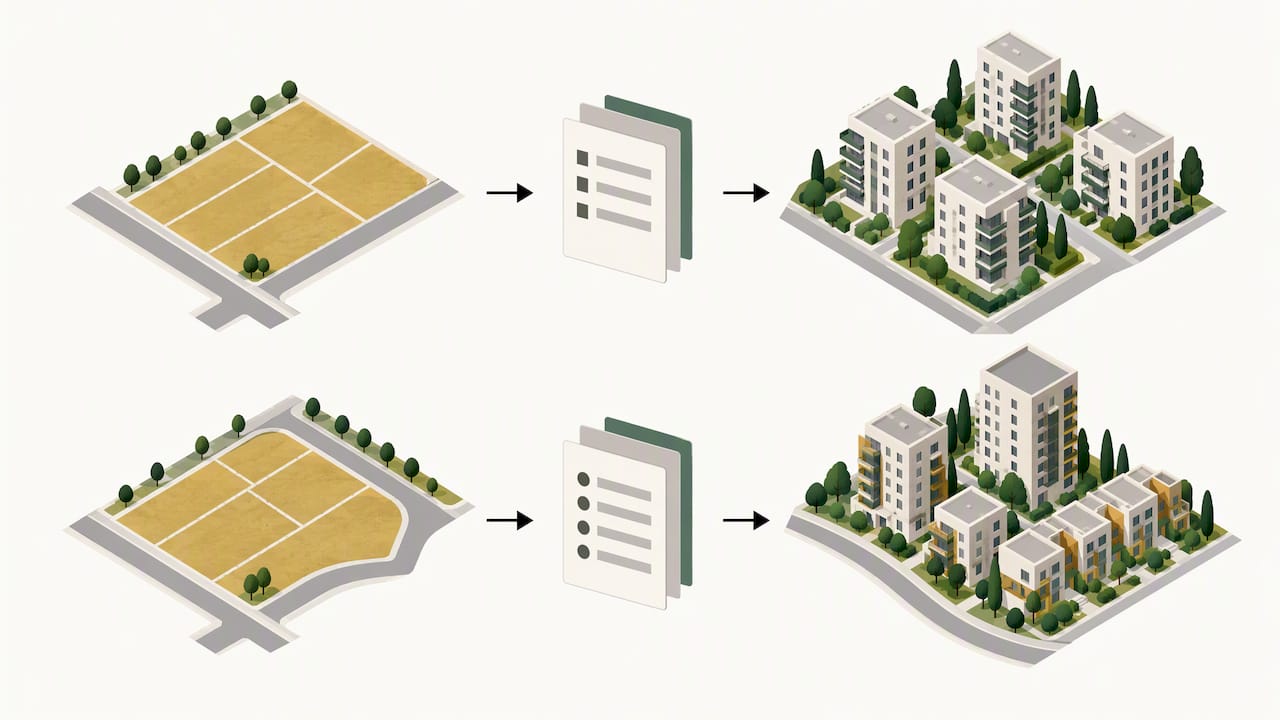
The Mechir Lemishtaken discounted-housing program distributes units by lottery to eligible buyers, but Ynet reporting on allocation outcomes in Ramat Beit Shemesh Dalet and Neve Shamir found that lottery winners did not always match the religious composition municipal planners intended, producing neighborhoods that ended up more mixed, or more uniformly Haredi, than originally designed. The municipality has at times attempted to adjust allocation rules to preserve a neighborhood’s intended character, with mixed success.
More recently, Times of Israel reporting describes a pattern where added language in a tender listing, signaling a project as suited to a specific sector, shifts marketing and buyer interest even before construction finishes. The same reporting notes that tens of thousands of Haredi residents moved into Beit Shemesh between 2016 and 2021, a wave that has outpaced the pace at which some older neighborhoods expected to absorb new residents, pushing the city to lean on its approved master plan for further growth.
Once a critical mass of one religious sector settles into a neighborhood, demographic momentum and housing-market pressure tend to pull in more of the same, which can reshape an area’s character within a single planning cycle.
For buyers, this means a neighborhood’s current description is not a guarantee of what it will look like in five or ten years.
Our guide to Beit Shemesh housing developments walks through what to check before committing to a pre-construction unit in a newer phase.
Matching a neighborhood to your family takes more than checking a map. Work through these questions before you commit:
At a viewing, ask directly which school network most neighborhood children attend and whether there are unwritten norms around dress, noise or use of shared public space. These details rarely show up in listings but shape daily life more than finishes or floor plans.
Pro Tip: For Anglo-Olim especially, prioritize community infrastructure, schools, shuls and English-language support, over a slightly lower price in a neighborhood where you would be starting from scratch socially.
Our first-time buyer checklist expands on several of these points with practical next steps for your first visit.
Finding the right religious or semi-religious neighborhood in Beit Shemesh often comes down to details that do not show up in a listing: which school network dominates a street, how a tender’s wording signals its intended buyer, or where English-speaking minyanim actually meet. We specialize in Beit Shemesh and the surrounding area, and our work focuses on reading those details for buyers before they sign anything.
For readers who want the on-the-ground picture of English-language prayer life in the city, our guide to minyanim in English in Beit Shemesh is a useful starting point.
The neighborhoods that look nearly identical on a map can feel completely different depending on when you visit and who you meet there. Walk each candidate street at more than one time of week, and introduce yourself at a shul or minyan before you fall in love with a floor plan. Community fit and school access hold their value longer than a bargain price on a unit in an unproven phase.
— Spiros
Picking between Ramat Beit Shemesh Bet’s insular community and Ramat Shilo’s mixed, suburban feel is easier with someone who reads tender language and neighborhood shifts for a living. Our concierge project guidance walks you through which developments fit your religious practice, family size and budget, with early access to listings before they go wide.
Reach out through our concierge guidance page to start matching a neighborhood to your family’s needs.
Ramat Beit Shemesh Bet, Gimmel and Dalet carry the strongest Haredi character in the city, with Bet known for its Eda Haredit presence. Ramat Beit Shemesh Alef is also heavily religious but draws a wider mix of English-speaking Haredi and Modern Orthodox families.
Neve Shamir, also called Ramat Beit Shemesh Hey, was planned as a more mixed area with taller buildings and fewer synagogues than other Ramat Beit Shemesh sections. Recent reporting shows its character has shifted toward a stronger Haredi presence through tender wording and buyer demand.
English-speaking Modern Orthodox and Haredi families most often settle in Ramat Beit Shemesh Alef and the C sections, along with pockets of Ramat Shilo, where established Anglo communities, English-language minyanim and familiar school networks already exist.
Housing tenders and allocation programs like Mechir Lemishtaken can shift a neighborhood’s intended population once added wording or marketing signals it as suited to a particular sector. Once enough buyers from one group move in, demographic momentum tends to draw in more of the same within a short period.
We offer concierge project guidance that helps buyers match their religious practice and family needs to the right Beit Shemesh neighborhood. Our services include early access to developments and support tailored to international and religious buyers.