%20(4).png)
![[background image] image of cityscape background (for an architect firm)](https://cdn.prod.website-files.com/68961ade6feff9cbdffc080d/69384e066e0e9a310b6817f8_061f6bac-48bf-44b8-a689-078dacd8009f.avif)
Twelve neighborhoods define Beit Shemesh’s housing map, and the right pick usually comes down to hashkafa, budget, and how much commute you can stomach. For established Anglo-Dati-Leumi community with strong infrastructure, look at Ramat Beit Shemesh Aleph (including the Mishkenos Yaakov and M3 pockets). For a heavily Haredi, walkable environment, it’s Ramat Beit Shemesh Bet. For new construction at a lower entry price, Ramat Beit Shemesh Gimmel and Daled lead the way, with Neve Shamir (RBS Hey) and Ramat Shilo close behind. Older, service-rich pockets like Givat Sharett, Sheinfeld, Nofei Aviv, Migdal HaMayim, and Nahala U’Menucha round out the list for buyers who want mature schools and shopping already in place. The city itself has grown from under 13,000 residents in 1983 to roughly 176,786 in 2024, and a 2017-approved master plan tied to Ramat Beit Shemesh’s expansion adds tens of thousands of new units across these same neighborhoods.
Here’s the shortlist, with a one-line read on who each area actually suits:
Choosing among Beit Shemesh’s neighborhoods comes down to matching hashkafa, school access, and commute tolerance to a budget band, since no single area wins on every metric.
| Point | Details |
|---|---|
| Established vs. new construction | RBS Aleph, Sheinfeld, and Givat Sharett offer built-out schools and shops; Gimmel, Daled, and Neve Shamir trade that for lower prices and more space. |
| Anglo community concentration | RBS Aleph and M3 hold the densest English-speaking infrastructure, from synagogues to playgroups. |
| Commute depends on location | Givat Sharett’s proximity to the train station makes it the strongest pick for Jerusalem or Tel Aviv commuters. |
| Growth is reshaping resale value | The city’s master plan adds 17,000 units, and areas gaining new commercial centers tend to see stronger long-term demand. |
| Local guidance speeds up the search | Yigal Realty’s agents can match your family to a specific neighborhood and arrange tours before you commit to a purchase. |
Before touring a single property, it helps to see how these areas stack up side by side. The comparison below covers who each neighborhood tends to suit, what the housing stock looks like, and how car-dependent daily life is.
| Neighborhood | Best For | Housing (age/type) | Amenities | Affordability | Transport & Commute |
|---|---|---|---|---|---|
| RBS Aleph (incl. M3) | Anglo & Dati Leumi families | 1990s–2010s apartments, some private homes | 130-store shopping area, parks, synagogues | Mid to upper | Bus routes strong; walkable core |
| RBS Bet | Haredi families | Mostly modern apartment blocks | Dense minyanim, shops, schools | Mid | Bus-dependent, limited parking |
| RBS Gimmel | New-construction buyers | New builds, 2010s onward | Growing but still filling in | Lower to mid | Car often needed short-term |
| RBS Daled | Investors, early buyers | Newest builds | Sparse initially, expanding | Lower | Car recommended |
| Neve Shamir (Hey) | Growing Haredi families | New apartments | Limited but developing | Lower to mid | Car helpful |
| Ramat Shilo | Semi-established buyers | Mostly 2010s apartments | Moderate, improving | Mid | Bus and car mix |
| Givat Sharett | Mixed, secular-friendly households | Older apartments, some houses | Near train station, established shops | Mid | Strong rail access |
| Sheinfeld | Service-focused families | Older, established | Full school and shop network | Mid | Bus-friendly |
| Nofei Aviv | Budget-conscious families | Older apartments | Established parks and shops | Mid to lower | Car useful |
| Migdal HaMayim | Small households | Older, smaller units | Basic but complete | Lower to mid | Car recommended |
| Nahala U’Menucha | Quiet-seeking residents | Older housing stock | Modest, central proximity | Lower to mid | Bus access decent |
The biggest tradeoff across this table isn’t price. It’s timing. Newer sections like Gimmel, Daled, and Neve Shamir offer larger, cheaper units, but industry observers note that new neighborhoods often lack mature school networks and full commercial services for several years after the first residents move in. Established areas like Sheinfeld or Givat Sharett trade that uncertainty for smaller lots and higher per-square-meter prices.
Statistic callout: Beit Shemesh’s population climbed from about 12,956 residents in 1983 to roughly 176,786 by 2024, and the city’s approved master plan adds 17,000 additional housing units plus 53 hectares of new commercial zoning. That kind of growth pressure is exactly why newer Ramat Beit Shemesh sections keep filling in faster than their amenities can keep pace.
Ramat Beit Shemesh Aleph is the anchor neighborhood for English speakers moving to Beit Shemesh. It houses roughly 25,000 residents, a shopping strip of about 130 stores, and a dense concentration of English-speaking synagogues and schools. Housing runs from 1990s walk-ups to newer 2010s apartment buildings, and the community mix leans Dati Leumi with a significant Anglo population. Families relocating from the US or UK often start their search here because the infrastructure, from English-language playgroups to Anglo-run medical clinics, is already in place.
Mishkafayim, sometimes called the M3 area, sits within greater Aleph but functions almost as its own micro-neighborhood. It skews slightly younger and slightly newer in construction, with the same community feel as Aleph but a bit more breathing room on price.
Ramat Beit Shemesh Bet is predominantly Haredi, dense, and built around walkability to yeshivas, kollels, and shuls rather than commuting convenience. Apartment buildings here tend to be more uniform and utilitarian than Aleph’s mixed housing stock, and prices sit a notch below Aleph for comparable square footage.
Ramat Beit Shemesh Gimmel and Ramat Beit Shemesh Daled are where the city’s growth is most visible right now. Both are newer, largely Haredi-oriented sections still filling in their commercial cores. Community guides describe this as a pattern seen throughout Ramat Beit Shemesh’s development since the late 1990s: new sub-neighborhoods arrive with modern buildings first, then schools and shops follow over several years. Buyers get more space for less money, but you should expect to drive for groceries and errands during the first stretch after moving in.
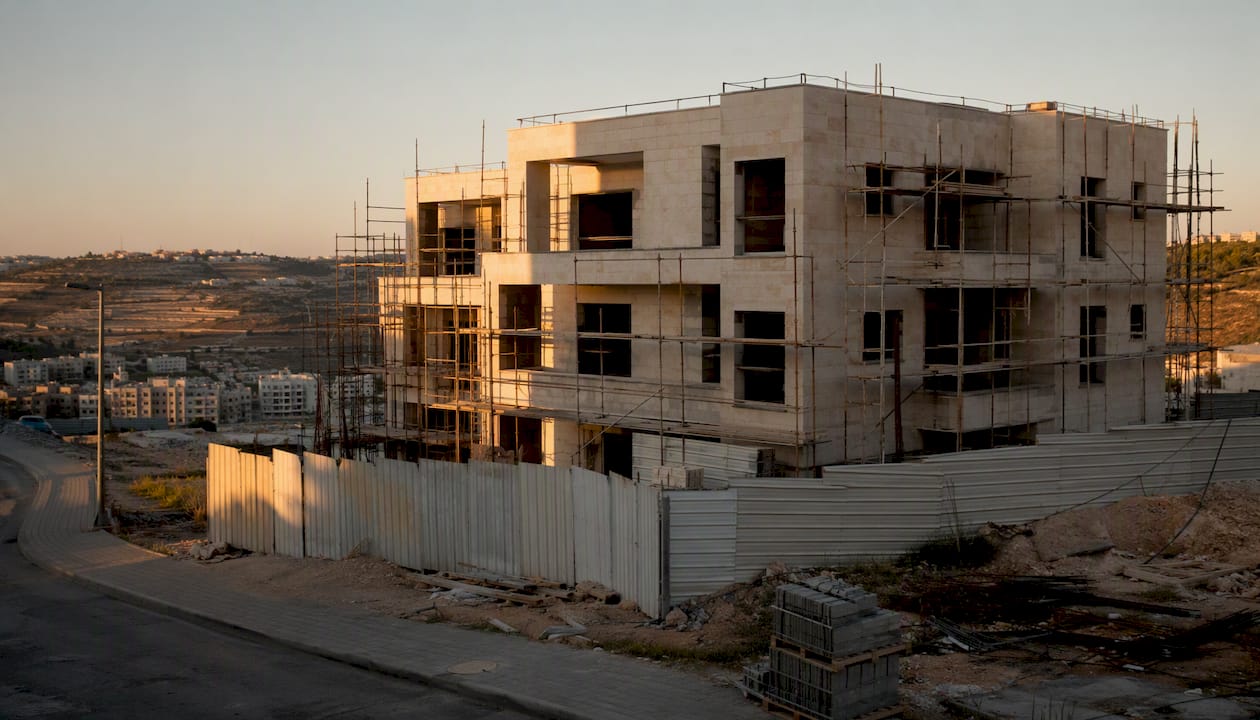
Neve Shamir, also referred to as RBS Hey, follows the same growth pattern as Gimmel and Daled but with a slightly more established feel closer to Bet. Ramat Shilo offers a quieter, semi-established alternative, popular with families who want RBS proximity without RBS density.
Givat Sharett stands apart from the Ramat Beit Shemesh cluster entirely. It’s older, more religiously mixed, and sits within easy reach of the train station, making it the pick for anyone prioritizing rail commuting to Jerusalem or Tel Aviv. The rail connection cuts the Jerusalem commute to about 25 minutes, which matters if one household member works outside the city.
Sheinfeld, Nofei Aviv, Migdal HaMayim, and Nahala U’Menucha are the city’s older, quieter pockets. Schools, synagogues, and grocery stores are already established, which is exactly what draws buyers who don’t want to gamble on a neighborhood still under construction. Prices in these areas tend to sit lower than Aleph, since the housing stock is older and units run smaller.
Pro Tip: Before signing anything, visit on a weekday morning and a Shabbat. Weekday visits show you the commute and school pickup chaos; a Shabbat visit tells you whether the local minyan schedule and community vibe actually match your family’s hashkafa.
If you want to see how these neighborhoods sit relative to each other geographically, Yigal Realty’s neighborhood pages include maps and links to the main shopping and park hubs for each area, which is worth pulling up alongside this profile list before you book viewings.
Pick your neighborhood by matching lifestyle, schools, and commute first, then let price narrow the field. Reversing that order is the single most common mistake buyers make, because a great price on a home two bus transfers from the nearest English-speaking shul rarely stays a bargain once the daily friction sets in.
On budget bands: entry-level buyers chasing newer construction tend to land in Gimmel, Daled, or Neve Shamir, where per-square-meter costs run lower but you’re paying in patience for maturing infrastructure. Mid-range budgets fit comfortably in Aleph, Ramat Shilo, or Sheinfeld. Buyers stretching toward the top of the market usually end up comparing larger units in Aleph against private homes in Givat Sharett. Whatever your band, a family-focused buying checklist helps keep viewings organized instead of overwhelming.
Beit Shemesh’s approved master plan is the single biggest factor reshaping which neighborhoods will feel most livable five years from now. The plan adds roughly 17,000 housing units and 53 hectares of new commercial zoning across Ramat Beit Shemesh’s subdistricts, and that construction wave is still working its way through Gimmel, Daled, and Neve Shamir.
| Milestone | Timeframe | Expected Impact |
|---|---|---|
| Master plan approval | 2017 | Set the framework for 17,000 new units across RBS subareas |
| RBS Aleph buildout | Late 1990s–2010s | Matured into today’s shopping and school hub |
| RBS Gimmel/Daled expansion | 2010s–ongoing | New construction outpacing commercial infrastructure |
| Neve Shamir (Hey) growth | Ongoing | Following the same delayed-amenity pattern as Gimmel |
| Population growth to 176,786 | By 2024 | Sustained demand pressure across all subareas |
The practical implication: if you buy in Gimmel or Daled today, expect a few years of construction noise and a commute that leans on a car more than public transit. In exchange, you’re buying into a neighborhood where new commercial centers and improved amenities tend to lift resale values as they finish filling in. If you buy in an established area like Sheinfeld or Givat Sharett, you skip that waiting period entirely, but you’re also less likely to see the same percentage price appreciation over the next decade.
One caution worth flagging: population figures for Beit Shemesh vary by source and year. Some aggregators put the 2026 estimate closer to 161,755, while municipal-adjacent reporting cites the higher 2024 figure. Treat any single population number as a directional signal rather than a fixed fact when you’re sizing up demand in a specific neighborhood.
This list combines municipal planning documents, population data, community directories, and on-the-ground brokerage insight from Yigal Realty’s agents working these neighborhoods day to day.
Data checks behind this guide were run against sources current as of early 2026, though population estimates in particular shift often enough that they’re worth re-verifying before you commit to a specific area.
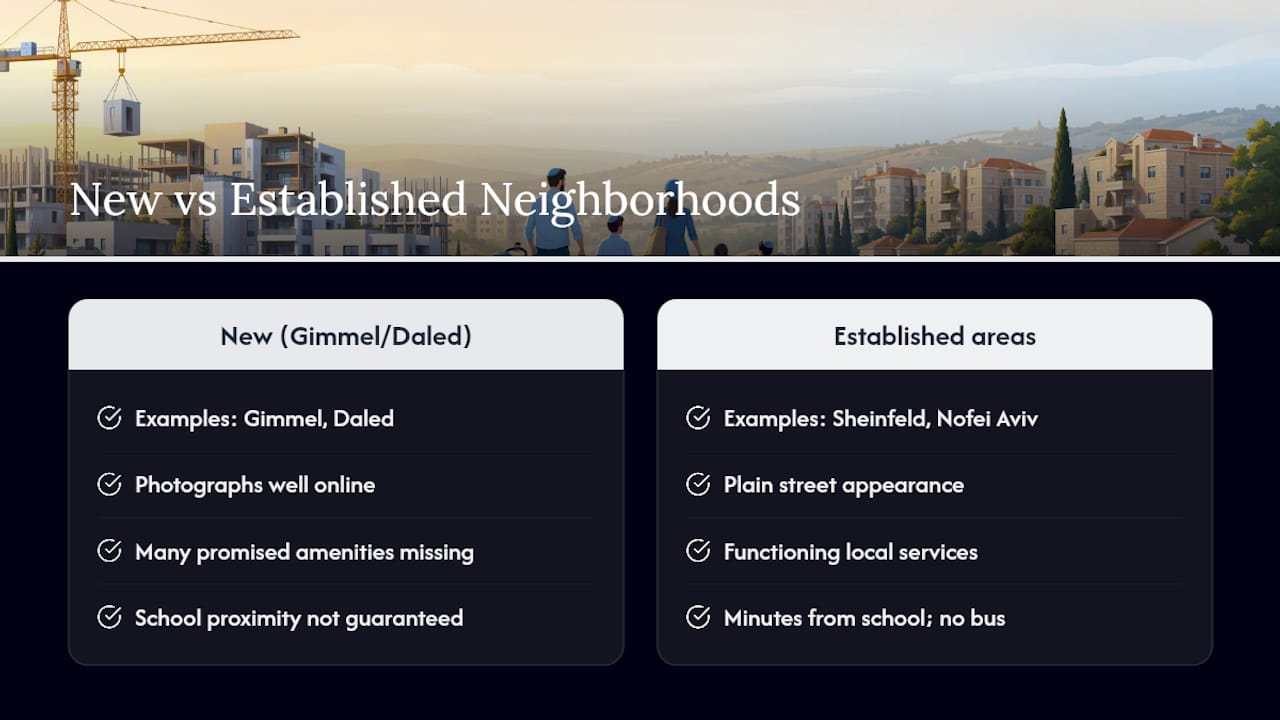
Spend enough time comparing Beit Shemesh neighborhoods and a pattern emerges: the areas that photograph well online aren’t always the ones that feel right in person. Newer sections like Gimmel and Daled look impressive in listing photos, all fresh stone facades and wide streets, but that polish can mask a neighborhood still missing half its promised infrastructure. Meanwhile, an older building in Sheinfeld or Nofei Aviv might look plain from the street while sitting three minutes from a school your kids will actually attend without a bus ride.
The Anglo community draw is real, and it’s a genuine reason to consider Aleph or M3 over other options. But community observers rightly caution against treating that community as a substitute for actual integration. The families who settle in fastest are the ones who join a local shul, sign up for a neighborhood WhatsApp group, and show up to the grocery store enough times that the cashier starts recognizing them, not the ones who stay inside an English-only social circle.
For anyone weighing new construction against an established block, my honest read is this: buy new if you can tolerate two or three years of unfinished amenities in exchange for lower entry price and more space. Buy established if your family needs school certainty and a functioning shul on day one. Meet the neighbors before you meet the mortgage broker.
If you want on-the-ground help matching your family to the right neighborhood instead of guessing from listing photos, Yigal Realty can walk you through it directly. The firm’s agents work these exact neighborhoods daily, which means you get real answers on which Gimmel block still lacks a grocery store and which Sheinfeld street has the shortest walk to the nearest English-speaking minyan, not generic listing copy.
Start by browsing current Beit Shemesh housing developments or reach out through the Yigal Realty homepage to set up a neighborhood tour tailored to your family’s budget and hashkafa.
For a deeper look at the buying process once you’ve settled on a neighborhood, Yigal Realty’s guide on first-time buyer checklists covers the paperwork side step by step.