

The areas most often described as religious or effectively closed in Beit Shemesh are Ramat Beit Shemesh Alef, Bet, Gimmel, and Daled, along with Neve Shamir, also called Ramat Beit Shemesh Hey, plus a handful of older enclaves near the city center. Most of these areas skew Haredi or otherwise observant, but the character of any single street or building can differ sharply from the neighborhood’s reputation.
TL;DR:
- Daled and Neve Shamir are still filling in their planned units, with Daled expected to significantly shift local demographics once fully built.
- Marketing language in tenders often indicates the target religious community, so checking construction stages and purchase conditions helps assess future neighborhood character.
- The immediate community around a specific address, including synagogue density, school streams, and signage language, is more important than neighborhood labels.
- Observing street activity during Shabbat and confirming local amenities before buying prevents misunderstandings about the community’s true environment.
- A local real estate agent can provide tailored guidance by walking the actual streets and interpreting municipal plans, avoiding reliance on neighborhood names alone.
Ramat Beit Shemesh sits on the higher ground southeast of the older city center, and its letters mark distinct construction phases rather than a single master plan. Ramat Beit Shemesh Alef and Bet were built first and house a mix of Haredi, Dati Leumi (national religious), and some Anglo immigrant families, according to the neighborhood’s Wikipedia entry. Gimmel followed with a stronger Haredi concentration, and Daled is the newest large-scale expansion, planned for 8,300 residential units aimed largely at growing Haredi families, per the same Wikipedia entry.
Neve Shamir, marketed under the letter Hey, sits adjacent to Daled and was originally conceived as a mixed development. Reporting from The Times of Israel found that marketing later shifted toward Haredi buyers, and occupancy still trails the plan.
A quick orientation for readers comparing names in listings:
Labels like modern-Orthodox, Dati Leumi, Yeshivish, and various strands of Haredi observance describe broad approaches to religious practice, but they rarely map cleanly onto a neighborhood boundary. A street can lean Yeshivish while the next block over is largely Dati Leumi, and a single building sometimes mixes both.
Buyers who want a realistic read on a specific address can look for a few concrete signals:
Community observers cited by Nefesh B’Nefesh describe Ramat Beit Shemesh as a mosaic of Torah communities, each with its own character, and advise treating the neighborhood name as a starting point rather than a conclusion.
Pro Tip: Walk the actual block on a Friday afternoon before deciding anything, since that hour tells you more about a street’s character than any listing description.
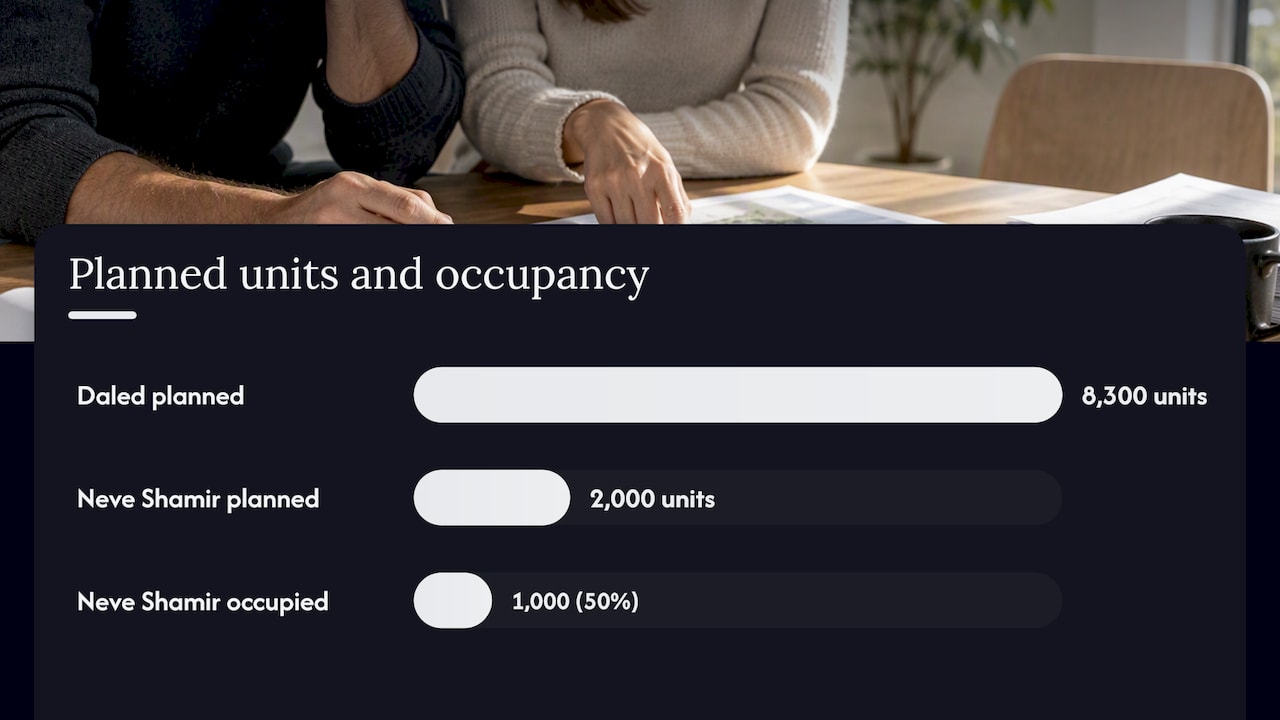
Construction in Daled and Neve Shamir is the main engine behind demographic change in this part of the city. Daled’s plan calls for 8,300 new units, a scale large enough to shift the balance of an entire district once fully built, according to Wikipedia.
About 1,000 families were living in Neve Shamir out of roughly 2,000 planned units as of mid-2024, according to The Times of Israel, meaning the neighborhood is still filling in and its eventual character is not yet fixed.
Tender language plays a direct role in who ends up buying. Some tenders in the area have carried wording indicating suitability for ultra-Orthodox populations, alongside state-arranged affordable-sale programs, a pattern documented by The Times of Israel. That kind of language steers marketing toward specific buyers well before a single family moves in, and it is worth reading closely if you want to understand where a project is headed. Buyers can track construction stages and absorption pace directly with a local agent, since published unit counts describe the plan, not the current occupancy on the ground.
Daily life in Beit Shemesh’s religious neighborhoods runs on synagogue density, school access, and kosher commerce, and these details matter more than curb appeal for most observant buyers. A block with three or four synagogues within a five-minute walk signals a different kind of community than one with a single shul serving a wide radius.
Key services worth checking before you commit to an area:
Public transport connects Beit Shemesh to Jerusalem in well under an hour by bus or rail, which makes commuting workable for families who need access to the capital for work or yeshiva study. A Ynet neighborhood feature also flags parks, green views, and proximity to main roads as meaningful quality-of-life factors in Ramat Beit Shemesh Alef specifically.
A short, ordered checklist can save months of frustration if an area turns out to be a poor fit. Work through these steps before you sign anything:
Watch for a few red flags in particular: explicit exclusionary language in building rules, or marketing materials that describe a mixed community while municipal plans show a single population being targeted. Local agents note that a project’s early marketing sometimes outpaces the reality on the ground, so cross-check both sources rather than relying on either alone. Reviewing the ideological signals on a specific street, as outlined in this buyer’s guide to assessing Israeli real estate, is worth doing before you view a property, not after.
Pro Tip: Ask a prospective agent for the names of two or three synagogues on the actual block, not just the neighborhood, since a vague answer usually means they have not walked the street themselves.

A real estate agency focuses on Beit Shemesh and the surrounding area, offering concierge project guidance to help buyers understand a community’s religious character before they commit. Services offered include assistance with early access to new project listings, guidance on Sabbath-related considerations during the buying process, and help interpreting municipal planning documents and tender language for signs of future demographic shifts.
An agent who works these neighborhoods daily can walk a buyer through a project’s housing development details and flag which signals matter most for a given household. Before a consultation, bring any listing you are considering, a list of your school and synagogue requirements, and questions about the building’s current resident mix.
The biggest misconception is that a neighborhood’s name tells you everything. It does not. Two apartments on the same block can sit inside completely different communities depending on the building’s history and its current residents.
The real work is verifying the immediate community around a specific address, not the label attached to the district.
— Spiros
Yigal Realty’s concierge project guidance walks observant buyers through the specific streets and buildings behind a listing, not just the neighborhood name on a map. Reach out through the Yigal Realty project guidance page to request early access to current listings in Ramat Beit Shemesh and Neve Shamir and get answers tailored to your household’s needs.
Neve Shamir, also called Ramat Beit Shemesh Hey, is a newer development adjacent to Ramat Beit Shemesh Daled. It was originally planned as a mixed community, but marketing has shifted toward Haredi buyers, with about 1,000 families living there out of roughly 2,000 planned units as of mid-2024.
Beit Vegan is not one of the core neighborhoods covered in Beit Shemesh planning and reporting reviewed here, and its character is not documented in these sources. Buyers interested in a specific address there should verify the local synagogue, school, and building mix directly rather than relying on the neighborhood’s general reputation.
Ramat Beit Shemesh Daled is the newest large-scale expansion of Ramat Beit Shemesh, planned for 8,300 residential units aimed largely at growing Haredi families. Construction and absorption are ongoing, so the neighborhood’s final character is still taking shape.
Beit Shemesh’s elevation is not covered in the sources used for this guide. Readers looking for that figure should check a mapping or municipal source directly.
Visit the street on a Friday afternoon and Saturday to observe Shabbat rhythms, and confirm which synagogues and school streams actually serve that block. Community experts recommend prioritizing street-level and building-level research over general neighborhood reputation.