%20(4).png)
![[background image] image of cityscape background (for an architect firm)](https://cdn.prod.website-files.com/68961ade6feff9cbdffc080d/69384e066e0e9a310b6817f8_061f6bac-48bf-44b8-a689-078dacd8009f.avif)
Government incentives shave real money off the cost of buying, building, or investing in a home, and they steer where developers choose to build in the first place. That’s the whole story in one line. The mechanics get more interesting: some programs work through subsidized mortgage rates, others through discounted state land, and others through direct cash grants tied to your personal status.
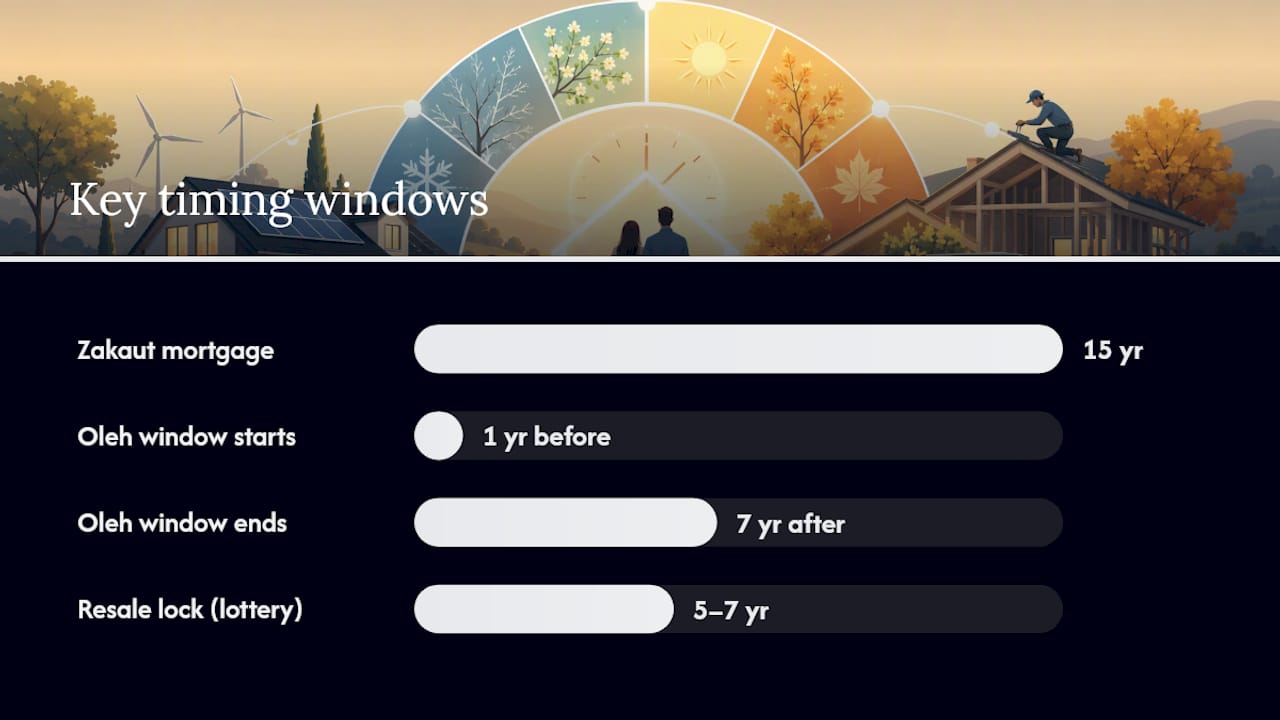
Three names matter more than the rest right now. The Zakaut mortgage gives eligible olim a government-backed rate for up to 15 years after aliyah. The Israel Land Authority (ILA) controls the land tenders that determine which projects get built and at what discount. And the Bank of Israel tracks how these programs ripple through the broader land market, including effects most buyers never see coming.
Here’s how the main channels break down:
Government incentives lower the effective cost of a home purchase or development project, but every discount carries a timing window, an eligibility test, or a resale restriction that determines whether it’s actually worth taking.
| Point | Details |
|---|---|
| Incentives change costs and location | Subsidized mortgages, tax tracks, and land programs lower effective price and steer developer activity toward priority areas. |
| Zakaut has an inflation catch | The mortgage rate is capped, but the CPI-linked principal means payments can still rise with inflation. |
| Lottery discounts carry resale locks | Dira B’Hanacha and similar programs offer 20% to 30% discounts but typically lock resale for 5 to 7 years. |
| Timing windows are strict | The oleh purchase-tax track runs from one year before to seven years after aliyah, with brackets frozen through January 2028. |
| Yigal-realty models the real cost | Yigal-realty runs eligibility checks and after-incentive cost comparisons so buyers and developers see the true tradeoff before committing. |
Every incentive falls into one of two buckets: the government either sets a price or rate directly, or it subsidizes someone else’s cost so they can pass on the savings. A capped mortgage rate is the first type. A developer grant that lowers construction cost per unit is the second.
Take the Zakaut mortgage as a working example. The rate is set as the Bank of Israel’s average rate on index-linked mortgages minus 0.5%, or a 3% cap, whichever is lower. That sounds like a clean discount until you notice the loan principal itself is CPI-linked. A low headline rate can still produce rising payments if inflation runs hot, because you’re paying interest on a principal that grows with the index.
Compare that to a one-time grant, like the Rehabilitation Department’s medical condition purchase grants, which pay out a fixed amount once and carry no ongoing indexation risk at all. Same government, two completely different risk profiles.
Supply-side incentives and demand-side incentives also work in opposite directions. Land marketing and developer subsidies change what gets built and where. Purchase grants and tax breaks change what a specific buyer pays for something that already exists or is already planned. Both affect the housing market, but they hit different points in the chain.
Pro Tip: *Before you value any incentive, check two things: is the loan or price linked to an index, and does accepting the discount lock you into a resale restriction?
Buyers and investors run into a fairly short list of recurring instruments. Here’s the practical rundown, matched to the categories you’ll actually see on official forms and developer paperwork.
The table below lays out how these compare on the details that actually matter when you’re deciding whether a program is worth pursuing.
| Who it’s for | Type | Typical amount or cap | Timing / how paid | Key restrictions | Where/how to apply |
|---|---|---|---|---|---|
| Olim (up to 15 years post-aliyah) | Mortgage subsidy | Rate capped at 3% or BOI average minus 0.5% | Monthly, over loan term | CPI-linked principal | Israeli banks |
| Olim, first home | Purchase-tax relief | Reduced-track brackets vs. resident schedule | Paid at purchase, one time | Usable 1 year before to 7 years after aliyah | Tax authority declaration |
| Lottery winners | Discounted land program | 20% to 30% below market | One-time purchase, multi-year construction | 5 to 7 year resale lock, index-linked price | Ministry of Construction and Housing |
| Developers on periphery sites | Development grant | Up to roughly ₪50,000 per unit | Tied to construction milestones | Tender commitments, delivery deadlines | ILA tender process |
| Medical rehabilitation cases | One-time grant | NIS 254,482 to NIS 311,620 | Single payment | Medical board approval required | Rehabilitation Department |
Every program in that table has its own paperwork trail, and matching the right form to the right office is half the battle. Yigal-realty’s breakdown of early-access opportunities covers how these lotteries interact with early project access for buyers who want a head start.
Eligibility hinges on status, timing, and sometimes both at once. First-time buyers, olim, reservists, families with special needs, and developers targeting periphery sites each sit in a different eligibility lane, and mixing them up costs real money.
Timing windows are unforgiving. The Zakaut mortgage is usable for up to 15 years after aliyah, not indefinitely. The oleh purchase-tax reduced track runs from one year before aliyah to seven years after it, and missing that window pushes you onto the standard resident schedule, which can mean a meaningfully higher tax bill on the same purchase.
Amounts vary by program and change over time, so treat any number here as a starting point, not a final figure to build a budget around. Purchase-tax brackets themselves were frozen from January 16, 2025 through January 15, 2028, which at least gives buyers a stable planning window for the next few years.
A statistic worth sitting with: Rehabilitation Department purchase grants for eligible medical conditions ranged from NIS 254,482 to NIS 311,620 as of January 1, 2025, and applicants may combine the higher entitlement with half of a second one under current rules.
Restrictions show up almost everywhere:
Subsidized land programs don’t just help individual buyers, they change how developers behave across an entire area. When the ILA markets land for a discounted lottery project, it effectively creates a second market running parallel to the regular tender system, and developers respond to that split.
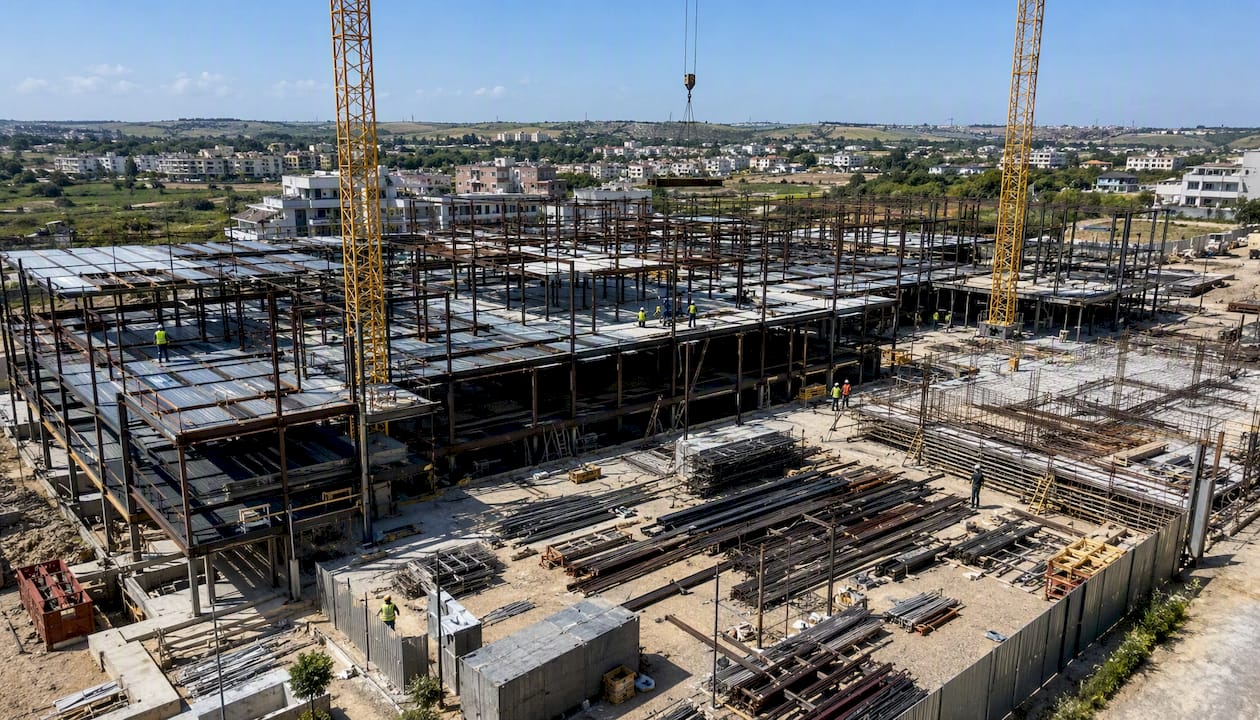
A Bank of Israel working paper found that proximity to subsidized housing raises bids in nearby non-subsidized land tenders, with the effect stronger in peripheral regions. Developers who can’t compete for the discounted project itself often bid more aggressively on adjacent land, betting the subsidized project will pull in infrastructure, buyers, and future demand.
Periphery-targeted development grants work on a different logic entirely. A site that wouldn’t pencil out financially on its own becomes viable once a per-unit subsidy narrows the gap between construction cost and expected sale price. Developers generally treat these grants as a buffer that makes an uneconomic project barely workable, not as a bonus layered on top of an already-profitable one.
Pro Tip: When a heavy subsidy lands on a specific locality, expect more volatile bidding on nearby tenders and longer lead times before construction and handover. Subsidized projects tend to attract more applicants than the pipeline can process quickly, so patience is part of the deal.
For a closer look at how these dynamics play out in practice, Yigal-realty’s guide to property development in Israel walks through the tender process from the developer’s side.
Knowing the programs exist is one thing. Deciding whether to use one, and how, is where most people get it wrong. Here’s a straightforward sequence to follow before you commit to anything.
Pro Tip: Investors chasing a “discount” on a lottery unit sometimes ignore that the same restrictions cutting the purchase price also cap your rental income and resale timeline. Run the numbers on actual cash flow, not just acquisition cost, before assuming you found an arbitrage opportunity. Yigal-realty’s guide on financing Israeli real estate is a useful companion when you’re stacking a subsidized mortgage against other financing routes.
The single most common error is valuing the headline number and skipping the fine print. A 30% discount on a Dira B’Hanacha apartment looks fantastic until you realize the resale lock keeps you from selling for years, and the price itself moves with a construction-cost index you never checked.
Timing mistakes are almost as common. Buyers occasionally start their purchase-tax paperwork outside the oleh reduced-track window, either too early or too late, and end up on the standard resident schedule by accident. Lottery timelines also run longer than people expect. Multi-year construction periods are normal, and treating a lottery win like an immediate purchase, rather than a multi-year commitment, sets up disappointment.
Watch for these red flags before signing anything:
Run three quick checks before you commit: confirm the exact resale lock length, ask directly whether the price is tied to a construction-cost index, and verify the developer’s subsidy commitments actually appear in the tender documents rather than in a sales brochure. Yigal-realty’s negotiation guide for homebuyers covers how to get these terms confirmed in writing.
Paperwork varies by program, but a few documents come up again and again across almost every incentive track.
Where you actually apply depends on the program: banks handle Zakaut mortgage applications directly, the Ministry of Construction and Housing runs the lottery programs, and the Rehabilitation Department processes disability-related purchase grants. Developers typically manage the paperwork trail for lottery-unit buyers once you’ve won an allocation.
Yigal-realty’s breakdown of home purchase costs in Beit Shemesh is a useful reference for lining up these documents against the actual line-item costs you’ll face at closing.
The same three scenarios come up over and over in client conversations. An oleh trying to time a purchase against the Zakaut and tax-relief windows. A reservist family weighing a lottery entry against priority allocation rules. A developer deciding whether a periphery grant makes a marginal site worth pursuing.
The oleh timing question is the trickiest one in practice. Someone who buys eleven months before finalizing aliyah paperwork can lose access to the reduced purchase-tax track entirely, simply because the window is measured in calendar time, not intent. We walk clients through the exact dates before they sign anything, because a tax-bracket mistake here can cost tens of thousands of shekels.
Reservist families evaluating a lottery entry face a different kind of decision. The discount is real, but so is the resale lock, and a family that might relocate for work in three years needs to weigh that restriction seriously against the savings. We model both paths, incentive and open market, side by side, so the tradeoff is visible rather than assumed.
For developers, the periphery grant conversation usually comes down to one question: does the subsidy change the project from unviable to viable, or is it just extra margin on something that already worked? That distinction changes how aggressively a developer should bid on a given tender.
Reading about Zakaut mortgages and Dira B’Hanacha lotteries is useful. Figuring out which ones actually apply to your situation, and modeling the real after-incentive cost against an open-market alternative, is where most buyers get stuck. That’s the gap Yigal-realty closes for clients buying in Beit Shemesh and the surrounding area.
Yigal-realty runs eligibility checks against your specific status, whether you’re an oleh inside the tax-relief window, a reservist considering a lottery entry, or a developer weighing a periphery tender. We build side-by-side cost models so you can see the incentive path and the open-market path with real numbers, not guesswork, and we support you through the actual application paperwork once you decide which route fits. If you want a clear answer on which programs apply to your purchase, request a consultation through Yigal-realty and get your eligibility checked before you commit to anything.
What is the role of government incentives in buying a home? Government incentives lower the effective price of a home through subsidized mortgages, purchase-tax reductions, and discounted state land programs, while also shaping where developers choose to build by making certain locations more financially attractive.
How does the Zakaut mortgage work for olim? Zakaut offers a capped, government-backed mortgage rate for up to 15 years after aliyah, but the loan principal is CPI-linked, so payments can still rise with inflation even though the rate itself is capped.
What is Dira B’Hanacha and how does the lottery work? Dira B’Hanacha markets ILA land at a discount, typically 20% to 30% below market price, through a lottery system that reserves a share of units for priority groups like reservists, with resale restrictions attached to winning units.
Do government incentives distort the housing market? They can. A Bank of Israel working paper found that subsidized land programs raise bids on nearby regular tenders and can reduce developer participation in standard land auctions near a subsidized project.
How long is the purchase-tax window for new immigrants? The oleh reduced purchase-tax track applies from one year before aliyah to seven years after it. Buying outside that window generally means falling back to the standard resident tax schedule.
This article is general information, not a substitute for advice from a qualified financial advisor. Consult a qualified financial professional about your own circumstances before acting on anything here.
Program terms, rates, and tax brackets change, so confirm current figures against official sources before finalizing a purchase.
Use official simulators and published tables directly before finalizing any purchase decision, since brackets, caps, and program terms are updated periodically.