%20(4).png)
![[background image] image of cityscape background (for an architect firm)](https://cdn.prod.website-files.com/68961ade6feff9cbdffc080d/69384e066e0e9a310b6817f8_061f6bac-48bf-44b8-a689-078dacd8009f.avif)
TL;DR:
- Property management involves multiple phases from onboarding to lease renewal, requiring careful oversight.
- US property management industry manages billions in assets, emphasizing the importance of professional oversight.
- Cross-border Israeli investments demand specialized managers familiar with religious community standards and local laws.
Property management is a $94 billion industry in the US, covering nearly 50 million rental units, yet most investors treat it as an afterthought. If you’re a US homebuyer or observant investor considering residential opportunities in Israel, the stakes are even higher. Cross-border ownership introduces layers of complexity that standard guides simply don’t address: local licensing, religious community requirements, and cultural expectations that can make or break your investment. This guide cuts through the noise and gives you a clear, practical picture of what property management actually involves, why it matters, and what you need to know before buying abroad.
| Point | Details |
|---|---|
| Core responsibilities | Property management involves a phased process including leasing, maintenance, and tenant relations. |
| Industry value | The US property management sector is a $94-102 billion industry with millions of managed properties. |
| Common challenges | Problem tenants, unexpected repairs, and compliance rules are manageable with good systems and professional support. |
| Religious needs in Israel | Observant US investors in Israel should prioritize managers experienced with kosher and Shabbat requirements. |
| Expert guidance | Cross-border investment needs local expertise and attentive property management for best results. |
Property management is not a single task. It’s a phased process that begins before a tenant ever moves in and continues long after they leave. Understanding each phase helps you ask the right questions and set realistic expectations for any manager you hire.
The property management process follows a clear sequence of responsibilities:
| Phase | Key responsibility | Typical timeline |
|---|---|---|
| Onboarding | Property assessment, documentation | Before listing |
| Leasing | Marketing, screening, signing | 2 to 6 weeks |
| Tenant relations | Communication, rule enforcement | Ongoing |
| Maintenance | Repairs, vendor coordination | As needed |
| Rent collection | Payment tracking, late fees | Monthly |
| Reporting | Financial statements | Monthly/Annual |
| Inspections | Walkthroughs, photo records | Move-in/out, periodic |
| Renewal/Termination | Notice, deposit return | End of lease |
Pro Tip: Always ask your property manager what their maintenance spending limit is before authorizing repairs without your approval. The industry standard is $200 to $500 per incident. Anything above that threshold should require your sign-off.
For US religious investors exploring Israeli property investing, this framework still applies, but with additional layers. A property in a religious neighborhood may require kosher kitchen standards, Shabbat elevator access, or proximity to an eruv. These aren’t optional extras. They directly affect tenant demand and resale value. If you’re new to this market, reviewing tips for American buyers investing in Israel will help you understand what questions to ask from day one. You should also explore property investment tools for Israel to stay ahead of the market.
The scale of property management in the US is easy to underestimate. This is a serious industry with real economic weight, and its trends have direct implications for investors operating in any market, including Israel.
The US property management industry manages between 45 and 50 million rental units, employs over 1 million people, and generates between $94 and $102 billion in annual revenue. Average property manager salaries range from $66,000 to $72,000 per year, reflecting the genuine skill this work demands.
Here’s a snapshot of key US market figures:
Multifamily properties dominate the revenue picture, but single-family rentals are the fastest-growing segment. Commercial, vacation, and mixed-use properties round out the managed portfolio.
| Property type | US market share | Typical PM fee |
|---|---|---|
| Multifamily | 62% of revenue | 6% to 10% of rent |
| Single-family | Growing rapidly | 8% to 12% of rent |
| Commercial | Smaller but high value | Negotiated flat fee |
| Vacation/Short-term | Niche but expanding | 15% to 35% of revenue |
For investors weighing the benefits of Israeli real estate, these US benchmarks are a useful reference point. Israel’s rental market operates differently, with tighter inventory, strong demand in religious neighborhoods, and different fee structures. But the core logic holds: professional management protects your asset, reduces vacancy, and keeps your income predictable. Ignoring it is not a cost-saving strategy. It’s a risk multiplier.
Even the best-screened tenants can become difficult. And even well-maintained properties face unexpected repair bills. Property management is largely about anticipating problems before they escalate.
Here’s how experienced managers handle the most common challenges:
Eviction is expensive, slow, and stressful. In many US states, the process takes 30 to 90 days and can cost $3,000 to $10,000 in legal fees and lost rent. Prevention through careful screening and early intervention is always the better path.
Compliance is equally important. Fair Housing Act violations can result in serious legal penalties. State-specific rules on security deposit timelines range from 14 to 60 days depending on jurisdiction. Ignoring these rules, even accidentally, creates liability.
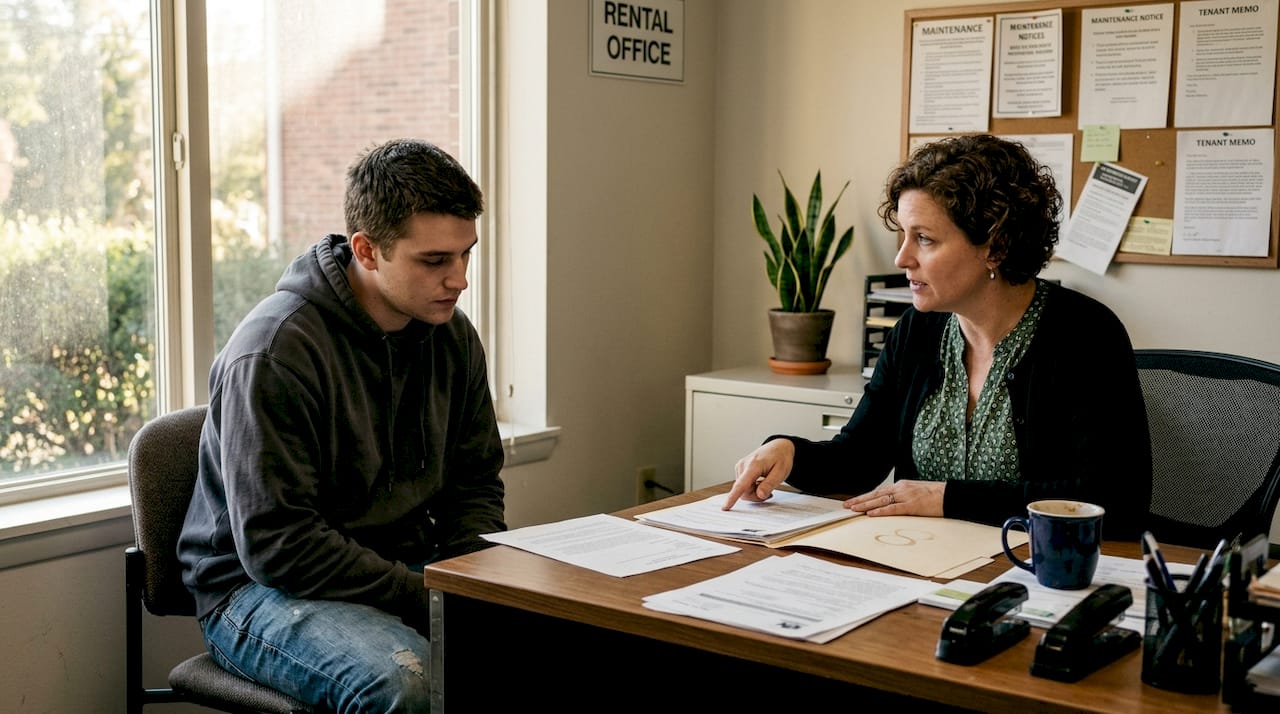
Pro Tip: Set a maintenance reserve fund equal to at least one month of expected rent before your first tenant moves in. This single step prevents the most common cash flow crises new landlords face.
For US buyers navigating Israeli real estate law basics, the compliance picture looks different but is no less important. Israel has its own tenant protection rules, deposit regulations, and contract standards. If you’re buying remotely, understanding laws for US buyers in Israel before you sign anything is essential.
Property management’s challenges are amplified for US religious buyers considering homes in Israel. Here’s what you need to know.

For observant families and investors, a property is not just a financial asset. It’s a home within a community. That means the management of that property must reflect specific religious and cultural standards that most general property managers are simply not equipped to handle.
Key factors to address before you buy or rent:
The cross-border property management framework that works in the US needs significant adaptation for the Israeli market. What’s standard practice in New Jersey may be completely misaligned with what’s expected in Beit Shemesh or Ramat Beit Shemesh.
Pro Tip: When interviewing property managers for Israeli properties, ask specifically for references from other US religious clients. A manager who has successfully served this community will have a track record you can verify.
If you’re exploring overseas offices that simplify Israel real estate for US buyers, you’ll find that the right firm dramatically reduces the friction of remote ownership. For those interested in premium properties, luxury real estate in Israel also comes with its own management expectations and standards.
Most property management guides focus on checklists and fee structures. What they miss is the human and cultural layer, especially for US religious buyers operating across borders.
We’ve seen investors make the same mistakes repeatedly. They hire a local Israeli manager without verifying their experience with American clients. They assume US compliance standards translate directly. They underestimate how much a language gap or a misunderstood religious requirement can cost them in tenant turnover or legal exposure.
The non-obvious mistakes that hurt investors most:
Successful cross-border ownership is built on trust and specificity. When you’re negotiating in Israel, knowing the local norms gives you real leverage. The same applies to management. Don’t DIY this. Find a manager who speaks your language, literally and culturally, and who has real experience serving observant American families in Israel.
Understanding property management is the foundation, but acting on that knowledge requires the right partner. Yigal Realty specializes in residential properties in Beit Shemesh and surrounding areas, with a deep understanding of what observant US buyers need. Their listings are designed with religious community life in mind, from Shabbat access to eruv proximity to kosher-ready kitchens. If you’re looking for a property that already meets these standards, the Sharei Chessed Trilogy House is a strong example of what thoughtful development looks like for this community. Reach out to their team for personalized guidance.
Property managers handle the full lifecycle of a rental: leasing, tenant relations, maintenance, rent collection, financial reporting, inspections, and lease renewals or terminations.
Fees typically range from 6% to 12% of monthly rent, and managers set repair spending limits of $200 to $500 per incident, with reserve funds covering larger emergencies.
Managers must follow the Fair Housing Act and state-specific rules on security deposit returns, which vary from 14 to 60 days depending on the state.
Ask about kosher compliance, Shabbat elevator access, eruv boundaries, local licensing requirements, and whether the manager has experience serving observant American clients specifically.