%20(4).png)
![[background image] image of cityscape background (for an architect firm)](https://cdn.prod.website-files.com/68961ade6feff9cbdffc080d/69384e066e0e9a310b6817f8_061f6bac-48bf-44b8-a689-078dacd8009f.avif)
TL;DR:
- Remote property touring involves live video walkthroughs, virtual scans, and digital tools to assess real estate without visiting physically. Effective tours require structured sessions, active buyer involvement, and a trusted local agent to identify true property conditions and avoid common pitfalls. International buyers must utilize legal safeguards, verified payments, and local experts to ensure a secure and thorough purchase process.
Touring property remotely is the process of evaluating real estate through live video walkthroughs, 3D digital scans, and expert-guided online resources to assess condition, layout, and neighborhood context without physical presence. 40% of homebuyers now use virtual tours as a core part of their buying process, according to 2026 data from the National Association of Realtors (NAR). That figure reflects a permanent shift in how buyers, especially international investors and out-of-area purchasers, approach real estate decisions. Knowing how to tour property remotely with discipline and the right tools separates confident buyers from those who get burned by incomplete information.
The right technology setup determines how much you actually learn from a remote viewing session. A shaky phone call over poor Wi-Fi tells you almost nothing. A structured live walkthrough on a stable connection with a prepared agent tells you nearly everything you need to make a decision.
Zoom, WhatsApp, and FaceTime are the three most widely used platforms for live interactive property tours. Each has a distinct advantage. Zoom records sessions natively and allows screen sharing of floor plans during the call. WhatsApp works well internationally with low data overhead. FaceTime delivers the sharpest video quality on Apple devices. Raw, unedited live video over WhatsApp or similar apps shows a property’s true condition far better than polished 3D marketing scans. That is the key insight most buyers miss.
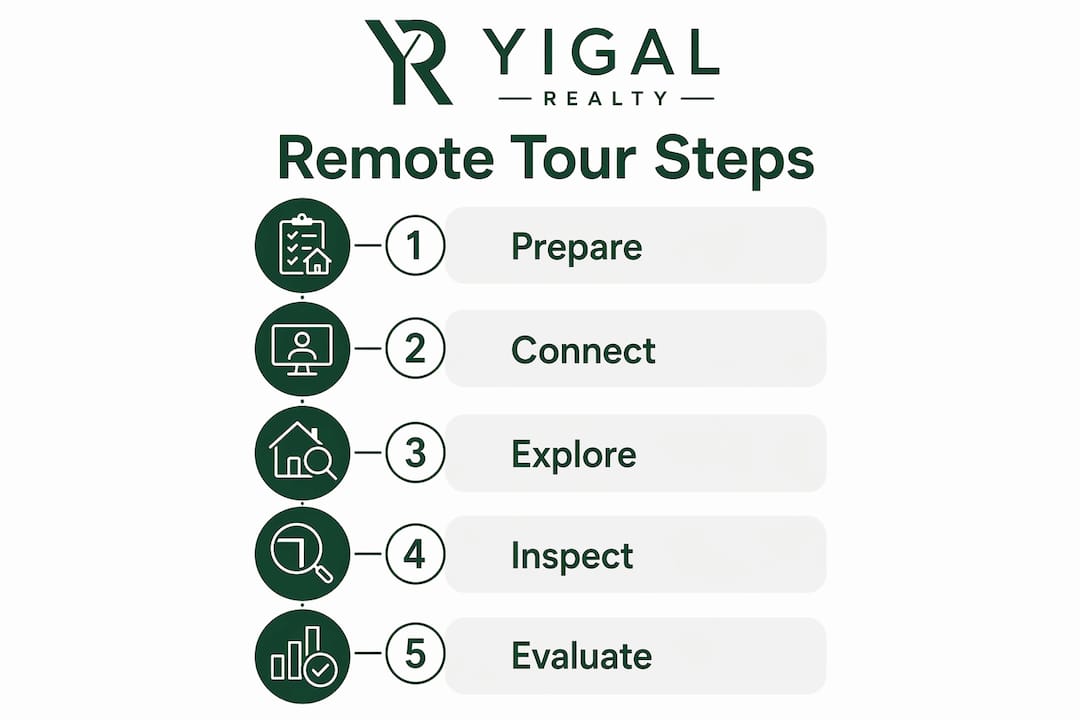
Matterport scans and similar 3D virtual tour formats give you a spatial reference before the live session. Use them to orient yourself to the layout, not to evaluate condition. Wide-angle lenses and controlled lighting in 3D scans can make rooms appear larger and brighter than they are. Treat them as a starting point, not a verdict.
Beyond video, your full digital toolkit should include:
Pro Tip: Ask the agent to send you the floor plan before the live session. Mark the rooms you want to inspect most carefully. This keeps the walkthrough focused and prevents you from forgetting critical areas under time pressure.
A live remote walkthrough is not a passive viewing experience. Active engagement during remote tours yields far better insights than watching the agent move through rooms at their own pace. You direct the session. You set the agenda.
Schedule the tour at a time when natural light fills the property. Mid-morning is ideal for most orientations. Prepare a written checklist covering structural, functional, and neighborhood questions before the session begins. A solid property viewing checklist covers ceiling conditions, water stains, electrical panel access, window seals, and floor levelness.
Pro Tip: Record the entire session with permission. Review the footage at 0.5x speed afterward. You will notice details that your brain filtered out during the live call.
Local licensed inspectors who join virtual tours in real time can identify hidden structural issues that untrained remote buyers will miss entirely. Arranging a third-party inspector to be physically present during your live session is one of the highest-value steps you can take.
A virtual tour shows you what the property looks like. Due diligence tells you what the property actually is. These are two different things, and conflating them is the most common mistake remote buyers make.
Start by requesting the full documentation package from the seller or agent:
Google Street View and local area videos on YouTube give you environmental context that a property-only tour cannot provide. Check the street at different times of day using Street View’s historical imagery feature. Look for construction sites, commercial activity, or traffic patterns that could affect livability. A step-by-step due diligence guide covers the full document review process in detail.
| Pitfall | What it hides | How to counter it |
|---|---|---|
| Wide-angle lens distortion | True room size | Request a tape measure on camera |
| Bright artificial lighting | Water stains, discoloration | Ask for natural light only |
| Staged furniture placement | Floor damage, wall cracks | Request furniture moved during tour |
| Pre-recorded 3D scans | Current condition changes | Always require a live session |
| Selective camera angles | Neighboring buildings, noise sources | Ask for exterior 360-degree footage |
Virtual tours cannot substitute for a licensed third-party home inspection. That is an industry-wide consensus, not a cautious opinion. Budget for a local inspector regardless of how thorough your virtual session was.
Remote tours introduce specific failure points that in-person visits do not. Knowing them in advance lets you address them before they cost you money.
Poor video quality is the most frequent technical problem. If the agent’s connection drops or the image is blurry, stop the session and reschedule. Do not accept a degraded tour and try to fill in the gaps with imagination.
Uncooperative agents are a real risk. An agent who rushes through rooms, avoids certain areas, or refuses to move furniture on request is sending a signal. A trustworthy agent welcomes your questions and slows down when asked.
Signs of potential omission in virtual content include:
Pro Tip: Request a second live tour at a different time of day before making an offer. Morning light and afternoon light reveal different things. A second session also tests whether the agent’s story about the property stays consistent.
Knowing when to insist on an in-person visit matters too. If the property is above a certain price threshold, if documentation is incomplete, or if the live tour raised unresolved questions, a physical visit or a boots-on-the-ground inspection by a trusted local contact is not optional. It is the responsible next step.
International buyers face a higher-stakes version of every challenge domestic remote buyers encounter. Legal systems differ, languages differ, and the consequences of a missed detail are amplified by distance and currency exposure.
Successful international remote acquisitions depend on notarized documents, powers of attorney, and verified ownership and permits. These are not optional formalities. They are the legal architecture that protects your purchase.
Key best practices for international buyers include:
For buyers looking at luxury properties in international markets, a luxury property viewing checklist covers the additional due diligence layers that high-value transactions require. Choosing the right local representation is equally critical. Guidance on selecting an experienced agent in international markets applies directly to the Israeli market as well.
Yigal-realty works specifically with international buyers purchasing in Beit Shemesh and surrounding areas, providing local representation and guided remote viewing support tailored to observant communities. Their approach to choosing a real estate agent in Israel reflects the specific needs of buyers who cannot be present in person.
Effective remote property touring requires live interactive video, structured due diligence, and a trusted local agent working exclusively for the buyer’s interests.
| Point | Details |
|---|---|
| Live video beats 3D scans | Unedited live walkthroughs reveal true property condition better than polished marketing tours. |
| Direct the session actively | Guide the agent’s camera, request pauses, and ask about utilities, smells, and noise. |
| Due diligence goes beyond the tour | Always request title deeds, permits, tax records, and utility bills before committing. |
| Hire a local inspector | A licensed inspector present during the live session catches structural issues you will miss. |
| International buyers need legal safeguards | Powers of attorney, notarized documents, and verified payment channels protect overseas purchases. |
I have seen buyers spend hours watching polished 3D walkthroughs and come away feeling confident, then discover serious problems after closing. The issue is not the technology. The issue is the mindset. A 3D scan is a marketing asset. It is produced by the seller’s team, lit by the seller’s team, and edited by the seller’s team. Treating it as objective evidence is a mistake I see repeatedly.
The buyers who do this well treat every remote session as an active investigation. They come in with a written checklist. They direct the camera. They ask the agent to open the electrical panel, move the couch, and stand in the corner of the basement. They schedule a second session after reviewing the recording. They hire a local inspector to be physically present during the live call.
The most critical factor for remote buying success is an experienced local agent acting objectively for your interests, not the seller’s. Technology is a tool. A good local advocate is the actual safeguard. I have watched buyers with inferior technology and a great local agent make excellent purchases. I have watched buyers with perfect video setups and a conflicted agent make costly mistakes.
Remote property viewing works. It works well when you treat it as a discipline, not a convenience. The buyers who get burned are the ones who watch passively and assume the tour tells the whole story. It never does.
— Spiros
Buyers purchasing property in Israel from abroad face a specific set of challenges: unfamiliar legal processes, language barriers, and the inability to walk a neighborhood at their own pace. Yigal-realty addresses each of these directly. Their team provides guided remote viewing sessions for properties in Beit Shemesh and surrounding areas, with agents experienced in working with international and sight-unseen buyers. From coordinating live walkthroughs to managing legal documentation and connecting buyers with local inspectors, Yigal-realty handles the on-the-ground work that remote buyers cannot do themselves. Buyers can explore current projects and services and connect directly with an agent through their platform.
Zoom, WhatsApp, and FaceTime are the most reliable platforms for live remote property tours. Zoom is preferred for its recording feature and screen-sharing capability during the session.
A virtual tour cannot replace a licensed home inspection. Industry professionals consistently confirm that virtual tours miss structural, electrical, and moisture issues that only a physical inspection reveals.
Request a live, unscripted walkthrough rather than relying on pre-recorded or 3D scans. Ask the agent to move furniture, open all doors, and show utility areas to reduce the risk of staged or selective presentation.
Request the title deed, building permits, property tax records for the past three years, and 12 months of utility bills. For condos or apartments, also request HOA meeting minutes and reserve fund statements.
International buyers should formalize a power of attorney with a local attorney, use verified escrow accounts for all payments, and hire an independent local surveyor separate from the agent-arranged tour.