%20(4).png)
![[background image] image of cityscape background (for an architect firm)](https://cdn.prod.website-files.com/68961ade6feff9cbdffc080d/69384e066e0e9a310b6817f8_061f6bac-48bf-44b8-a689-078dacd8009f.avif)
TL;DR:
- Buying property in Israel requires thorough legal, financial, and community-related preparation.
- Engaging local experts, such as agents and lawyers familiar with religious neighborhoods, ensures smoother transactions.
- Due diligence on titles, permits, and community norms is essential to avoid costly mistakes.
Buying property in Israel is one of the most meaningful financial decisions a family or investor can make, yet the process is layered with legal requirements, cultural expectations, and community-specific considerations that catch many buyers off guard. For observant families seeking homes near synagogues and Jewish schools, or investors targeting religious neighborhoods in Beit Shemesh and surrounding areas, the stakes are even higher. Getting it right means more than just finding the right apartment. It means understanding every step, every document, and every local nuance before you sign anything. This guide walks you through the entire acquisition process clearly and practically.
| Point | Details |
|---|---|
| Preparation is key | Gather your documents and research neighborhoods early to avoid delays and surprises. |
| Step-by-step approach | Following each acquisition phase in order helps ensure a smooth property purchase in Israel. |
| Legal checks matter | Thorough due diligence protects you from costly legal issues, especially in niche communities. |
| Local expertise advantage | Trusting professionals with deep local and community knowledge reduces risks and maximizes value. |
Now that we’ve established the importance of navigating this process wisely, let’s start with essential preparations. Before you even begin browsing listings, you need to get your financial and informational house in order. Skipping this stage is one of the most common reasons buyers face delays or lose properties they love.
As a starting point, buyers should collect key documents before searching, because missing paperwork can stall a deal at any stage. Here’s what you’ll typically need:
For families targeting religious neighborhoods, preparation goes beyond paperwork. You need to research whether the area fits your lifestyle. Is there an eruv (a symbolic boundary that allows carrying on Shabbat)? How many shuls (synagogues) are within walking distance? Are there schools for both boys and girls at the right levels?
| Preparation area | What to check |
|---|---|
| Financial readiness | Pre-approval, proof of funds, tax status |
| Neighborhood fit | Shul proximity, eruv, schools, mikva |
| Legal standing | Prior ownership, citizenship, residency status |
| Documentation | ID, family status, bank records |
For Israeli property documentation, the earlier you start organizing, the smoother your process will be. Mortgage pre-approval in Israel can take two to four weeks, so don’t wait until you’ve found your dream apartment to start that process.
Pro Tip: Create a dedicated folder, physical or digital, for every document you’ll need. Label it by category: financial, legal, personal. This one habit saves buyers hours of scrambling when deadlines hit.
Doing your due diligence steps early also means researching property values in your target neighborhood so you can recognize a fair price when you see one.
With your preparations complete, you’re ready to move through each stage of acquiring property in Israel. The process follows a fairly consistent path, but the details matter enormously.
A detailed acquisition process significantly increases your success rate and reduces the risk of costly surprises.
| Approach | Pros | Cons |
|---|---|---|
| Direct owner purchase | Potentially lower price | No professional buffer, higher risk |
| Agent-facilitated | Market knowledge, negotiation support | Agent commission applies |
The role of realtors is especially important in religious neighborhoods where community relationships and insider knowledge about upcoming projects can give you a real advantage. Similarly, real estate lawyers are not just a formality. They are your primary protection against fraud, hidden debts, and contract traps.
Pro Tip: Never sign a memorandum of understanding (zikaron devarim) without your lawyer present. This preliminary document can be legally binding in Israel even before the full contract is signed.
Execution goes beyond just following steps. It’s vital to verify every detail before you commit to buying. Due diligence is the stage where many buyers cut corners, and where the most serious problems surface.
Proper due diligence prevents costly mistakes that can delay or even cancel a property transfer. Here’s what a thorough check covers:
In religious neighborhoods, there are additional layers to check. Some areas have neighborhood agreements (va’adot bayit or community charters) that govern noise levels, Shabbat observance standards, and even which businesses can operate nearby. These are not always posted publicly, so your agent and lawyer need to ask specifically.
“A real estate lawyer’s job is not just to review a contract. It’s to protect you from what the contract doesn’t say.”
Lawyers play a crucial role in vetting documents and identifying red flags that non-professionals would miss entirely. The role of a real estate lawyer includes negotiating contract terms, managing escrow payments, and ensuring the registration process is completed correctly after closing.

Skipping or rushing due diligence to close faster is a gamble that rarely pays off. One missed lien or unpermitted addition can result in months of legal battles and significant financial loss.
Beyond process and paperwork, real-world experience shows some mistakes are far more common and costlier than others. Knowing what to watch out for is just as important as knowing what to do.
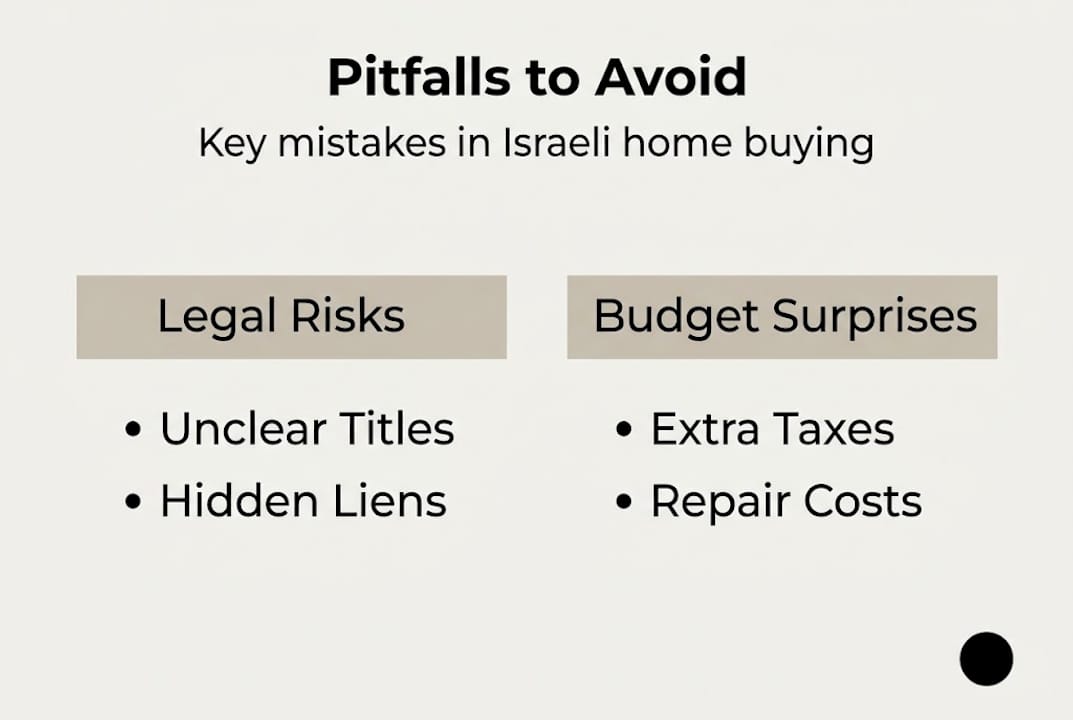
Many buyers overlook unique regulations or skip professional guidance entirely, assuming the process is straightforward. It rarely is. Here are the most frequent mistakes:
Pro Tip: Always ask your agent specifically about neighborhood-level regulations, not just city-level zoning. In Beit Shemesh, for example, different sections of the city have very different community characters and expectations.
Budget surprises are another major pitfall. Many buyers focus on the purchase price and forget to account for the tama 38 (building reinforcement) assessments, building committee fees, or renovation permits that can add up quickly after closing.
After working with families and investors across Beit Shemesh and surrounding areas, we’ve seen one pattern repeat itself clearly. Buyers who rely on general online guides or overseas advisors without local grounding consistently run into problems that local experts would have spotted immediately.
General advice tells you to hire a lawyer and do due diligence. That’s true, but it’s not enough. What it doesn’t tell you is that in certain religious neighborhoods, the informal community standards carry as much weight as the legal documents. A property might be perfectly clean on paper but located in a section of a neighborhood that doesn’t match your family’s practice level or social needs.
We’ve seen buyers purchase beautiful apartments only to realize the community wasn’t the right fit. We’ve also seen investors overlook properties that looked average on paper but were in high-demand religious enclaves with strong rental markets. Local realtor insights are what bridge that gap between data and reality.
The uncomfortable truth is that no amount of online research fully replaces the judgment of someone who has spent years building relationships in these specific communities. Cultural fluency is not a soft skill in this market. It’s a competitive advantage.
If you’re ready to move forward with confidence, here’s how you can get hands-on guidance. The acquisition process in Israel doesn’t have to be overwhelming. With the right team beside you, every step becomes manageable and far less stressful.
At Yigal Realty, we specialize in helping families and investors find properties in Beit Shemesh and surrounding religious communities. From your first document checklist to final registration at the Tabu, we offer personalized support tailored to your lifestyle, budget, and community preferences. Start your property journey with a team that knows the market from the inside. Whether you’re buying your first Israeli home or expanding an investment portfolio, expert realtor guidance makes all the difference between a smooth closing and a stressful ordeal.
You typically need proof of funds, a valid ID or passport, mortgage pre-approval, and sometimes documents related to family status and prior property ownership. Collecting key documents before you start searching prevents delays at critical stages.
On average, the buying process takes two to three months from offer acceptance to property registration, though complex transactions or legal issues can extend this timeline. A step-by-step buying process helps keep things on track.
While not always legally mandatory, using both is strongly recommended for a secure transaction. Lawyers are crucial for vetting documents, and hiring a real estate agent protects you from overlooking regulations or missing better opportunities.
Verify community norms, neighborhood-specific regulations, Shabbat-related rules, and proximity to religious amenities like synagogues, schools, and a mikva. A thorough due diligence checklist should include these community-level checks alongside standard legal verifications.