

Beit Shemesh offers family-oriented community life, active municipal health programs like Efsharibari, and a city government investing in schools and infrastructure, but the Central Bureau of Statistics places it in the medium tier for overall quality of life, with growth straining commutes and services. Before deciding, visit prospective neighborhoods and test a peak-hour commute yourself.
TL;DR:
- The city scored above the national average on 20 of 48 indicators, with weaker results for trust in the health system and housing costs.
- Older neighborhoods generally have established schools and infrastructure, while newer Ramat and Neve areas offer newer homes but may lag in services.
- Efsharibari supports activity across ages, with programs in 40 kindergartens, shaded fitness stations, and a 3 km walking path for daily use.
- Commuters should ride their actual bus route during morning and evening peak times, then time the entire trip from home to destination.
- Before buying in a new development, verify municipal approvals, check the developer’s delivery record, and confirm opening dates for nearby schools and community centers.
Daily life in Beit Shemesh reflects a mixed socio-economic profile with a strong family and religious orientation. The Central Bureau of Statistics report on large cities puts Beit Shemesh in the medium group for overall quality of life, scoring above the national average on 20 of 48 measured indicators and below it on 28, including metrics tied to trust in the health system and the share of income spent on housing. That mixed picture plays out differently depending on where in the city you live and which services you rely on most.
Residents experience the city through a combination of community events, municipal upgrades, and volunteer-driven activity that fills gaps between formal services. Visible improvements from municipal investment show up gradually across neighborhoods:
These changes tend to arrive first in areas targeted by current budget cycles, so the pace of visible improvement varies by neighborhood.
Beit Shemesh is not one uniform city. Older neighborhoods generally have mature infrastructure, established schools, and a settled community fabric, while newer areas like the Ramat and Neve expansions bring fresh housing stock paired with schools and services still being built out. Municipal planning documents describe this segmentation directly, noting that service delivery in newer zones often lags behind construction timelines even as renewal continues in older districts, according to municipal planning guidance.
Religious and observant families tend to concentrate in specific neighborhoods, which shapes everything from synagogue density to school availability and the rhythm of local commerce. If you want a fuller picture of how these areas compare, our list of popular neighborhoods in Beit Shemesh breaks down several options in more detail.
Before committing to an area, a short visit can tell you more than any listing:
The municipal engineering and infrastructure division oversees new construction, public buildings, roads, parks, and coordination with utilities across the city, according to the municipal engineering department. That office is the practical engine behind most of the physical changes residents notice year to year.
Recent budget decisions back this up. The city council approved a major development budget aimed at expanding schools, community services, and infrastructure in response to rapid population growth, with funds also directed toward a new employment zone, according to ShemeshPhone. For residents, that translates into:
Pro Tip: Contact the municipal Education and Community departments directly when you move in. Planning documents note that proactive engagement with these offices eases access to schooling and integration services more reliably than relying on informal community channels alone, per the municipal planning PDF.
The national Efsharibari health initiative has a concrete local footprint in Beit Shemesh. The program added shaded public fitness stations, water fountains, and a companion app with 15 instructional videos to guide residents through workouts. It also runs the “Growing Healthy” curriculum in 40 kindergartens and physiotherapist-led activity programs for elderly clubs, extending its reach across age groups rather than focusing narrowly on one population.
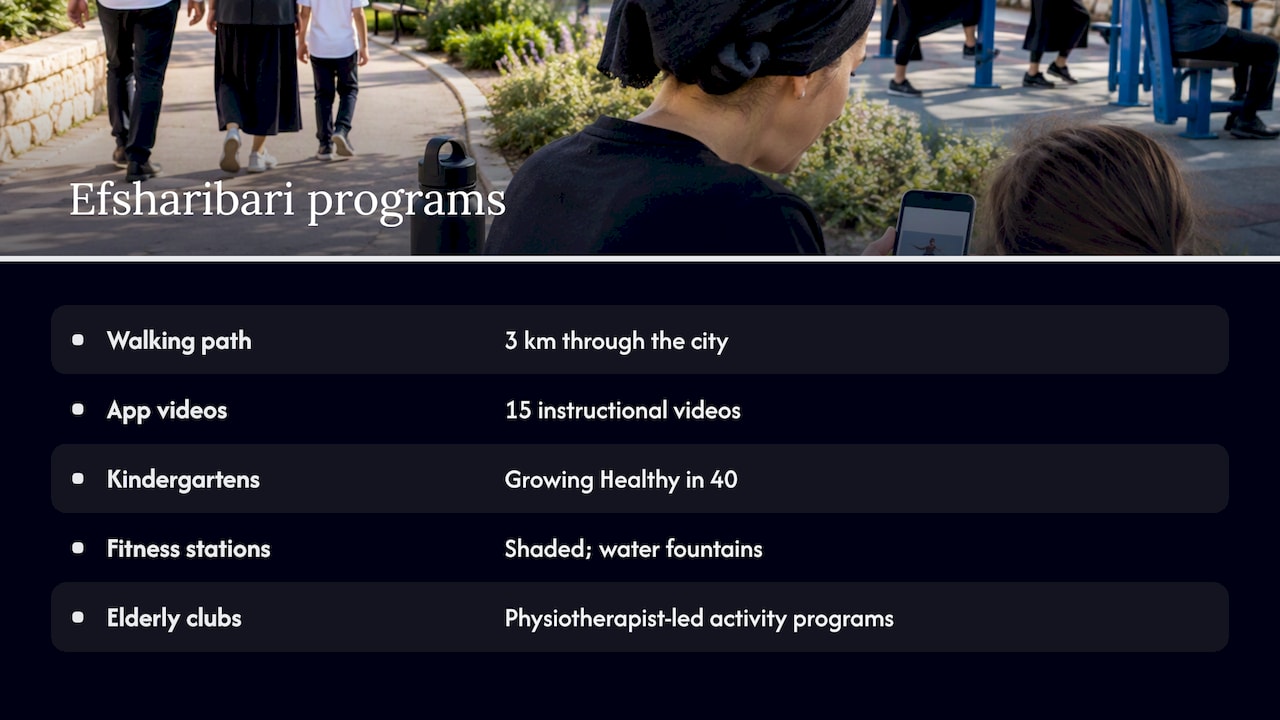
One of the clearest signs of this investment is a new 3 km walking path woven through the city, a tangible upgrade that families, older residents, and anyone building a daily exercise habit can use immediately, according to Efsharibari. The program’s emphasis on accessible, shaded stations and structured programming for both young children and seniors makes it one of the more visible quality-of-life improvements in the city, ahead of larger infrastructure projects still in progress.
Most residents who work in Jerusalem or Tel Aviv rely on inter-city bus connections rather than rail, and travel times can vary with traffic and bus frequency even when published schedules look manageable. A municipal newcomers booklet recommends testing the commute in person during peak hours rather than trusting timetables alone, since boarding delays and frequency gaps do not show up on paper, according to the Beit Shemesh newcomers booklet. The city’s master plan references upgrades to transit corridors and road widths, though those improvements roll out over time alongside population growth.
If you are weighing a move and depend on a daily commute, run this short test during a visit:
The city’s master plan prioritizes growth alongside investment in education and employment zones, echoed in the recent council-approved budget directing funds toward new schools, community services, and a planned employment zone, according to ShemeshPhone. For buyers, that growth creates a real choice between established neighborhoods and newer developments still filling in their services.
Buying into a new project often means modern construction and planned amenities, but it can also mean temporary gaps before schools, community centers, or public transit fully catch up. Established neighborhoods trade some of that upside for infrastructure that already works. Our guide on how to assess Israeli real estate in Beit Shemesh walks through this trade-off in more depth, and our post on what buyers need to know about Beit Shemesh housing developments covers specific project timelines.
Before committing to a new development, check these points:
Pro Tip: Ask any developer directly which phase of municipal approval their project has cleared. Buyers who skip this step are the ones most often surprised by delayed schools or unfinished roads. Our piece on the advantages of new real estate projects in Beit Shemesh outlines what to expect when amenities are still being built out.
Beit Shemesh functions as a family-dense city where community-based oversight plays a visible role in daily life, from volunteer neighborhood watch groups to coordination between synagogues, schools, and local police. Municipal planning documents note that community services and local policing presence are part of the broader infrastructure investment tied to the city’s growth, with new neighborhoods expected to receive coverage as they build out, according to the municipal planning PDF.
Residents in established neighborhoods generally describe a settled, watchful community dynamic, with families and neighbors informally keeping an eye on shared spaces. In newer developments, that same social fabric takes time to form as new residents move in gradually. When visiting a neighborhood, it helps to walk it in the evening and observe whether streets feel lit, active, and used by families rather than empty. Speaking with current residents about their own sense of safety will tell you more than any single statistic, since local perception often varies by block and by how long a section of the city has been built out.
Daily shopping in Beit Shemesh runs through a mix of supermarkets, smaller grocers, and neighborhood shopping strips that cluster near residential areas rather than one central commercial district. Older neighborhoods tend to have a denser concentration of established shops, bakeries, and judaica stores built up over years, while newer developments often start with fewer options before commercial space fills in alongside residential construction.

This pattern matters for day-to-day convenience. A family moving into a newer section of the city may need to travel further for groceries or specialty items in the early years of a neighborhood’s life, while established areas typically offer walkable access to daily essentials. Local markets and small businesses also serve as informal community hubs, particularly around Jewish holidays when shopping patterns intensify and neighborhood strips become gathering points as much as retail spaces. When evaluating a neighborhood, checking the walking distance to a full-service supermarket and a few smaller shops gives a practical sense of daily convenience that a map alone will not show.
Beit Shemesh sits in a hill region outside the dense urban corridors of Jerusalem and Tel Aviv, which generally supports cleaner air than more congested cities, though construction activity tied to rapid development can create localized dust and noise in growth areas. Older, settled neighborhoods tend to be quieter day to day, while areas under active construction experience more noise from building work and heavier vehicle traffic tied to new projects.
Cleanliness and upkeep of public spaces connect directly to the municipal infrastructure investments already underway, since repaired sidewalks, maintained parks, and functioning street lighting all shape how a neighborhood looks and feels. Newer developments sometimes show rougher edges during construction phases before landscaping and public space finishing catch up. If environmental comfort matters to your decision, a visit during both a weekday and a weekend can reveal how much construction noise or traffic affects a specific block, since this varies significantly between an established street and one still being built out.
If you are weighing a move, visit your shortlisted neighborhoods at different times of day, including evenings and a weekday morning rush. Walk into a community center, talk with staff, and try the Efsharibari walking path yourself to get a feel for the pace of daily life. If buying is on the table, reach out to a local broker early so you understand project timelines before you fall in love with a floor plan. One more thing worth repeating: contacting the municipal Education and Community departments before you move, not after, shortens the friction of settling in considerably.
— Spiros
Finding the right neighborhood in Beit Shemesh takes more than a map. We offer concierge project guidance built around local expertise in the city’s neighborhoods and personalized support for international and religious buyers relocating or investing here. We walk you through project timelines, coordinate viewings, and connect what we know about each area’s services and growth trajectory to your specific needs as a buyer or investor.
We currently work with projects including Neve Amim, Eucalyptus, Rotshtein Heights, Olmaya, Givaat Zeev, and The Trilogy House. Reach out through our main site to arrange a conversation about which neighborhood and project timeline fit your plans.
Beit Shemesh offers active community life, family-oriented neighborhoods, and municipal health programs like Efsharibari that run activities in 40 kindergartens and provide walking paths and fitness stations. The Central Bureau of Statistics places the city in a medium overall quality-of-life tier, reflecting strengths balanced against areas like housing-cost pressure.
Efsharibari is a national health initiative with a local presence in Beit Shemesh that added a 3 km walking path, shaded fitness stations, water fountains, and an app with 15 instructional videos. It also runs kindergarten health programming and physiotherapist-led activity for elderly clubs, according to Efsharibari.
Commuting relies mainly on inter-city buses, and travel times can vary with traffic and bus frequency beyond what published schedules suggest. A municipal booklet recommends testing your actual commute at peak hours before deciding where to live, per the Beit Shemesh newcomers booklet.
Older neighborhoods tend to offer more established infrastructure and schools, while newer areas like the Ramat and Neve expansions bring newer housing with services still being built out, according to municipal planning guidance. The right choice depends on whether you prioritize settled infrastructure or newer construction with longer-term upside.
Confirm the developer’s track record for delivering past projects on schedule, verify municipal approvals rather than preliminary plans, and ask when schools and community centers are scheduled to open. We outline this process further in our guide on how to assess Israeli real estate in Beit Shemesh.