%20(4).png)
![[background image] image of cityscape background (for an architect firm)](https://cdn.prod.website-files.com/68961ade6feff9cbdffc080d/69384e066e0e9a310b6817f8_061f6bac-48bf-44b8-a689-078dacd8009f.avif)
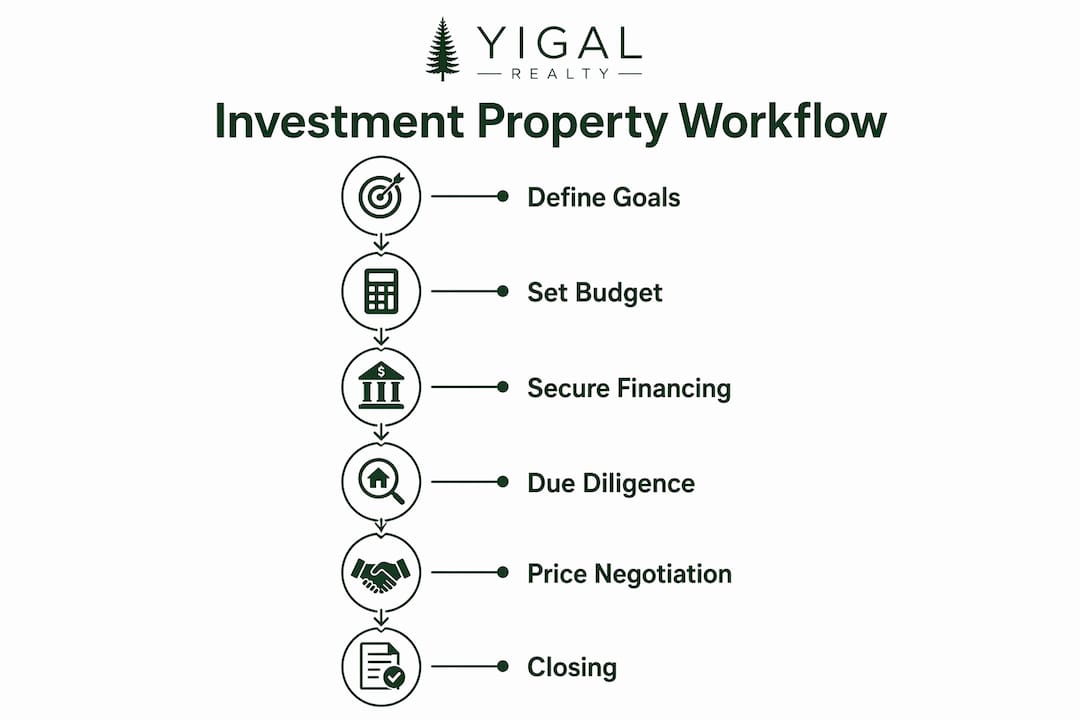
The most effective workflow for securing investment property follows ten sequential stages: define goals, research the market, set your budget, select the property, run the numbers, arrange financing, engage expert advisors, write down the plan, protect the asset, and review regularly. Investors who skip steps or treat this as a checklist rather than a workflow tend to hit expensive surprises at closing. The sequence matters because each stage feeds the next.
Here is the full framework at a glance:
Clear goals are the foundation of any property investment strategy. Before you look at a single listing, decide whether you are targeting monthly cash flow, long-term appreciation, or a combination of both. That decision shapes every choice downstream, from the markets you target to the loan products you pursue.
Once your goals are set, market research narrows the field. Focus on:
Use data from sources like the U.S. Census Bureau, Bureau of Labor Statistics, and local MLS reports. Align your market choice with your timeline. A five-year hold strategy in a high-growth suburb looks very different from a ten-year hold in an established urban core.
Budgeting for an investment property goes well beyond the purchase price. Investment property loans generally require good credit scores, substantial down payments, and reserves after closing. That reserve requirement alone catches many first-time investors off guard.
Build your budget around key cost categories, including down payment, closing costs, reserves, repair and renovation allowance, and vacancy buffer; exact percentages vary by lender and property.
When selecting the property itself, compare types against your goals. Single-family rentals offer simpler management; small multifamily properties generate more cash flow per dollar invested. Condition, location quality, and verifiable rental income history all affect both your financing options and your long-term returns.

Pro Tip: Use an investment property calculator to stress-test cash flow, cap rate, and after-repair value before making an offer. Running the numbers on paper first prevents emotional decisions at the negotiating table.
Financing is where most investment property acquisitions either accelerate or stall. The loan product you choose should match your income documentation profile, not just the interest rate.
Work with a mortgage broker who specializes in investment loans. A generalist residential broker often lacks familiarity with DSCR underwriting or Fannie Mae’s rental income rules, which can cost you weeks. Prepare your documentation before you start shopping rates. Lenders who see a complete file move faster and price better.
Most investors treat underwriting as an interest rate negotiation. The ones who close on time treat it as a documentation workflow. The distinction matters because lenders need specific inputs, not general narratives.
Under Fannie Mae’s rental income rules, lenders apply a 75% income haircut to gross rents and require six months of PITIA reserves for investment property transactions. That means a property generating $2,000 per month in rent contributes only $1,500 toward your qualifying income. Organize your documentation around what the lender’s model actually uses.
Key documentation priorities:
On the tax side, IRS MACRS depreciation rules require you to start depreciation in the year the property is placed in service, using a mid-month convention. Time renovations carefully. Improvements placed in service in December of one year versus January of the next can shift a full year of depreciation deductions. Coordinate renovation completion dates with your tax advisor before you close.
Pro Tip: Pre-organize your entity documents and liquid asset proofs at least 30 days before applying. A DSCR loan checklist prepared in advance is the single most reliable way to close in 15–21 days rather than 45.
Real estate agents, mortgage brokers, tax advisors, and real estate attorneys each catch problems the others miss. An attorney reviews the purchase contract for contingencies that protect you if financing falls through. A tax advisor structures the entity correctly before closing, not after. A broker experienced in investment loans knows which lenders price DSCR deals competitively in your target market.
A written investment plan formalizes what you know and forces clarity on what you do not. It should cover:
The plan also serves a practical function with lenders and partners. A written document signals that you have thought through the deal, which builds confidence on both sides of the table.
Asset protection starts before the tenant moves in. Landlord insurance covers property damage, liability claims, and lost rental income during covered repairs. Hold the property in an LLC to separate personal assets from investment liabilities. Confirm the insurance policy is in the LLC’s name if you close in an entity.
Ongoing protection requires regular monitoring:
Schedule a formal portfolio review every six months. Markets shift, personal circumstances change, and the strategy that made sense at acquisition may need adjustment two years in.
Saving for an investment property down payment is a different exercise than saving for a primary residence. You need 20%–25% down plus closing costs plus six months of reserves, all liquid and documented. On a $400,000 property at 25% down, that is $100,000 before closing costs and reserves.
Practical approaches include setting up a dedicated savings account labeled for investment purposes, automating monthly transfers, and tracking the account separately from personal funds. Lenders will ask for two to three months of bank statements showing those funds have been in the account for at least 60 days. Unsourced large deposits trigger underwriting conditions and can delay or kill a closing. Keep the money clean and traceable from the start.
A guarantor on an investment property loan is someone who agrees to repay the debt if the primary borrower defaults. This arrangement can help investors who have strong assets but limited income documentation qualify for conventional financing. The guarantor’s credit score, income, and debt load all factor into the underwriting, so choose someone whose financial profile genuinely strengthens the application.
For DSCR loans, personal income documentation is not required at all, which often removes the need for a guarantor entirely. If your credit score is above 680 and the property’s rental income covers the PITIA ratio, a DSCR loan may be a cleaner path than adding a guarantor to a conventional file. Discuss both options with your broker before committing to either structure.
A formal investment plan is a one-to-three page document that captures your goals, assumptions, and strategy in writing. It is not a business plan for a startup. It is a decision-making reference you return to when market conditions change or a new opportunity appears.
Structure it around four sections: your financial goals and target metrics, your market thesis and property selection criteria, your financing and exit strategy, and your risk factors with specific mitigation steps. Update it after every acquisition and at each six-month portfolio review. Investors who evaluate multiple properties efficiently tend to use a consistent evaluation framework, which a written plan supports naturally.
The full investment property acquisition process typically runs 60–120 days from initial goal-setting to closing, depending on financing type and market conditions.
| Phase | Typical Duration |
|---|---|
| Goal-setting and market research | 2–4 weeks |
| Budget analysis and pre-approval | 1–2 weeks |
| Property search and offer | 2–3 weeks |
| Due diligence and inspection | 1–2 weeks |
| Underwriting and appraisal | 3 weeks (conventional); 2–3 weeks (DSCR) |
| Closing | 1–3 days |
DSCR loans can close faster when the borrower submits a complete file at application. Conventional investment loans generally take longer to close. The biggest delays come from incomplete documentation and slow responses to underwriter conditions, not from the underwriting itself.
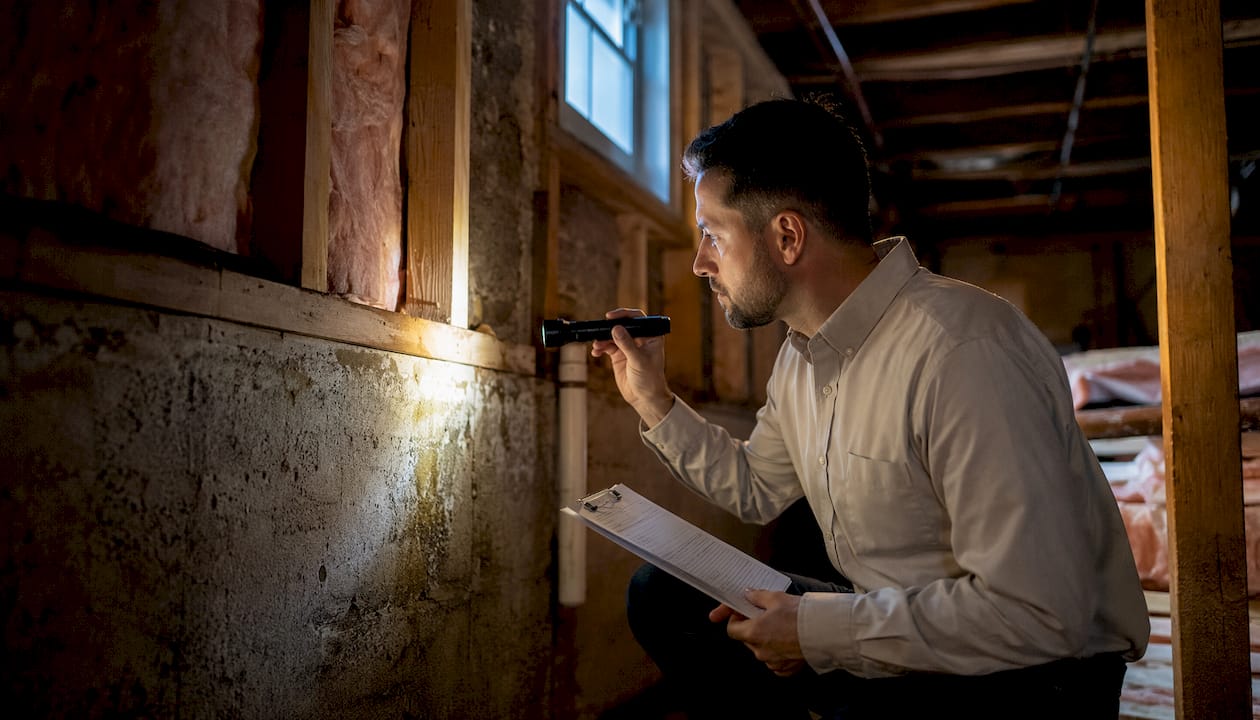
Due diligence on an investment property covers three parallel tracks: physical condition, legal title, and financial performance.
Physical inspection should use a licensed inspector who has experience with rental properties. Beyond the standard systems check (roof, HVAC, plumbing, electrical), ask specifically about deferred maintenance, code compliance issues, and any unpermitted work. Unpermitted additions can affect your appraisal, your insurance, and your ability to refinance.
Legal checks include a title search for liens, easements, and encumbrances; a review of the purchase contract for contingency deadlines; and verification that the seller has the legal authority to convey the property. If you are buying through an LLC, confirm the entity is in good standing before the title company runs the commitment.
Financial verification means confirming actual rent rolls against what the seller represented, reviewing the last 24 months of rental history for unexplained gaps, and checking operating expenses against local benchmarks. A property with a stated cap rate of 7% and undisclosed deferred maintenance may actually perform at 4% after repairs.
Price negotiation on investment property is fundamentally different from negotiating a primary residence purchase. Emotion plays no role. The number you offer should come directly from your financial analysis: what price produces your target return at your projected rent and expense levels.
Start with comparable sales data from the MLS, not the listing price. Identify the seller’s motivation. A landlord who has owned the property for 20 years and wants a clean exit may accept a lower price for a faster close with fewer contingencies. A seller who just listed at market value has no urgency and will not move much.
Use inspection findings as a second negotiation point. A roof that needs replacement in two years is a documented cost. Present a repair estimate and request a price reduction or seller credit at closing. Lenders generally prefer price reductions over seller credits on investment transactions, so confirm the structure with your broker before you make the request.
Investors who know the workflow still need a team that executes it. Yigal-realty specializes in guiding buyers through the full step-by-step acquisition process, from early-stage market research through closing and beyond. The firm focuses on residential investment properties in Beit Shemesh and surrounding areas, with a dedicated New York office for international buyers who want direct access to the Israeli market without navigating it alone.
What sets Yigal-realty apart is the combination of local market depth and personalized project guidance. Clients get early access to new developments before they reach the general market, transparent pricing, and support through every stage of the documentation and purchase process. For investors who want a knowledgeable local partner rather than a generic listing search, that combination is hard to replicate.
Contact Yigal-realty directly through info.yigal-realty.com to discuss current projects and get guidance matched to your investment goals.
A complete workflow for securing investment property requires aligned documentation, financing, and tax planning from day one, not just at closing.
| Point | Details |
|---|---|
| Start with clear goals | Define target returns and hold period before researching markets or properties. |
| Budget for all costs | Down payment, closing costs, and six months of PITIA reserves must all be liquid and documented. |
| Match loan to income profile | DSCR loans qualify on property cash flow; conventional loans require full personal income verification. |
| Treat underwriting as documentation | Fannie Mae applies a 75% rental income haircut; organized files close in 15–21 days versus 45 days. |
| Yigal-realty as your acquisition partner | Yigal-realty provides early project access, local expertise, and guided support for investors in the Israeli market. |