%20(4).png)
![[background image] image of cityscape background (for an architect firm)](https://cdn.prod.website-files.com/68961ade6feff9cbdffc080d/69384e066e0e9a310b6817f8_061f6bac-48bf-44b8-a689-078dacd8009f.avif)
TL;DR:
- Successful real estate investing requires a structured process involving six key phases, from financial preparation to post-purchase management. Properly assessing market signals, analyzing properties with key metrics, and completing thorough due diligence are essential to protect your returns. Starting with a local, simple property and setting up legal and financial structures early can significantly improve your chances of scaling successfully.
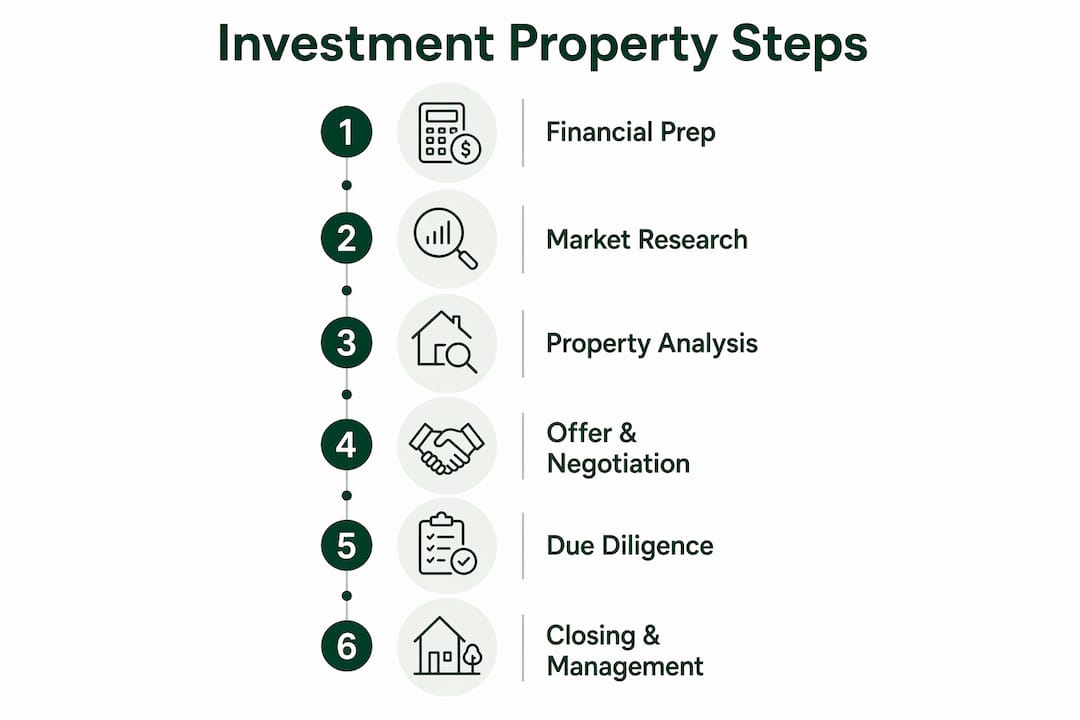
A step-by-step investment property guide is a structured framework covering every phase of acquiring a profitable rental property, from financial preparation through closing and post-purchase management. The real estate investment process spans six distinct phases: financial readiness, market selection, property screening, offer and negotiation, due diligence, and closing. Each phase contains specific tasks you must complete before advancing. Skip one, and you risk overpaying, buying a money-losing asset, or facing legal complications. This guide walks you through each phase with concrete benchmarks, proven metrics, and expert tips built for first-time investors in 2026.
Financial preparation is the foundation of every successful property acquisition. Without it, lenders reject your application, sellers ignore your offers, and unexpected costs destroy your returns before you collect a single rent check.
Budget between $40,000 and $55,000 for a $150,000 investment property, covering a 20–25% down payment, 2–4% in closing costs, and six months of operating reserves. That reserve fund is not optional. Vacancies, repairs, and tenant turnover happen in year one more often than most new investors expect.
Your credit score directly affects your mortgage rate and loan eligibility. Most conventional investment property loans require a minimum score of 620, though scores above 740 unlock significantly better rates. Your debt-to-income ratio should sit below 45% to qualify for most programs.
Mortgage preapproval is your next step. It tells you your real budget, strengthens your offers, and forces you to gather the documents you will need anyway. Collect these before you speak to a lender:
Pro Tip: Set up a separate business bank account for each investment property from day one. It protects your personal assets, simplifies tax filing, and gives you clean records if you ever face an audit.
Consulting a real estate CPA before your first purchase is one of the highest-return moves you can make. Tax structures, depreciation schedules, and entity formation decisions made early can save thousands annually. Strong accounting and legal frameworks are not just good practice. They are the infrastructure that lets you scale from one property to ten.
Location is the single most critical factor in real estate investment. Job growth, school quality, and crime rates are the three indicators that most reliably predict rental demand and long-term appreciation. A great property in a declining neighborhood will underperform a mediocre property in a growing one.

Look for markets with rising employment, population growth, and infrastructure investment. Vacancy rates below 5% signal strong rental demand. Cap rates in your target area tell you what the market expects in return. Compare at least 10–15 recent rental comps before settling on a target neighborhood.
Once you have a market, match your property type to your investment strategy. The table below shows how different property types align with common approaches:
| Property type | Best strategy | Key advantage | Main risk |
|---|---|---|---|
| Single-family home | Buy and hold | Easy to finance, broad tenant pool | One vacancy = zero income |
| Small multifamily (2–4 units) | Buy and hold | Multiple income streams, still residential financing | Higher management complexity |
| Condo or townhouse | Buy and hold | Lower maintenance responsibility | HOA fees and restrictions |
| Fixer-upper | Fix and flip | Below-market purchase price | Renovation cost overruns |
| New construction | Long-term appreciation | Minimal near-term repairs | Higher purchase price |
Pro Tip: For your first purchase, keep the investment local. You already know the neighborhoods, the schools, and the rental market. That familiarity cuts your research time and reduces the chance of a costly mistake.
Use tools like Zillow, Rentometer, and local MLS data to validate rental values. Pull comps within a half-mile radius, similar square footage, and comparable condition. The goal is to know the market well enough that no seller or agent can surprise you with inflated numbers.
Property analysis converts raw listings into yes or no decisions. Two metrics do most of the work. Cap rate equals Net Operating Income divided by property value. Cash-on-cash return equals pre-tax cash flow divided by total cash invested. These numbers tell you whether a deal actually performs or just looks good on paper.
The 1% rule is a quick filter: monthly rent should equal at least 1% of the purchase price. A $200,000 property should rent for at least $2,000 per month. This rule does not replace full analysis, but it eliminates weak deals in seconds.
Your offer should reflect your financial model, not the asking price. Request the seller’s rent rolls, utility bills, and maintenance records before submitting. These documents reveal actual expenses versus what the listing claims. If the numbers do not support the asking price, your offer should reflect that gap.
Negotiate repairs as a credit at closing rather than asking the seller to fix items. You control the quality of work, and you avoid delays. Always include an inspection contingency and a financing contingency in your offer.
Due diligence is where deals get confirmed or killed. Work through this list before removing any contingency:
The documentation process at this stage is detailed. Missing one item can delay closing or expose you to liability after purchase. Treat this checklist as non-negotiable.
Closing is the final phase of the real estate investment process, and it moves fast once you clear due diligence. Schedule your final walkthrough 24–48 hours before the closing date. Confirm that all agreed repairs are complete, appliances are present, and the property is in the condition specified in the contract.
At the closing table, you will sign a stack of documents and wire your down payment and closing costs. The key documents you will receive and sign include:
Transfer utilities into your name or your LLC’s name the day of closing. Set up a property management system immediately, even if you are self-managing. A simple spreadsheet tracking income, expenses, and maintenance requests is enough to start.
Managing your first rental yourself teaches you things no book or course can replicate. You learn how tenants communicate, what maintenance issues recur, and how long real turnovers actually take. That knowledge makes you a far better client when you eventually hire a property manager.
Track actual cash flow and expenses within the first 90 days after purchase. Many new investors overestimate returns because their models miss deferred maintenance and turnover costs. Comparing actuals to projections early reveals exactly where your numbers were off, and gives you better data for your next purchase.
Buying an investment property successfully requires completing six sequential phases, each with specific financial, legal, and analytical tasks that directly protect your returns.
| Point | Details |
|---|---|
| Capital requirements are specific | Budget 20–25% down, 2–4% closing costs, and six months of reserves before making any offer. |
| Location drives returns | Prioritize job growth, school quality, and crime rates over property features when selecting a market. |
| Two metrics decide deals | Cap rate and cash-on-cash return tell you whether a property performs. Run both before every offer. |
| Due diligence is non-negotiable | Complete all eight due diligence checkpoints before removing contingencies to avoid post-close surprises. |
| Track actuals within 90 days | Compare real expenses to your model within the first quarter to catch hidden costs early. |
Most first-time investors I work with want to chase the hottest market they read about online. They look at cities three states away, run numbers on spreadsheets, and convince themselves they have it figured out. The ones who struggle most are almost always the ones who bought somewhere they have never lived.
Keeping your first investment local is not a limitation. It is a real advantage. You know which streets flood, which neighborhoods are turning, and which landlords have a bad reputation. That local knowledge is worth more than any market report.
The other mistake I see constantly is overcomplicating the first deal. Investors try to buy a six-unit building with a value-add component and a short-term rental conversion strategy all at once. The first deal should teach you the process, not maximize complexity. A clean single-family home in a solid rental neighborhood is a better first investment than a complicated deal that stretches your skills and capital simultaneously.
Set up your legal and accounting structure before you close, not after. An LLC, a dedicated business bank account, and a real estate CPA cost a few hundred dollars upfront. They save you from personal liability exposure and tax inefficiency that compounds over years. The investors I have seen scale from one property to ten all built that infrastructure on deal one.
— Spiros
Yigal-realty specializes in guiding investors through every phase of the property acquisition process, with deep expertise in the Israeli real estate market and a dedicated New York office serving international clients. Whether you are working through financial preparation, evaluating specific developments in Beit Shemesh, or navigating the closing process, Yigal-realty provides personalized guidance, early access to new projects, and transparent support at each step. Their team connects you with the right properties, the right professionals, and the right information before you commit. Visit Yigal-realty’s investment guide to explore current listings, request a consultation, and get the expert support that turns a complex process into a clear path forward.
Budget at least $40,000–$55,000 for a $150,000 property, covering a 20–25% down payment, 2–4% in closing costs, and six months of operating reserves.
Most conventional investment property loans require a minimum score of 620, but scores above 740 qualify for significantly better interest rates and loan terms.
Cap rate equals Net Operating Income divided by property value. It measures a property’s return independent of financing, making it the standard metric for comparing investment properties.
The full process from financial preparation to closing typically spans several months and involves more than 40 critical steps, depending on market conditions and financing timelines.
Yes, at least initially. Self-managing your first rental builds hands-on knowledge in tenant relations and maintenance that makes you a better investor and a more informed property management client later.