%20(4).png)
![[background image] image of cityscape background (for an architect firm)](https://cdn.prod.website-files.com/68961ade6feff9cbdffc080d/69384e066e0e9a310b6817f8_061f6bac-48bf-44b8-a689-078dacd8009f.avif)
TL;DR:
- Property valuation determines a property’s true market worth, which often differs from the asking price. It guides mortgage, tax, and investment decisions, relying on methods like market, income, and cost approaches. Understanding and applying valuation insights helps buyers negotiate better and mitigate financial risks during property transactions.
Most people buying a home assume the asking price reflects what the property is actually worth. It rarely does. Understanding what is property valuation, and how it differs from price, is one of the most practical things you can do before signing any purchase agreement. A proper property value assessment tells you what a property would realistically sell for in the open market, based on evidence, not emotion or seller expectation. This guide walks you through every key concept, from how appraisers work to how valuations affect your mortgage and taxes.
| Point | Details |
|---|---|
| Price is not value | A property’s asking price can diverge from its true market value due to negotiations, urgency, or market conditions. |
| Three valuation approaches | Professionals use market, income, and cost approaches, often combining them for accuracy. |
| Appraisals affect your mortgage | Lenders use the appraised value to calculate LTV ratios, which directly impacts your loan terms. |
| Taxes use separate valuations | Government tax assessments are distinct from market valuations and can differ significantly. |
| Get the report early | Buyers receive appraisal reports at least 3 business days before closing, giving time to act on surprises. |
Property valuation is the process of determining what a property is actually worth at a specific point in time. This may differ from what a seller asks and what a buyer pays. Value reflects market evidence. Price reflects an agreement between two parties, shaped by motivation, timing, and negotiation.
Two terms come up constantly: valuation and appraisal. In the United States, “appraisal” is the standard word for the formal, written report produced by a licensed appraiser. In international real estate and professional frameworks like RICS (Royal Institution of Chartered Surveyors) and IVS (International Valuation Standards), “valuation” is the broader term covering the entire process, methodology, and conclusion. For practical purposes, they refer to the same core activity.
Here are the foundational terms every buyer and investor should understand:
The importance of property valuation goes beyond simply setting a price. Valuations are used for mortgage lending, insurance, taxation, estate planning, and legal disputes. Each use case may call for a different basis of value and a different method. This is why the same property can have multiple legitimate “values” depending on the question being asked.
Licensed appraisers and valuers do not guess. They apply structured, internationally recognized approaches to arrive at a defensible value. The three main approaches are the market approach, the income approach, and the cost approach.
| Approach | How it works | Best used for |
|---|---|---|
| Market (Sales Comparison) | Compares the subject property to recently sold similar properties (comps) | Residential homes, standard purchases |
| Income | Converts expected future cash flows into a present value | Rental properties, commercial real estate |
| Cost | Estimates the cost to replace the structure, minus depreciation, plus land value | New construction, unique or specialized properties |
The market approach is the most common method for residential buyers. An appraiser pulls comparable sales data from recently sold homes in the same area and adjusts for differences in size, condition, age, and features. If a comparable home sold for $400,000 but had an extra bathroom your target property lacks, the appraiser reduces the comparable’s contribution to the value estimate accordingly.

The income approach matters most if you are buying a rental property. The appraiser calculates the net income the property generates, then applies a capitalization rate to convert that income stream into a single value figure. You can explore more about this methodology in depth with real estate market analysis tools that align with RICS and IVS frameworks.
Professionals often apply more than one approach and then reconcile multiple methodologies to reach a final value. This is not averaging. It is a judgment call about which approach carries the most weight given the property type and the evidence available.
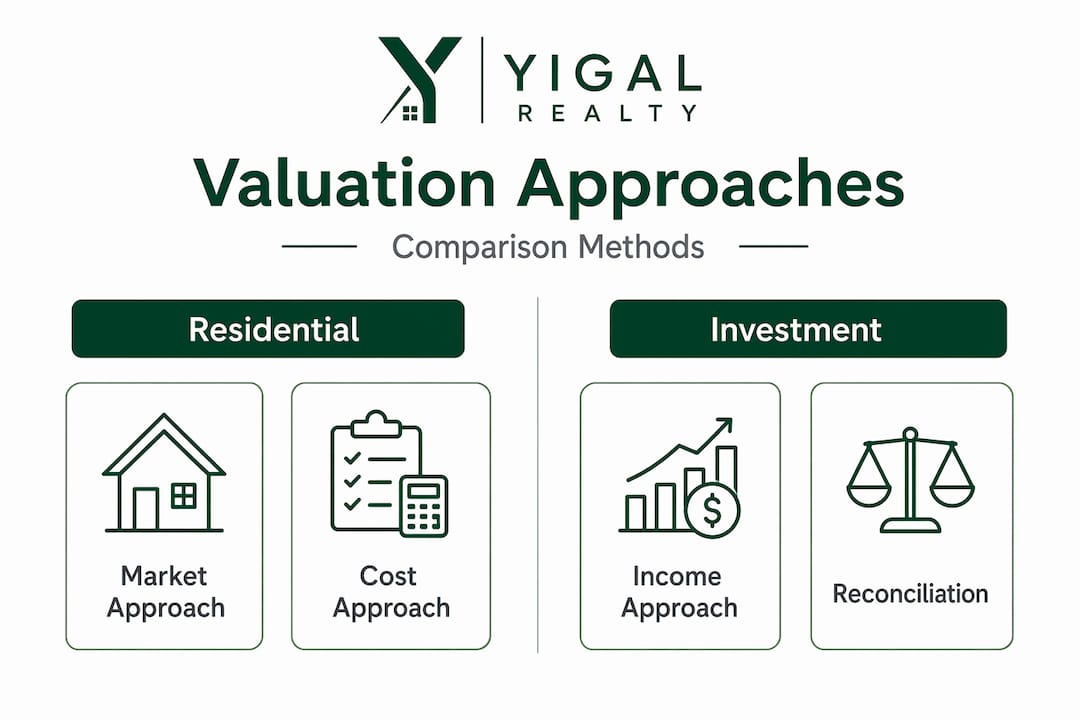
Pro Tip: If you receive a valuation report and see only one approach used, ask the appraiser why the others were excluded. For most residential properties, the market approach should dominate, but the reasoning should always be documented.
Understanding the property appraisal process before you make an offer takes much of the stress out of the mortgage stage. Here is how it typically unfolds:
The appraised value directly affects your mortgage. Lenders calculate the loan-to-value (LTV) ratio by dividing the loan amount by the appraised value. Lenders typically target LTV ratios of 80% or less, and if the appraisal comes in lower than your offer price, you may face a funding gap. You would need to renegotiate the purchase price, increase your down payment, or walk away.
Appraisal surprises affect loan terms beyond just the purchase price. A low appraisal can trigger private mortgage insurance (PMI) requirements or change the interest rate you qualify for. Review the documentation process for property buyers to understand exactly what paperwork and timelines to expect during your purchase.
Pro Tip: Ask your real estate agent to walk you through the comps before the appraisal. If you know the appraiser will find three recent sales significantly below your offer price, you have time to address it before financing gets complicated.
Not all valuations exist to support a sale. Government agencies conduct their own property value assessments for taxation, and these figures operate on a completely different basis from market valuations.
Key differences between tax valuations and market valuations include:
Government valuation agencies operate at significant scale. In the United Kingdom alone, the Valuation Office Agency supports over £60 billion a year in tax revenue through its assessments.
In the Israeli real estate market, property taxes and their relationship to government valuations require careful attention, particularly for international buyers. Understanding Israeli property taxes in detail helps you factor the real carrying cost of a property into your investment decision.
If you believe your tax assessment does not reflect your property’s true condition or market position, most jurisdictions have a formal appeals process. You typically need a professional appraisal to support that challenge.
Knowing what is a home valuation is only the first step. The real advantage comes from knowing how to apply that knowledge when making purchase decisions.
Here is what experienced buyers and investors do differently:
Investors stepping into real estate for the first time benefit from a structured approach. The investment property buying guide walks through how valuation fits into the full acquisition process from initial analysis to closing.
I have worked with enough first-time buyers to know that the valuation step is where deals go sideways most often. Not because the appraisal is wrong, but because buyers were not prepared for it.
The most common misunderstanding I see is this: buyers treat the purchase price they agreed to as the “right” number, and then feel cheated when the appraisal comes in lower. The appraiser did not make a mistake. The market simply does not support the price that two motivated parties agreed to in a competitive offer situation. Those are different things.
My honest advice is to treat the appraisal as your financial protection, not an obstacle. It exists because the lender needs to know they are not financing more than the property is realistically worth. That same protection benefits you as the buyer. You are being asked to take on a mortgage potentially lasting 20 to 30 years. Knowing the asset supports that debt is not paperwork. It is due diligence.
I have also seen buyers skip independent valuations entirely when buying new construction, assuming that the developer’s pricing reflects market reality. It often does not. New developments sometimes carry a premium that the resale market will not support for years. A proper valuation before you commit protects you from finding that out the hard way.
— Spiros
Understanding property valuation is one thing. Applying it during an active purchase in a competitive or unfamiliar market is another. Yigal Realty specializes in exactly that transition, guiding buyers and investors through every stage of property acquisition in Beit Shemesh and surrounding communities in Israel.
The Yigal Realty team works with buyers from initial property selection through to closing, ensuring you understand what each valuation figure means for your financing, tax obligations, and long-term investment. Whether you are relocating from abroad, purchasing for the first time, or expanding a real estate portfolio, the team provides localized expertise and direct access to current projects and developments.
Reach out through info.yigal-realty.com to speak with an agent who can connect your valuation knowledge to real properties and real numbers in the Israeli market.
Property valuation is a professional assessment of what a property is worth in the open market at a specific point in time. It may differ from the asking or purchase price, which reflects negotiation rather than objective market evidence.
A licensed appraiser inspects the property, researches comparable sales, and produces a written report. The full process typically takes 5 to 10 business days after the physical inspection.
Location, size, condition, recent comparable sales, and income potential are the primary drivers. Market conditions at the time of valuation also play a significant role, as appraisals are always based on current market evidence.
Tax assessments use mass appraisal models tied to a fixed government assessment date, while a licensed appraisal reflects current market conditions and individual property characteristics. The two figures serve different purposes and are calculated differently.
Yes. You can request a reconsideration of value by providing the appraiser with comparable sales they may not have used. If the report still does not reflect market reality, you can request a second appraisal through your lender, though approval depends on lender policy.