%20(4).png)
![[background image] image of cityscape background (for an architect firm)](https://cdn.prod.website-files.com/68961ade6feff9cbdffc080d/69384e066e0e9a310b6817f8_061f6bac-48bf-44b8-a689-078dacd8009f.avif)
Investing in Israeli real estate from the United States presents unique opportunities and challenges, especially for families seeking properties in observant and religious communities like Beit Shemesh. The process involves navigating unfamiliar legal frameworks, understanding leasehold land systems, and managing cross-border tax obligations. Many potential investors hesitate due to concerns about foreign ownership restrictions, complex procedures, and financial planning uncertainties. This comprehensive guide breaks down every step of the investment journey, from understanding Israel’s distinctive land ownership structure to closing your purchase and maximizing returns while staying compliant with both Israeli and U.S. regulations in 2026.
| Point | Details |
|---|---|
| Leasehold dominance | Most Israeli land operates under 49 to 98 year leases rather than outright ownership, affecting investment terms and renewal conditions. |
| Regional yield variation | Rental returns range from 2% to 4% in major cities but reach 5% to 7% in peripheral markets like Beit Shemesh. |
| Community alignment | Beit Shemesh offers rapidly growing observant populations with strong transaction volumes, making it ideal for religious family investors. |
| Dual tax compliance | U.S. investors must navigate FATCA reporting, FBAR filings, and progressive Israeli purchase taxes starting around 8%. |
Israel’s land ownership system differs fundamentally from American property law, creating both opportunities and limitations for foreign investors. 93% of Israel land is state, ILA, or JNF leasehold with terms ranging from 49 to 98 years and renewable conditions. This leasehold structure means you purchase the right to use land rather than owning it outright, which affects resale values, financing options, and long-term planning.
Foreign buyers face specific restrictions on Jewish National Fund lands unless they qualify under the Law of Return. Jewish individuals and their families typically encounter fewer barriers, but non-Jewish investors may find certain properties unavailable or subject to additional approval processes. Church lands in Jerusalem neighborhoods present another consideration, as some involve expiring leases with uncertain renewal prospects that can jeopardize investment security.
Before committing capital, verify lease terms meticulously and confirm your eligibility status. Key prerequisites include:
Pro Tip: Request a full lease history and renewal terms in writing before making any purchase offer, as verbal assurances carry no legal weight in Israeli property transactions.
The leasehold system actually benefits long-term investors in growing markets like Beit Shemesh, where infrastructure improvements and community expansion increase property values without the full cost burden of land ownership. Understanding these fundamentals positions you to make informed decisions and avoid common pitfalls that derail inexperienced foreign buyers.
Executing a successful Israeli property purchase requires methodical preparation and cultural awareness, especially when targeting observant community markets. Beit Shemesh has growing observant populations with increasing transaction volumes and rising prices, making it a prime focus for religious family investors seeking both community fit and financial returns.
Follow this sequential approach to navigate the purchase process:
Pro Tip: Schedule your property visits around Jewish holidays when you can experience the community’s religious infrastructure and social atmosphere firsthand, giving you authentic insight into daily life.
Timelines vary based on property type and seller circumstances, but expect 60 to 90 days for straightforward transactions and up to six months for complex situations involving multiple owners or legal complications. Budget for costs including purchase tax, legal fees (typically 1% to 1.5% of purchase price), agent commissions (usually 2%), and registration fees, which collectively add 10% to 15% to your base property price.
Working with professionals who understand observant family priorities streamlines the process and helps you avoid properties that seem attractive financially but lack essential community features or religious amenities.
Financial success in Israeli real estate investment requires understanding both local market dynamics and international tax obligations that affect your net returns. National gross rental yields average 3.1% with net returns around 2.0%, but Beit Shemesh and peripheral areas often deliver higher performance due to growing demand and lower entry prices.
Rental yield expectations vary significantly by location and property type:
| Market Type | Gross Yield Range | Net Yield Range | Investment Characteristics |
|---|---|---|---|
| Tel Aviv center | 2.0% to 3.0% | 1.2% to 1.8% | High prices, stable demand, lower percentage returns |
| Jerusalem established | 2.5% to 3.5% | 1.5% to 2.2% | Mixed demographics, moderate appreciation |
| Beit Shemesh growing | 4.0% to 6.0% | 2.8% to 4.5% | Strong religious community demand, higher yields |
| Peripheral cities | 5.0% to 7.0% | 3.5% to 5.2% | Emerging markets, higher risk but better cash flow |
Capital appreciation remains strong in established observant communities, though sales volumes fluctuate with economic conditions and interest rate changes. Israeli purchase taxes follow a progressive structure starting around 8% for investment properties, with rates increasing based on property value and whether you own other Israeli real estate.

U.S. investors face FATCA and IRS reporting requirements including annual FBAR filings for foreign financial accounts and potential taxation on rental income and capital gains. Israel does not permit mortgage interest deductions, but U.S. tax law may allow you to claim these deductions on your American return, creating a valuable offset. The U.S. Israel tax treaty prevents double taxation, though you must navigate both systems carefully to maximize benefits.
Comprehensive cost planning must account for:
Pro Tip: Structure your purchase to minimize tax exposure by consulting both Israeli and U.S. tax professionals before closing, as timing and ownership structure significantly impact your obligations.
Successful investors in religious communities often achieve better-than-average returns by targeting properties near expanding yeshivas, new synagogue developments, or areas with planned infrastructure improvements that will enhance community attractiveness and drive demand growth.
Avoiding costly mistakes requires systematic verification and awareness of risks specific to Israeli real estate and cross-border transactions. Many foreign investors encounter problems that could have been prevented through proper due diligence and professional guidance.
Lease status verification stands as your most critical protection. Confirm remaining lease duration, renewal terms, associated costs, and any restrictions on transfer or subletting. Church land leases in Jerusalem carry risks due to expiring leases and uncertain renewal conditions, potentially leaving you with a worthless asset if renewal fails. Always obtain written lease documentation and have it reviewed by legal counsel before proceeding.
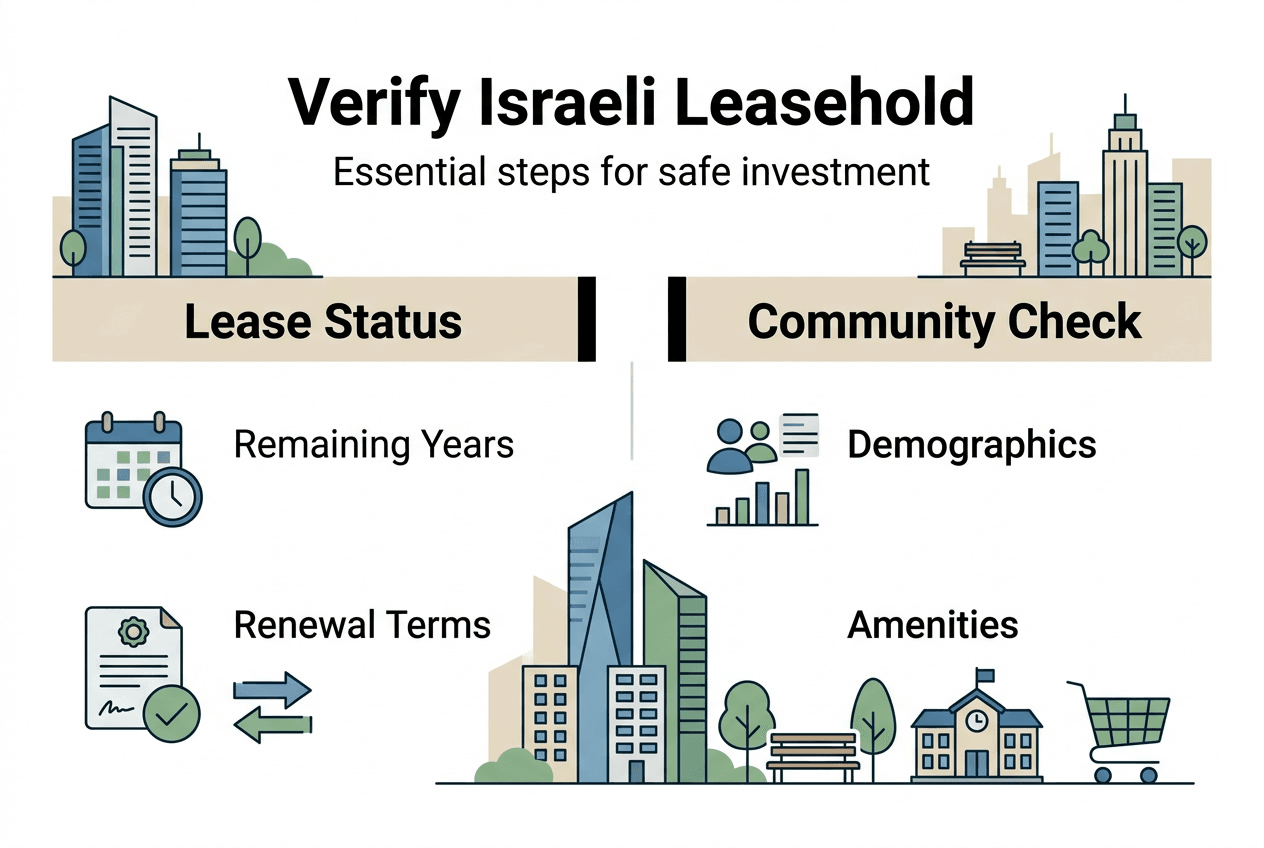
Community demographic alignment matters enormously for observant family investors. A property in a rapidly secularizing neighborhood may lose appeal to your target tenant base, while areas experiencing religious population growth offer sustained demand. Research local schools, synagogues, and community institutions to ensure long-term compatibility with your investment thesis.
Market timing mistakes occur when investors overpay during peak cycles or rush purchases without adequate comparable sales analysis. Beit Shemesh submarkets vary widely, with some neighborhoods commanding premium prices while others offer better value. Take time to understand micro-market dynamics rather than relying on citywide averages.
Essential verification steps include:
“The single biggest mistake foreign investors make is rushing the legal verification process to meet arbitrary timelines, only to discover title problems or lease complications after closing when remedies become expensive and complex.”
Pro Tip: Build a comprehensive investor checklist that you methodically complete for every property you consider, preventing emotion or time pressure from overriding sound due diligence practices.
Allow adequate time for professional property inspection and legal review, typically two to three weeks minimum. Cutting corners on verification to accelerate closing rarely saves money and frequently costs far more than the professional fees you attempted to avoid. Working with experienced professionals who understand both Israeli law and American investor needs provides essential protection against the pitfalls that derail unprepared buyers.
Navigating Israeli real estate investment successfully requires local expertise, cultural understanding, and professional support throughout the complex process. Yigal Realty specializes in serving observant families and U.S. investors seeking properties in Beit Shemesh and surrounding religious communities, offering the guidance and market knowledge essential for confident decision making in 2026.
Our team understands the unique priorities of religious investors, from eruv boundaries and synagogue proximity to educational institutions and community character. We provide access to current listings, market insights, and early notification of new developments before they reach the broader market. Whether you seek rental income properties, family vacation homes, or long-term appreciation investments, professional support streamlines legal compliance, financial planning, and cultural integration.
Explore comprehensive real estate investment opportunities with professionals who bridge American investor expectations and Israeli market realities, ensuring your investment journey proceeds smoothly from initial research through successful closing and beyond.
Yes, but U.S. investors must navigate Israel’s leasehold land system and comply with FATCA and IRS reporting requirements including annual FBAR filings. Certain restrictions apply to JNF lands for non-Jewish buyers, though individuals eligible under the Law of Return face fewer barriers. Professional legal and tax guidance helps ensure compliance with both Israeli and American regulations.
Purchase tax follows a progressive structure starting around 8% for investment properties, with rates increasing based on value and existing ownership. Additional costs include legal fees (1% to 1.5%), agent commissions (typically 2%), and registration fees, collectively adding 10% to 15% to your base property price. Ongoing expenses include property tax, building maintenance fees, insurance, and management costs if renting.
Beit Shemesh stands out as a rapidly growing market with expanding observant populations, strong transaction volumes, and rising property values that balance community fit with financial returns. Peripheral areas around Jerusalem and other cities with established religious communities often offer better rental yields (4% to 7%) compared to major urban centers. Focus on neighborhoods with robust religious infrastructure including synagogues, yeshivas, and kosher amenities.
U.S. investors must file FBAR reports for foreign financial accounts and comply with FATCA disclosure requirements while reporting rental income and capital gains to the IRS. The U.S. Israel tax treaty prevents double taxation, though you navigate both systems simultaneously. Mortgage interest may be deductible on U.S. returns but not in Israel, creating potential tax planning opportunities. Consult both Israeli and American tax professionals to optimize your structure and minimize obligations.