

In Israel today, a purchase price or payment plan explicitly linked to the US dollar is uncommon and should be treated as a nonstandard term. Developers now favor indexing tied to the Construction Inputs Price Index or deferred-payment promotions over currency pegs. Before signing anything, get the exact indexation wording and the bank guarantee language in writing, then run the developer’s numbers through an official calculator.
TL;DR:
- Any dollar clause should name its base date, published exchange rate, recalculation schedule, rounding rules, and adjustment cap, or its operation may be unpredictable.
- Ask the bank to confirm in writing that the developer guarantee covers the full nominal amount, including any currency driven increase the clause could trigger.
- Compare fixed shekel pricing, CIPI indexation, and deferred payment offers on a net present value basis, using identical discount assumptions rather than headline prices.
- Model every scheduled payment using the contract’s named rate, then test unchanged, 5% higher, and 10% higher exchange rates against the alternative offer.
Currency indexation ties part or all of a payment schedule to the US dollar exchange rate rather than to a domestic price index. That is a different mechanism from the Construction Inputs Price Index, or CIPI, which most new-build contracts in Israel use to adjust the price as construction progresses. A dollar-linked clause needs three things spelled out: a base date, a named exchange-rate source, and a recalculation frequency. Without those, the clause may be difficult to interpret or apply predictably.
Banking supervision rules require lenders to disclose indexation mechanics and the type of exchange rate used in a loan or payment structure, and buyers should use official banking calculators to see the long-term effect before committing. Statutory protections under the Sale Law also shape what guarantees a developer must provide and how buyer payments get secured.
Key mechanics to confirm in any dollar-linked clause:
Dollar linkage was once a routine feature of Israeli housing contracts, a legacy of earlier decades when the shekel floated less freely. Bank of Israel analysis on exchange-rate pass-through notes that the housing component has historically carried an outsized share of currency effects on prices, a pattern tied to that earlier dollarization. The market has moved toward NIS-denominated contracts, with currency-linked terms described as nonstandard.
Developers now market a different set of tools to manage buyer cash flow:
The Bank of Israel’s Financial Stability Report describes deferred-payment promotions and subsidized loans as alternatives to indexation in recent sales campaigns. A promoted plan with a low headline price and a deferred balloon payment is not automatically cheaper than an indexed contract. The only way to know is to compare both structures on a net present value basis, using the same discount assumptions for each.
Pro Tip: Ask the developer for the same scenario modeled three ways: fixed NIS price, CIPI-indexed price, and the promoted deferral plan, then compare the bottom line on each.
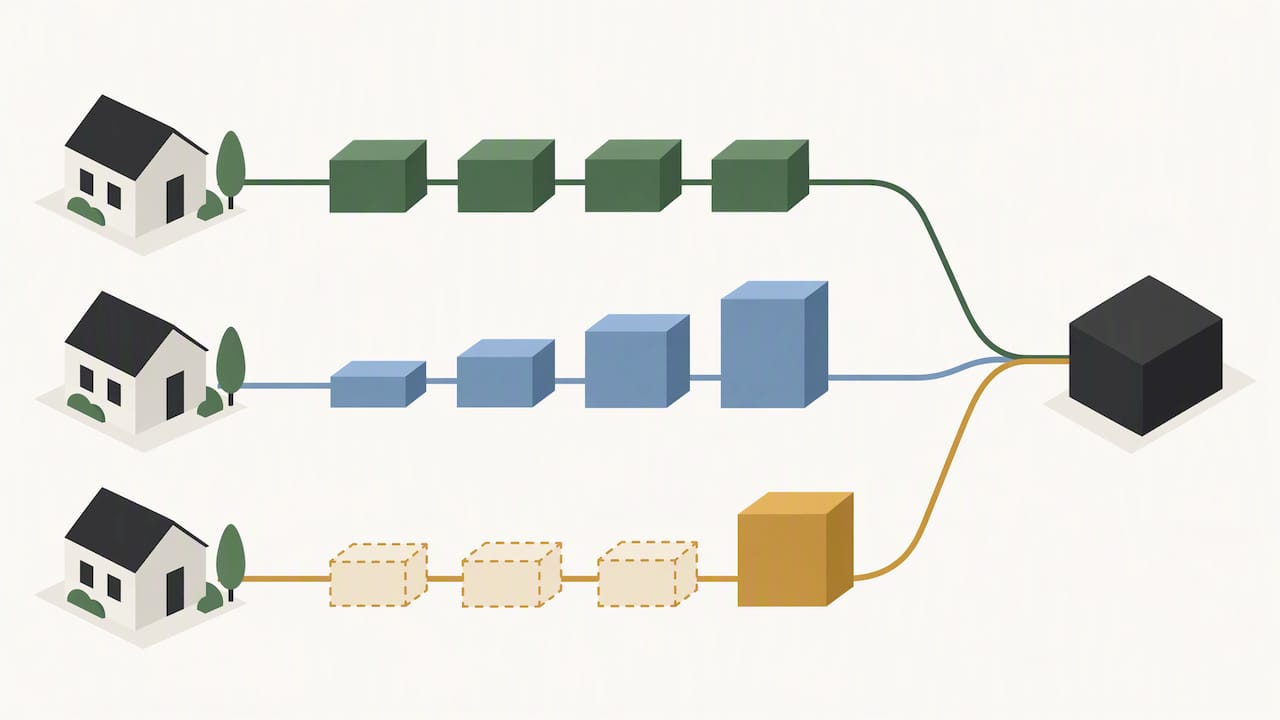
A dollar-linked clause is described as nonstandard in modern new-build contracts, and it can shift currency risk onto the buyer. Work through these steps before signing:
Historically, the exchange-rate pass-through to Israel’s consumer price index runs at about a 29 percent coefficient, with housing responsible for roughly 70 percent of that effect within the index. That history is exactly why a dollar clause deserves closer scrutiny than a standard CIPI clause.
For a deeper look at protecting yourself against currency swings in a purchase agreement, our guide to currency protection in a home purchase walks through the same checklist in more detail.
Running the numbers yourself takes three steps. First, list every payment date and amount from the draft contract exactly as written. Second, apply whichever series the contract specifies, the referenced dollar rate or the CIPI, to each future payment. Third, build two or three scenarios: the exchange rate unchanged, up 5 percent, and up 10 percent, and see what each does to your total.
For the inputs, use the Bank of Israel’s exchange-rate data and the Central Bureau of Statistics methodology for dwelling prices as your authoritative reference points rather than estimates from a sales office.
Pro Tip: If the draft contract does not name a specific exchange-rate source, do not sign until it does. “The dollar rate” without a named publisher is not a clause, it is a placeholder.
If the plan involves a bullet loan that later converts to a standard mortgage, our guide to financing a home in Israel covers how that conversion typically works.
Our work in Beit Shemesh and the surrounding area includes helping buyers assess proposed payment structures. Our practical rule stays simple: we prefer clear NIS pricing or a transparent deferred-payment promotion over a dollar clause, and we verify that any bank guarantee actually covers the indexed exposure before a buyer signs.
When a contract includes any form of indexation, we run the alternative scenarios side by side before recommending a position. If you want a second set of eyes on a draft, our concierge guidance can walk through it with you.
— Spiros
If you are weighing a contract with a dollar-linked clause, the real question is not whether such terms are allowed, it is whether the specific wording protects you. Our concierge project guidance reads the draft contract line by line, calculates your exposure under the exchange-rate scenarios that matter to your timeline, and checks that the bank guarantee matches what the indexation clause could actually cost you.
This work fits first-time buyers facing their first new-development contract, investors comparing several projects at once, and international purchasers managing a transaction from abroad. We handle the same scenario modeling and guarantee verification for any of the projects we represent, including Neve Amim, Eucalyptus, and Rotshtein Heights.
Reach out through our concierge project guidance page to have a draft contract reviewed before you commit to it.
Yes, currency-linked pricing is not prohibited, but it is a nonstandard term in today’s new-build contracts, which mostly use CIPI indexing or fixed NIS pricing instead. Treat any dollar clause as a point to negotiate and verify, not a routine feature.
Dollar indexation ties your price to the US dollar exchange rate, while CIPI tracks Israel’s Construction Inputs Price Index, a domestic measure that moves with building material and labor costs. The two mechanisms may expose a buyer to different risks, so check how each one would affect the payments under your contract.
Only if it is written to. Under the Sale Law buyer payments must be secured, but the guarantee amount has to explicitly include any increase the indexation clause could trigger, so confirm this wording with the bank directly before relying on it.
Common alternatives include 80/20 or 90/10 deferred-payment plans, developer-subsidized bullet loans, and straight NIS pricing with no index attached. The Bank of Israel’s Financial Stability Report describes these structures among the promotional approaches used in recent sales campaigns.
Yes, our concierge project guidance reads the exact contract language, models your exposure under several exchange-rate scenarios, and checks that the bank guarantee matches the indexed amount. This review is available to buyers considering any of the projects we represent in Beit Shemesh and the surrounding area.