%20(4).png)
![[background image] image of cityscape background (for an architect firm)](https://cdn.prod.website-files.com/68961ade6feff9cbdffc080d/69384e066e0e9a310b6817f8_061f6bac-48bf-44b8-a689-078dacd8009f.avif)
If you moved to Israel within the last 15 years, you likely qualify for a subsidized משכנתא לעולים חדשים (mortgage for new immigrants) known as the Zakaut. That entitlement is separate from your actual bank mortgage approval, and confusing the two is the single biggest mistake olim make when buying their first home.
Start these three things now, in parallel:
The subsidized portion is CPI-linked and capped by a Bank of Israel formula: the average index-linked rate minus 0.5%, or 3%, whichever is lower.
Securing a mortgage as an oleh works best when you separate government entitlement from bank approval and prepare both tracks at once.
| Point | Details |
|---|---|
| Zakaut is not bank approval | Teudat Zakaut proves eligibility; the bank still runs full underwriting on top of it. |
| Rate formula is fixed | Zakaut rate equals the Bank of Israel index-linked average minus 0.5%, capped at 3%. |
| Down payment stays firm | First apartments require roughly 25% down even after the Zakaut is applied. |
| Local liquidity matters | Keep several months of payments in an Israeli account to avoid credit problems. |
| Yigal Realty supports the process | Yigal Realty helps olim in Beit Shemesh with document prep, due diligence, and early project access. |
This article is general information, not a substitute for advice from a qualified financial advisor. Consult a qualified financial professional about your own circumstances before acting on anything here.
The Zakaut is a government-subsidized loan layered on top of your regular bank mortgage, not a replacement for it. Eligibility runs for up to 15 years from your aliyah date, and the apartment generally has to be your primary residence.
That sounds generous, but the loan principal itself moves with the CPI (the Madad), so inflation risk shifts onto the borrower even while the interest rate stays low. A quiet year of inflation can add real shekels to your outstanding balance.
How much you get depends on entitlement points, or nikud. The Ministry calculates these based on:
Zakaut amounts typically land somewhere between 100,000 and 300,000 NIS, depending on your points and location. One thing worth repeating clearly: the Teudat Zakaut proves you’re entitled to this benefit. It does not mean a bank has approved you for a mortgage.
Israeli banks don’t waive underwriting standards for olim, but they do accept forms of evidence you might not expect. Foreign credit reports and two to three years of foreign tax returns count as legitimate proof of financial history, even without an Israeli credit file.
Here’s the practical order of documents a loan officer will ask for:
Banks generally cap your monthly mortgage payment at roughly 40% to 50% of net income, and they stress-test that number against an interest rate roughly 2 percentage points higher than today’s rate. That protects the bank, and honestly, it protects you too, since rates on the commercial portion of your loan aren’t fixed for life.
Pro Tip: Build one organized folder, chronological and translated, before you ever walk into a branch. Loan officers who don’t have to chase you for a missing 2023 tax return move your file faster than ones who do.
Bank of Israel rules set the ceiling on how much of the purchase price a bank will finance, and that ceiling depends on what kind of buyer you are.
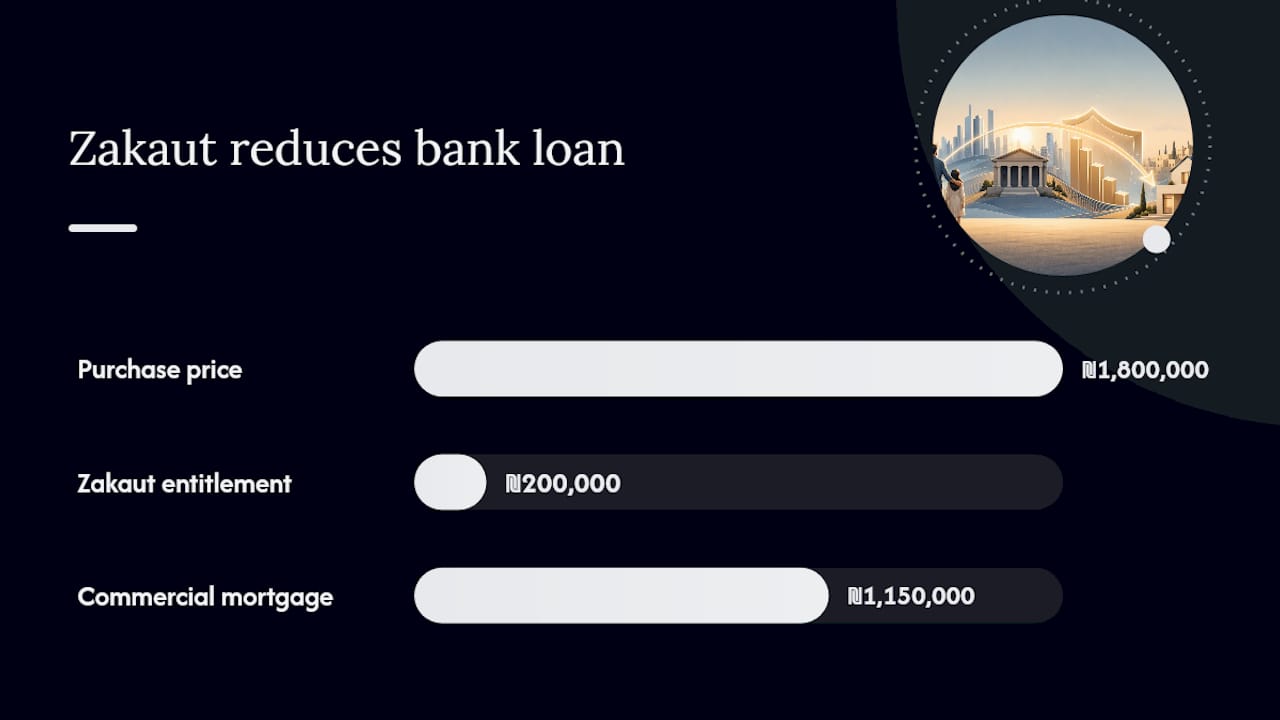
Say you’re buying a first apartment for 1,800,000 NIS. If your Zakaut entitlement covers 200,000 NIS of that financed amount, your commercial mortgage shrinks to 1,150,000 NIS, which lowers your monthly payment and can be the difference between passing or failing the payment-to-income test.
Buying from abroad or shortly after landing means you’re working with less local context than a longtime resident, so a structured checklist matters more.
A thorough registry and permit check before signing prevents the kind of expensive surprise that no mortgage can fix after the fact. Our guide on due diligence in Israeli real estate walks through the registry check in more detail.
Pro Tip: The Olim tax discount is a one-time benefit. If your first Israeli purchase is a small starter apartment, saving that benefit for a larger, later purchase sometimes nets you more money overall.
Currency mismatch trips up more olim than almost anything else. If your income arrives in dollars or euros but your mortgage payment is in shekels, a bad exchange-rate month can quietly wreck your budget. Holding a cushion of local savings, or exploring a hedge if your income stream is large and steady, takes that risk off the table.
Liquidity matters just as much. Keep several months of mortgage payments sitting in an Israeli bank account. A single bounced payment can land on your Israeli credit record, and repairing that record takes far longer than building the buffer would have.
The process runs in a fairly fixed sequence, and skipping a step usually costs you time later, not less of it.
Not every bank handles Zakaut submissions the same way, but you can transfer your Teudat Zakaut between banks if one offers a better commercial rate. Zakaut terms typically run 5 to 30 years, and remember the principal is Madad linked throughout, so a longer term means more years of CPI exposure on that portion. Start the legal checks on the property the same week you get pre-approval, not after, so nothing holds up your closing date.
Yes, and most olim leave options on the table simply because they don’t know to ask. A co-signer or guarantor with an established Israeli income history can meaningfully change what a bank offers you, particularly if your own income is entirely foreign-sourced and you’re early in building local credit.
A guarantor doesn’t need to contribute cash. Their role is to backstop the bank’s risk assessment, which can push your approved loan-to-value higher or soften the payment-to-income math in your favor. Family members already living in Israel with stable income sometimes fill this role for a first-time oleh buyer.
Beyond guarantors, a few concrete levers actually move the needle:
None of these require you to wait out your entire 15-year Zakaut window. Improving your terms is mostly about presenting a cleaner risk picture to the bank, not about accumulating more time in the country.
Israeli mortgages, including the commercial portion attached to a Zakaut loan, can be refinanced (known locally as mahzor mashכanta) once market rates shift or your financial picture improves. This matters more for olim than most buyers because your income situation in year one, often still transitioning from a foreign salary to Israeli employment, rarely looks like your income situation in year five.
A few practical points worth knowing before you sign your original mortgage:
Don’t treat your first mortgage structure as permanent. Revisiting it two or three years in, once you have an Israeli income history, is common practice among olim who locked in terms during a less certain first year.
Israeli banks require two types of insurance before releasing mortgage funds, and neither is optional for olim or anyone else.
Life insurance (bituach chayim) tied to the mortgage balance is mandatory. It pays off the outstanding loan if the borrower dies during the mortgage term, protecting both the bank and your family from an unpaid balance following a death. Premiums are usually based on age and health, so a medical questionnaire is standard.
Structural insurance (bituach mivne) covering the physical property against damage is also required, similar to homeowners insurance elsewhere. Banks want assurance that their collateral, the apartment itself, is protected against fire, flooding, and structural damage.
For olim specifically, a few wrinkles show up:
Budget for both premiums as part of your true monthly housing cost, not as an afterthought layered on after your mortgage payment is set.
Most of the friction olim hit isn’t the mortgage math. It’s not knowing which office to call, which document format a bank actually wants, or who to trust with a lien check. Local brokerage support closes that gap: early access to new projects, help assembling a document file, and coordinating between your lawyer and bank so nothing falls through the cracks between two institutions that don’t talk to each other.
— Spiros
Yigal Realty works specifically with olim buying in Beit Shemesh and the surrounding communities, and the practical edge is coordination: we help you assemble the document file your bank will actually accept, run the registry and permit checks before you sign anything, and get you early access to new developments before they’re publicly listed. That’s a meaningfully different experience than navigating bank branches and lawyers on your own from a foreign address, especially when you’re still learning which Israeli institution handles which piece of the process.

If you’re planning a purchase in the next year, start with our essential buying checklist for Israel and reach out through Yigal Realty to get matched with an agent who can walk your specific Zakaut and mortgage timeline alongside you.