%20(4).png)
![[background image] image of cityscape background (for an architect firm)](https://cdn.prod.website-files.com/68961ade6feff9cbdffc080d/69384e066e0e9a310b6817f8_061f6bac-48bf-44b8-a689-078dacd8009f.avif)
A signed זיכרון דברים (zichron devarim, or preliminary memorandum) can be enforced as a full sale contract in Israel if it shows intent to be bound and covers the essential terms. Do not sign one without a lawyer’s review, and never sign without protective mechanics in place: a warning note in your favor and a trust account for staged payments. Treat every memorandum as a potential final contract, not a casual placeholder.
TL;DR:
- A signed preliminary memorandum in Israel can be legally binding if it shows clear intent and contains essential terms like parties, property, and price, even if some details are missing.
- Signing without safeguards may lead to deposit forfeiture, weakened negotiating position, trigger tax reporting obligations, and transfer hidden liabilities to the buyer.
- Buyers should insist on protections such as lawyer approval clauses, trust account payments, registration of warning notes, and explicit deadlines for the formal contract.
- It is safest to complete title checks, mortgage pre-approval, engineer inspections, and structuring staged payments before signing any preliminary agreement.
- Proper legal and broker coordination reduces the risk of disputes, expensive litigation, and prolonged delays caused by rushed or poorly protected memoranda.
A zichron devarim is a short-written document buyers and sellers sign to lock in the basic terms of an apartment deal before the full contract is ready. Israelis also call it a reservation letter, a preliminary terms sheet, or a deposit acknowledgment, depending on the broker or lawyer drafting it.
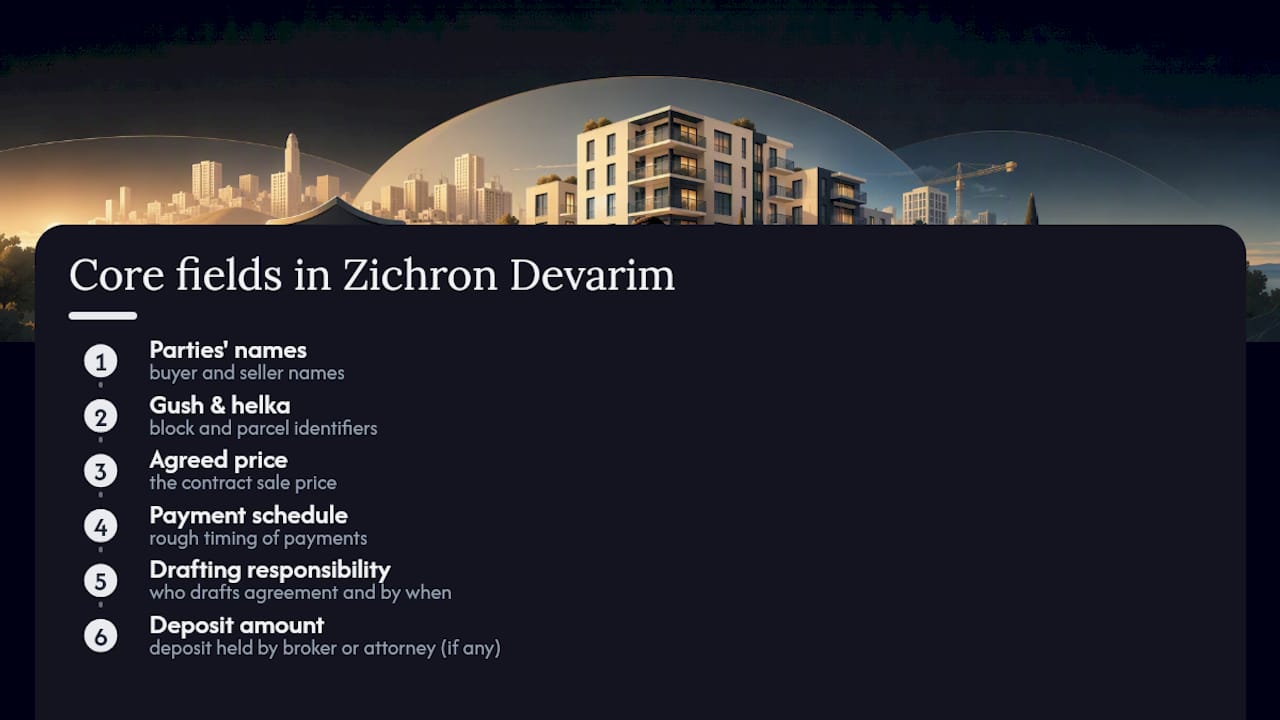
Most versions include the names of both parties, the property’s gush and helka (the block and parcel numbers identifying the land), the agreed price, a rough payment schedule, and a note on who will draft the formal agreement and by when. Some add a deposit amount held by the broker or attorney.
The key difference between a zichron devarim and the Heskem Mecher, the final sale agreement, is supposed to be detail and finality. In practice, that line blurs often enough that Israeli courts have built specific tests to sort one from the other.
Section 8 of the Land Law 1969 requires a real estate transaction to be in writing. A signed memorandum that includes the parties, the property, and the price can satisfy that requirement and function as a real contract, according to legal guidance for property buyers in Israel. The document’s title does not decide the outcome. Courts look at what the paper actually says and how the parties behaved afterward.
Two tests drive most rulings:
Recent Supreme Court decisions have leaned toward a more flexible reading of specificity, enforcing signed preliminary documents even with some terms missing, as long as intent is clear and a mechanism exists to fill the gaps, according to one ruling overview. For buyers, that trend cuts one way: the burden has shifted toward assuming a signed memorandum will hold up, not away from it. Walking into a signing thinking “it’s just a placeholder” is the single most expensive misconception in Israeli apartment buying.
A memorandum that reads like a formality can carry the same weight as a full contract, and the consequences show up fast once money moves.
None of these risks are theoretical. They are the standard fact pattern in Israeli property disputes involving rushed preliminary paperwork.
If you’re going to sign anything before the full Heskem Mecher exists, insist on language that limits your exposure rather than expands it.
Pro Tip: Ask your lawyer to write “This document is not a binding contract until reviewed and approved in writing by both parties’ attorneys” directly into the memorandum, not as a side letter. A verbal understanding with your agent means nothing in court; the words on the page do.
Not every zichron devarim is a trap. A few situations make signing one reasonable:
Refuse to sign, or insist on rewording, when any of these apply:
Safer alternatives exist. Ask for an expressly non-binding reservation letter with wording that states outright it creates no obligation, or a lawyer-drafted conditional preliminary tied explicitly to your due diligence results.
Complete these steps before any signature goes on paper, binding or not:
A fuller version of this process, including document checklists specific to non-resident buyers, is available in our due diligence checklist for Israeli buyers.
Buyers who sign a memorandum and later try to walk away often discover the exit costs more than the deal was worth. Reported legal fees to unwind a disputed memorandum commonly run between NIS 30,000 and NIS 60,000, with litigation stretching six to eighteen months.
Compare that to the paperwork on the other side: registering a warning note through the Land Registry typically clears within a few business days for a modest fee. A smooth transaction, from signed memorandum to final Tabu transfer, usually takes weeks to a few months. A contested one can eat a year or more, plus the legal bill, plus the opportunity cost of a frozen deposit.
Some real estate brokers coordinate the pieces that keep a memorandum from turning into a liability: fast-turnaround lawyer review, warning-note registration timed to payment release, and trust-account management that keeps your deposit out of the seller’s hands until milestones are actually met.
That means pulling the Tabu extract early, flagging title issues before they reach the signing table, and structuring holdbacks so you’re never fully exposed. If you’re weighing a memorandum right now, on a development promotion or a resale unit, that’s exactly the moment to bring in a second set of eyes before, not after, you sign.
Most guidance on this topic tells buyers to “get a lawyer” and leaves it there, as if legal review alone neutralizes the risk. It doesn’t. The research on how Israeli courts actually rule shows something sharper: judges look at conduct and content, not labels, and the recent trend toward flexible specificity means courts are more willing than ever to enforce a document that both sides treated as final, even with gaps in it.
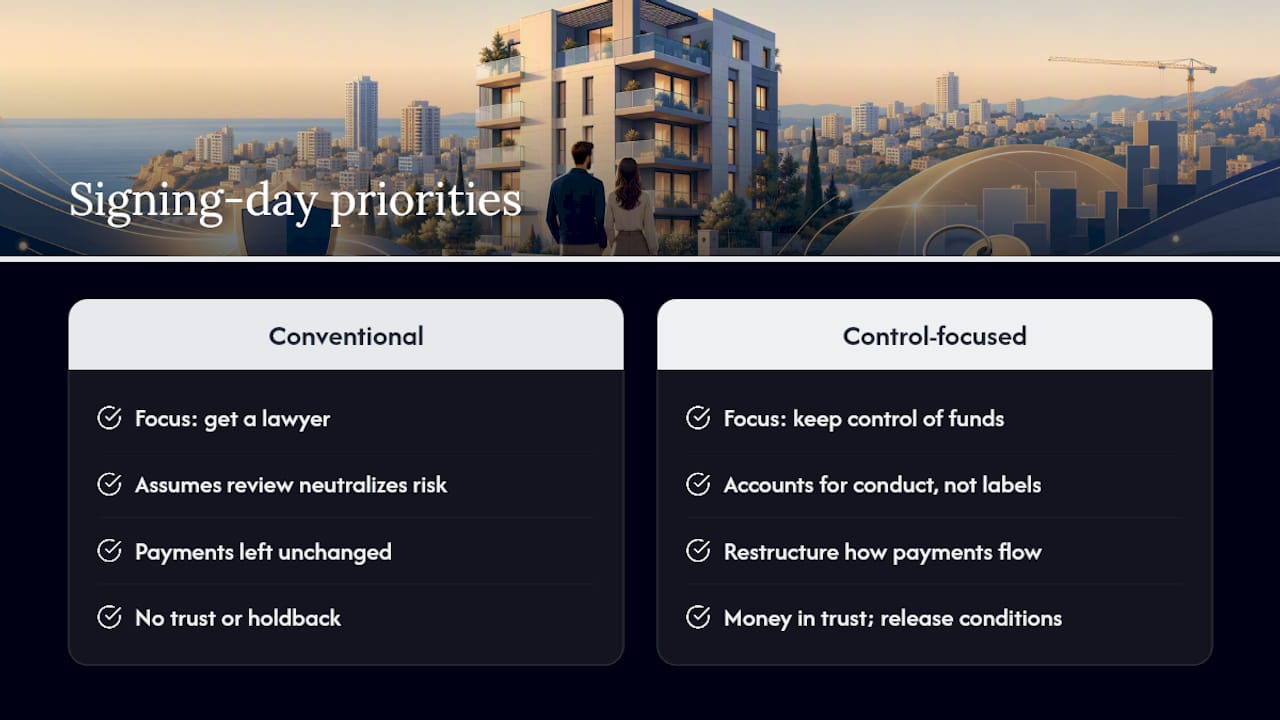
That should change how buyers approach signing day. The priority isn’t just “have a lawyer look at it.” It’s building the memorandum so that even if a court later decides it’s binding, you’re protected anyway: money sitting in a trust account, a warning note tied to release conditions, and a holdback that survives until Tabu transfer. Most buyers focus on whether to sign. The better question is whether the document, once signed, still leaves you in control of your own money.
The buyers who get burned aren’t usually the ones who skip legal advice entirely. They’re the ones who get a lawyer to glance at the wording but never restructure how the payments actually flow.
— Spiros
Some real estate brokers aim to keep buyers from learning these lessons the expensive way. Rather than handling a memorandum alone or relying on a seller’s agent to explain your own risk back to you, you get broker-led coordination: lawyer review scheduled fast enough to matter, Tabu checks run before terms are locked, and staged payment logistics set up through a trust account from the start.
If you have a memorandum in front of you right now, or you’re about to get one, reach out to Yigal Realty for a review before you sign. That single step, checking the document against the protections outlined here, is usually what separates a smooth closing from a six-month legal fight.
This article is general information, not a substitute for advice from a qualified lawyer. Consult a qualified legal professional about your own circumstances before acting on anything here.