%20(4).png)
![[background image] image of cityscape background (for an architect firm)](https://cdn.prod.website-files.com/68961ade6feff9cbdffc080d/69384e066e0e9a310b6817f8_061f6bac-48bf-44b8-a689-078dacd8009f.avif)
TL;DR:
- Buying in Israel involves navigating unfamiliar laws, no central listings, and community considerations.
- Olim benefit from subsidized mortgages, tax savings, and should rent first to assess neighborhoods.
- Community fit and personal priorities are more crucial than price or paperwork alone.
Many North American families dream of buying a home in Israel, but the reality involves navigating unfamiliar laws, a market with no central listing system, and deeply personal decisions about community fit. The process looks nothing like buying in the U.S. or Canada. Different tax rules, mortgage structures built specifically for Olim, and neighborhood dynamics that shift block by block make this one of the most complex purchases you will ever make. This guide walks you through 10 essential steps, with a sharp focus on Beit Shemesh, so you can move forward with clarity and confidence.
| Point | Details |
|---|---|
| Olim-specific benefits | New immigrants get significant tax and mortgage advantages, saving tens of thousands of shekels. |
| Neighborhood fit is crucial | Testing a community first ensures long-term happiness beyond the housing details. |
| Legal due diligence | Always use a lawyer to check property title and contracts before paying any deposit. |
| Budget for extras | Plan for 3-7% extra in closing and renovation costs beyond the purchase price. |
To start, knowing your purchasing power is crucial before considering specific homes. Your first job is to understand exactly what you can afford in shekels, not just dollars. Exchange rates shift, and Israeli banks evaluate you in local currency.
Gather your key documents early: your Teudat Oleh (immigrant certificate), Israeli ID, proof of income, and recent bank statements. These are required for any mortgage application in Israel. The purchase process overview is worth reviewing before you speak to any bank.
As an Oleh, you qualify for significant mortgage advantages. Olim can access up to ₪500,000 subsidized mortgage at rates between 3% and 4%, plus a standard mortgage covering up to 75% of the property value for a first home. Foreigners who have not yet made Aliyah are limited to 50% loan-to-value. That gap is enormous in a market where a standard apartment costs ₪2.5M or more.
The tax benefits for Olim are equally significant. On a ₪3.5M property, an Oleh can save up to ₪68,000 in purchase tax compared to a non-Oleh buyer. That is real money that belongs in your renovation budget or emergency fund.
Plan to have enough liquid savings to cover a 10% deposit at contract signing. This is non-negotiable in Israeli real estate. If you cannot produce that deposit quickly, sellers will move on.
Pro Tip: Open an Israeli bank account as early as possible, even before your Aliyah date if the bank allows it. Transferring large sums internationally takes time, and delays at the deposit stage can cost you the deal.
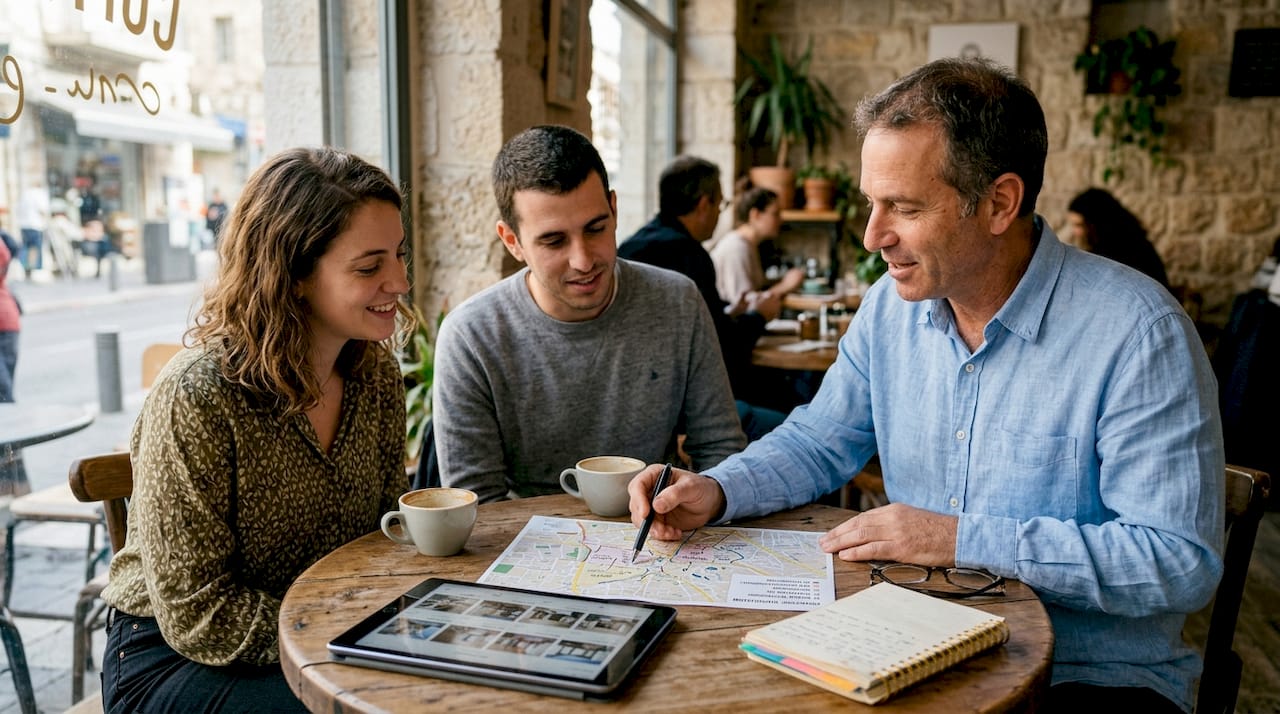
Next, narrowing your location preferences and assembling your team will shape your entire search. Before you look at a single listing, write down your non-negotiables: price range, number of bedrooms, proximity to a shul you would actually attend, school options for your children, and how important it is to be near extended family.
Beit Shemesh has distinct sub-neighborhoods, each with its own character. Ramat Beit Shemesh Aleph is the most established Anglo area, with a mix of modern Orthodox and Haredi families. Bet leans more Haredi. Gimmel and Daled are younger, growing fast, and attracting families who want more space for less money. Hey is the newest expansion zone, still under heavy construction but with strong long-term potential. Understanding the Beit Shemesh property landscape before touring saves you weeks of wasted viewings.
Here are the key pros and cons of newer areas to weigh:
Israel has no unified MLS. Properties are shared informally between agents, and good listings move fast. Buyer’s agents are essential when purchasing in Israel, and most sellers work with their own agents too. You need someone in your corner who speaks English, understands your religious requirements, and knows which buildings have elevator issues or problematic building committees. Review agent roles in Israel to understand what to expect from representation here.
“Photos and research often mismatch daily life; prioritize community fit over price.”
Pro Tip: Rent for 6 to 12 months in your target neighborhood before buying. It is the single best way to evaluate schools, shul culture, neighbors, and daily commute before committing hundreds of thousands of dollars. The first-time Beit Shemesh buyers checklist can help you organize this phase.
Once you have defined your goals and team, the property search and viewing phase begins. Expect to move faster than you would in North America. Good apartments in desirable RBS neighborhoods can receive multiple offers within days.
Here is a snapshot of current pricing to help you benchmark your search:
| Property type | Price range (₪) | Rental yield |
|---|---|---|
| 4-room apartment | 2,500,000 to 3,500,000 | 2.8% to 3.5% |
| 3-bedroom home | 2,200,000 to 2,900,000 | 2.8% to 3.5% |
| Rental unit (investor) | Varies by zone | 2.8% to 3.5% |
Average 4-room apartments in Beit Shemesh cost ₪2.5M to ₪3.5M, with rental yields between 2.8% and 3.5%. These numbers shift by neighborhood and building age, so use them as a starting point, not a ceiling.
When viewing a property, ask these questions:
Review the detailed property viewing guide for a fuller list of questions. Once you find the right property, your agent will present an offer. Sellers often expect some negotiation, and many will ask for proof of mortgage approval or funds before accepting. Get your property assessments in Beit Shemesh done before finalizing any price.
After making an offer, the legal and financial closing stage is crucial and must be handled with care. Here is the standard sequence:
Due diligence requires a lawyer, a full Tabu check, and verification that no liens or legal disputes are attached to the property. Skipping this step has cost buyers dearly. Understand the role of your Israeli lawyer before you sign anything.
Here is how purchase tax compares for different buyer categories:
| Buyer type | Tax on ₪2M property | Notes |
|---|---|---|
| Oleh Chadash | ~₪10,000 | One-time benefit, limited window |
| Israeli first-time buyer | ~₪0 to ₪20,000 | Bracket-based exemptions apply |
| Foreign buyer | ~₪160,000 | Higher rate applies from first shekel |
Olim Chadashim pay roughly ₪10,000 on a ₪2M property compared to ₪160,000 for foreign buyers. That difference alone justifies timing your purchase around your Aliyah date. Review the full Oleh Chadash tax rules to understand eligibility windows. Use the Israeli due diligence checklist to track every step.
Pro Tip: Never transfer a deposit before your lawyer confirms the title is clean at the Tabu and all liens are cleared. No exceptions.
Resale homes typically close in 2 to 6 months. New construction takes longer, sometimes years.
With your closing complete, a few more steps will help you settle into your new Israeli home confidently. Key handover is exciting, but there are practical items to handle immediately: transfer utilities to your name, confirm the building committee account is current, and walk through the apartment with your agent to document its condition.
Do not panic about Tabu registration timing. Tabu registration can take 3 to 12 months, and closing costs including tax, lawyer fees, agent commissions, and minor renovations typically add 3% to 7% to your total purchase price. Budget for this from the start.
Typical additional costs to plan for:
Review the full transaction process steps to make sure nothing falls through the cracks post-closing. For additional guidance on registration, the property registration guidance resource covers the full process clearly.
Pro Tip: Invest early in small upgrades that match your family’s observance needs. A proper kashrut kitchen setup, mezuzot on every doorpost, and privacy screens for a sukkah balcony make the space feel like yours from day one. Join local WhatsApp groups and community organizations right away. Integration happens faster when you show up.
Most guides focus on paperwork and process. That is useful, but it misses the bigger picture. The families who thrive after Aliyah are almost never the ones who found the best deal per square meter. They are the ones who landed in a community that matched their religious life, their parenting values, and their social needs.
We have seen buyers rush through the process, lock in a great price, and then quietly regret it within two years because the shul culture felt wrong or the school was not the right fit. Price and paperwork matter. Community is what makes you stay.
Spend a Shabbat in any neighborhood you are seriously considering before making an offer. Walk to shul. Eat a meal with locals. Ask real questions. The guide for observant buyers addresses this directly. Sometimes waiting six more months to find the right block is the smartest financial and personal decision you can make. Patience is not a weakness in this market. It is a strategy.
If you are a North American family moving through the Aliyah process and ready to take real steps toward buying in Beit Shemesh or surrounding areas, Yigal Realty is here to support you. Our agents are fluent in English, deeply familiar with observant community needs across every RBS neighborhood, and experienced in working with Olim on financing, timing, and neighborhood fit. There is no obligation to start a conversation. Start your property search today and connect with a local expert who understands exactly what you are looking for and why it matters.
You will need your Teudat Oleh, Israeli ID or passport, proof of income, and recent local bank statements. Having these ready before you begin your search speeds up the entire approval process.
For existing homes, expect 2 to 6 months from accepted offer to closing. New construction timelines vary significantly and can extend several years depending on the project stage.
Closing costs total 3 to 7% of the purchase price, covering purchase tax, lawyer fees, agent commissions, and any renovation work needed before move-in.
Yes. Pre-Aliyah purchases within one year of new construction may still qualify for Oleh tax benefits, making early planning worthwhile if you are close to your Aliyah date.
Most experts recommend renting for 6 to 12 months in your target area first. It gives you time to evaluate community life, school quality, and neighborhood dynamics before making a long-term financial commitment.