%20(4).png)
![[background image] image of cityscape background (for an architect firm)](https://cdn.prod.website-files.com/68961ade6feff9cbdffc080d/69384e066e0e9a310b6817f8_061f6bac-48bf-44b8-a689-078dacd8009f.avif)
Buying property in Israel presents unique opportunities and challenges for observant families and foreign investors. The Israeli real estate market operates under distinct regulations, land ownership structures, and tax frameworks that differ significantly from Western countries. Beit Shemesh has emerged as a prime destination for religious communities seeking quality housing with strong communal infrastructure. Understanding the complete purchase process, from initial budgeting through final registration, ensures you navigate this market confidently and avoid costly mistakes. This comprehensive guide walks you through every critical step to successfully acquire property in Israel.
| Point | Details |
|---|---|
| Foreign buyer taxes | Foreign buyers face higher purchase taxes than residents, at 8 percent for properties under 5.5 million ILS and 10 percent above that threshold. |
| Due diligence essentials | Conduct thorough due diligence before signing, including obtaining a full Tabu extract to verify lease terms, ownership history, and any encumbrances. |
| Beit Shemesh appeal | Beit Shemesh offers neighborhoods for observant families, so verify zoning and proximity to synagogues, kosher facilities, and religious schools. |
| Financing requirements | Foreigners typically need 40 to 50 percent down and can obtain mortgages up to 50 to 60 percent loan to value, with higher rates and substantial documentation and a bank account setup. |
Israel’s property market operates on fundamentally different principles than most Western countries. 93% of Israeli land is state-owned and leased long-term through the Israeli Land Authority (ILA), typically for 49 or 98 years. When you buy property, you’re actually purchasing the building rights and lease, not the land itself. These leases are renewable and transferable, functioning similarly to ownership in practice.
Foreigners can freely buy property without citizenship or residency requirements. However, non-residents face significantly higher purchase taxes at flat rates of 8% for properties under ILS 5.5M and 10% above that threshold. Israeli residents purchasing their first home benefit from progressive rates starting at 0% on the first ILS 1.93M, scaling up to 10% only on amounts exceeding ILS 19.27M. This tax differential represents the largest cost difference between foreign and domestic buyers.
For observant families, understanding local zoning and community composition is crucial. Different neighborhoods in cities like Beit Shemesh cater to specific religious communities with varying levels of observance. Verify that your target property falls within appropriate zoning for your lifestyle needs, including proximity to synagogues, kosher facilities, and religious schools. The guide to Israeli real estate market success provides deeper insights into community selection.
Arnona property tax represents your ongoing annual obligation to the municipality, calculated based on property size and location. This tax funds local services and typically ranges from ILS 5,000 to 15,000 annually depending on your property’s specifications. Budget for this recurring cost when evaluating affordability.
Key considerations for foreign buyers:
Pro Tip: Request a full Tabu extract early in your property search to verify lease terms, ownership history, and any encumbrances. This document reveals critical information that can affect your purchase decision and negotiating position.
Accurate budgeting extends far beyond the purchase price. Total acquisition costs for foreign buyers typically reach 10-13% of the property value when including all fees and taxes. For a ILS 3M property, budget an additional ILS 300,000-390,000 for closing costs. This includes purchase tax (your largest expense), legal fees at 0.5-1.5% plus VAT, real estate agent commission at 1-2% plus VAT, property inspection, and Tabu registration fees.
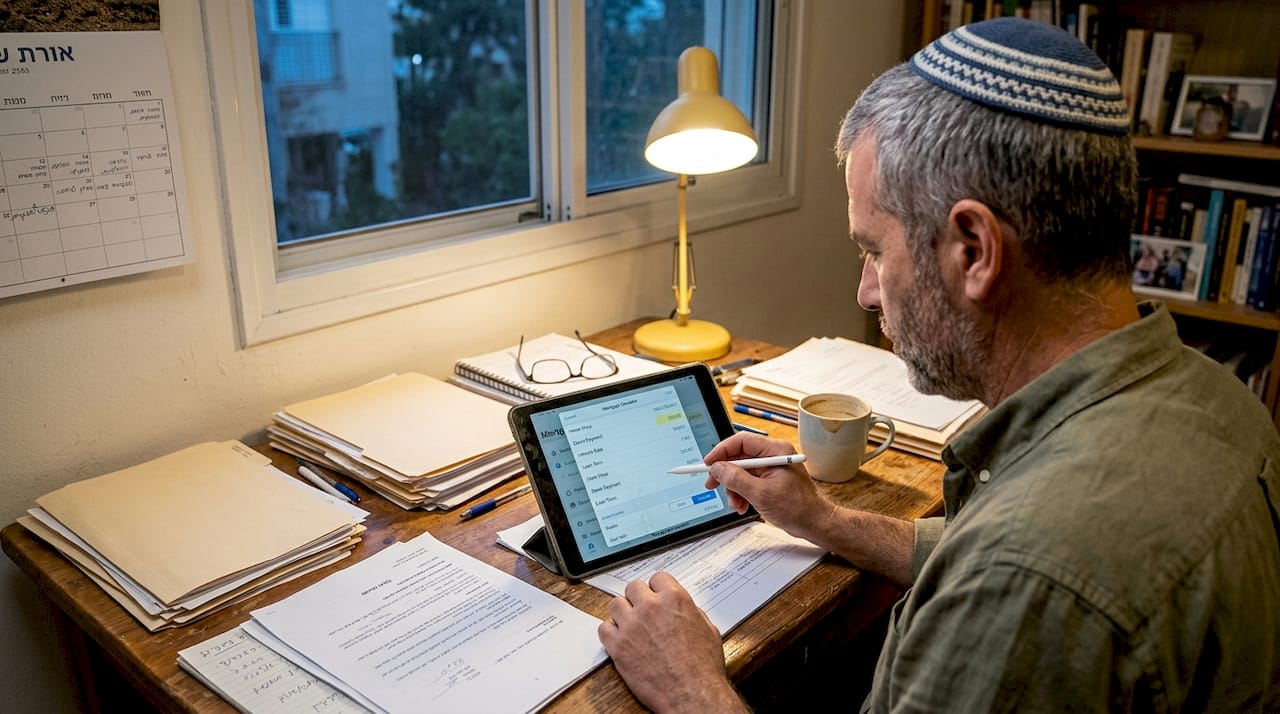
Foreigners typically need 40-50% down payment with Israeli banks offering mortgages up to 50-60% loan-to-value. Mortgage rates for non-residents run higher than for Israeli citizens, and you’ll need substantial documentation including proof of income, tax returns, bank statements, and employment verification. Establishing an Israeli bank account early in the process streamlines transactions and demonstrates commitment to lenders.
Beit Shemesh neighborhoods cater to different religious communities with distinct characteristics and price points. Ramat Beit Shemesh Aleph attracts Modern Orthodox families with average prices around ILS 2.35M for 4-room apartments. Ramat Beit Shemesh Bet serves primarily Haredi communities with similar pricing but different communal infrastructure. Ramat Beit Shemesh Gimmel offers newer construction at premium prices reaching ILS 3.4M for larger units. The city has experienced 9.2% annual price appreciation, making it attractive for both residence and investment.
Neighborhood selection factors:
Steps to secure financing:
| Property Type | Average Price | Rental Yield | Investment Timeline |
|---|---|---|---|
| Existing apartment | ILS 2.35M-3.4M | 2.8-3.5% | Immediate income |
| New construction | ILS 2.8M-3.6M | 3.0-3.8% | 1-2 years |
| Pinui Binui project | ILS 2.0M-2.8M | 3.5-4.2% | 4-8 years |
Pinui Binui urban renewal projects offer below-market prices by demolishing old buildings and constructing new ones, with existing tenants receiving upgraded apartments. Investors can purchase rights at discounts of 15-25% compared to market rates, but must wait 4-8 years for project completion. These investments suit patient buyers seeking higher eventual yields and appreciation. The homebuying checklist for observant buyers helps evaluate whether new construction or existing properties better fit your timeline.
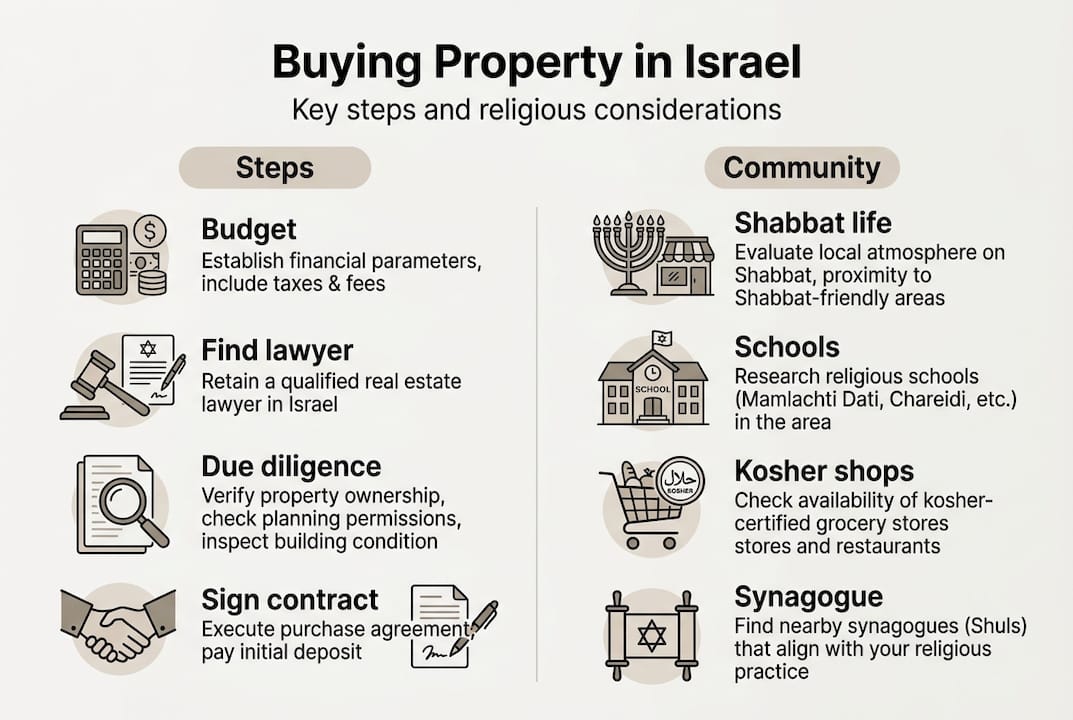
Pro Tip: Visit Beit Shemesh multiple times on different days, including Shabbat, to experience the neighborhood rhythm and community dynamics firsthand. What appears ideal on a weekday may feel quite different during religious observance periods.
The purchase process includes budgeting, lawyer due diligence, contract signing, escrow, taxes, and registration typically spanning 2-6 months. Unlike some countries, Israel requires buyers to hire their own independent lawyer rather than relying on the seller’s or developer’s legal representation. This protects your interests throughout the transaction and ensures thorough verification of all property aspects.
Your lawyer’s primary responsibility involves checking the full Tabu title registry to confirm clear ownership, verify land lease status and remaining term, and identify any liens, mortgages, or legal encumbrances. They also investigate zoning regulations to ensure the property can be used as intended and check for pending urban renewal projects that might affect your rights. Independent lawyers are essential because developers’ attorneys represent the seller’s interests, not yours, and may overlook issues that could prove costly later.
Complete purchase process steps:
The preliminary agreement (Zichron Devarim) locks in the deal terms and typically requires a 10% deposit held in escrow. This legally binding document outlines the purchase price, payment schedule, closing date, and any contingencies like mortgage approval or satisfactory inspection. Your lawyer reviews every clause to protect your interests and ensure compliance with Israeli law. The real estate transaction steps Israel guide provides detailed explanations of each contract element.
Full contract signing occurs after all due diligence is complete and conditions are met. The remaining funds transfer to escrow, where they remain until the Tabu registration finalizes. Israel does not offer title insurance like Western countries, making your lawyer’s thorough investigation critical. Any issues discovered post-purchase become your responsibility, emphasizing the importance of comprehensive pre-closing verification.
| Process Stage | Timeline | Key Actions | Costs |
|---|---|---|---|
| Offer to preliminary agreement | 1-2 weeks | Due diligence, negotiate terms | 10% deposit |
| Preliminary to full contract | 2-4 weeks | Complete inspections, secure financing | Inspection fees |
| Contract to closing | 4-8 weeks | Pay taxes, complete registration | Purchase tax, legal fees |
Foreign buyers completing transactions remotely must establish Power of Attorney authorizing their lawyer or representative to sign documents and complete registration on their behalf. This legal document must be notarized and sometimes requires apostille certification depending on your country of residence. The negotiating real estate in Israel resource explains how to manage long-distance purchases effectively.
Pro Tip: Request your lawyer provide a written due diligence report summarizing all findings, risks, and recommendations before signing the preliminary agreement. This document becomes your reference for understanding exactly what you’re purchasing and any limitations or obligations attached to the property.
Closing costs range 10-13% for foreigners with purchase tax representing the largest single expense. For a ILS 3M property, a foreign buyer pays ILS 240,000 in purchase tax at the 8% rate, plus approximately ILS 60,000-90,000 in additional fees. Israeli residents purchasing their first home under ILS 1.93M pay zero purchase tax, creating substantial savings that partly explains why foreign investors focus on rental yields and appreciation rather than immediate equity.
Legal fees typically cost 0.5-1.5% of the purchase price plus 17% VAT, varying based on transaction complexity and property value. A ILS 3M purchase might incur ILS 15,000-45,000 in legal fees plus VAT. Real estate agent commission runs 1-2% plus VAT, usually paid by the seller but sometimes negotiated as a buyer cost in certain transactions. Additional expenses include property inspection (ILS 2,000-5,000), Tabu registration fees (approximately 0.5%), and potential mortgage arrangement fees if financing the purchase.
| Cost Category | Foreign Buyer (ILS 3M property) | Israeli Resident First Home (ILS 3M) |
|---|---|---|
| Purchase tax | ILS 240,000 (8%) | ILS 107,000 (progressive) |
| Legal fees + VAT | ILS 25,000-52,000 | ILS 25,000-52,000 |
| Agent commission + VAT | ILS 35,000-70,000 | ILS 35,000-70,000 |
| Inspection & registration | ILS 10,000-15,000 | ILS 10,000-15,000 |
| Total closing costs | ILS 310,000-377,000 | ILS 177,000-244,000 |
Arnona tax averages ILS 5,000-15,000 annually depending on municipality, property size, and location within the city. Beit Shemesh rates fall in the middle range compared to other Israeli cities. This tax bills quarterly or annually and funds municipal services including garbage collection, street maintenance, and local infrastructure. Factor Arnona into your ongoing ownership costs when calculating investment returns or affordability.
Post-purchase responsibilities begin immediately upon Tabu registration completion. Verify that registration shows your name correctly and reflects accurate property details. Set up Arnona payment arrangements with the municipality to avoid penalties. If purchasing as an investment property, arrange property management services to handle tenant relations, maintenance, and rent collection. Budget 5-8% of annual rental income for professional management.
Essential post-closing actions:
“The most common mistake foreign buyers make is underestimating total costs and ongoing obligations. Budget conservatively and maintain reserves for unexpected expenses, especially in older buildings where maintenance can be substantial.” – Experienced Israeli real estate attorney
The real estate checklist for US buyers provides comprehensive guidance on managing your Israeli property from abroad, including tax reporting requirements in your home country and strategies for optimizing rental income.
Pro Tip: Maintain detailed records of all purchase documents, payments, and correspondence for at least seven years. Israeli tax authorities may request documentation during audits, and proper records protect you from disputes over property history or tax obligations.
Navigating Israel’s unique property market requires specialized knowledge of local regulations, community dynamics, and transaction processes. Yigal Realty provides comprehensive services tailored specifically for observant families and international investors seeking properties in Beit Shemesh and surrounding areas. Their experienced team guides you through every step, from initial neighborhood selection and financing arrangements through legal due diligence and final closing.
Working with professionals who understand both the Israeli market and the specific needs of religious communities ensures you find properties that match your lifestyle requirements while avoiding costly mistakes. Yigal Realty offers personalized consultations, exclusive access to new developments, and ongoing support throughout your ownership journey. Their dual presence in Israel and New York facilitates seamless communication and transaction management for foreign buyers.
Yes, foreign nationals can freely purchase property in Israel without any citizenship or residency requirements. However, non-residents pay higher purchase taxes at flat rates of 8-10% compared to Israeli residents’ progressive rates starting at 0%. You’ll need an Israeli bank account for transactions and may require Power of Attorney if completing the purchase remotely.
Foreign buyers typically need 40-50% down payment, with Israeli banks offering mortgages up to 50-60% loan-to-value for non-residents. Mortgage rates run higher than for Israeli citizens, and you must provide extensive documentation including international income verification, tax returns, and bank statements. Establishing banking relationships early improves your financing prospects.
Purchase tax is the largest cost, with foreigners paying 8% on properties under ILS 5.5M and 10% above that amount. Israeli residents purchasing their first home benefit from 0% tax on the first ILS 1.93M, scaling progressively. Annual Arnona property tax ranges ILS 5,000-15,000 depending on location and size. Capital gains tax applies when selling, though various exemptions may reduce liability.
Ramat Beit Shemesh Aleph attracts Modern Orthodox families with strong communal infrastructure and average prices around ILS 2.35M. Ramat Beit Shemesh Bet serves primarily Haredi communities with similar pricing but different religious character. Ramat Beit Shemesh Gimmel offers newer construction at premium prices reaching ILS 3.4M. Each neighborhood provides distinct religious environments, so visit multiple times to assess community fit.
The complete process typically spans 2-6 months from initial offer through final Tabu registration. Timeline factors include due diligence complexity, mortgage approval speed, and whether you’re purchasing existing property or new construction. Foreign buyers completing transactions remotely may experience longer timelines due to document authentication requirements and international fund transfers.
Yes, hiring an independent lawyer is essential and standard practice in Israeli real estate transactions. Your lawyer conducts critical Tabu title searches, verifies zoning and land lease terms, reviews all contracts, and ensures proper registration. Never rely on the seller’s or developer’s lawyer, as they represent opposing interests and may overlook issues affecting your purchase.