%20(4).png)
![[background image] image of cityscape background (for an architect firm)](https://cdn.prod.website-files.com/68961ade6feff9cbdffc080d/69384e066e0e9a310b6817f8_061f6bac-48bf-44b8-a689-078dacd8009f.avif)
Buying property in Israel presents unique challenges for US families and investors, particularly when navigating unfamiliar legal systems, cultural norms, and market dynamics within observant and religious communities. Working with the right Israeli real estate agent can transform a complex process into a smooth transaction, but many buyers struggle to understand how to select, communicate with, and leverage local expertise effectively. This guide provides practical strategies to help you collaborate successfully with Israeli agents, avoid common pitfalls, and secure the ideal property in 2026.
| Point | Details |
|---|---|
| Local expertise matters | Israeli real estate agents understand regional markets and cultural nuances critical to observant communities. |
| Legal systems differ | Israeli property laws, taxes, and mortgage regulations operate differently than US systems. |
| Trust is essential | Building strong relationships with agents familiar with religious neighborhoods ensures smoother transactions. |
| Preparation reduces risk | Understanding processes upfront minimizes delays and financial surprises during property purchases. |
The Israeli property market operates with distinct dynamics that differ significantly from US real estate. Regional property prices can fluctuate 5 to 10 percent based on demand patterns, community types, and external factors. Geopolitical events and religious holidays directly influence market activity, creating seasonal variations in pricing and availability that savvy buyers must anticipate.
Observant and religious neighborhoods feature specific property characteristics that reflect community values and lifestyle requirements. Homes in these areas often include features like multiple kitchens for Passover observance, proximity to synagogues and religious schools, and adherence to community standards for modesty and Shabbat observance. Real estate agents familiar with these communities provide crucial insight into which properties align with your religious practices and family needs.
Key market factors to understand include:
Working with agents who specialize in navigating Israeli real estate ensures you receive accurate information about neighborhood dynamics, pricing trends, and community fit. These professionals understand the nuances that generic market data cannot capture, such as which streets are most desirable for specific religious groups or how proximity to certain institutions affects property values.
Pro Tip: Schedule property viewings around religious holidays and Shabbat to observe neighborhood activity patterns and community atmosphere firsthand.
Navigating Israeli property law requires understanding several key financial obligations that differ from US real estate transactions. Arnona, the municipal property tax, operates as an ongoing expense that varies by city and property size. Purchase taxes in Israel follow a progressive scale, with rates increasing based on property value and whether you qualify as a first time buyer or investor.
Mortgage accessibility for foreign buyers presents unique challenges. Israeli lending criteria differ for non residents, often requiring larger down payments and offering different interest rate structures than US mortgages. Many banks limit loan to value ratios for foreign buyers to 50 to 70 percent, compared to higher ratios available to Israeli citizens. Securing mortgage preapproval before beginning your property search strengthens your negotiating position and clarifies your budget constraints.
Currency exchange rate fluctuations add another layer of financial complexity. The shekel to dollar exchange rate can shift significantly during the months long process from initial offer to closing, potentially affecting your total investment cost by thousands of dollars. Some buyers choose to lock in exchange rates through forward contracts, while others time their currency conversions strategically based on market conditions.
Critical financial steps include:
Your real estate agent coordinates with lawyers to ensure all legal requirements are met, but hiring a real estate lawyer independently provides additional protection. Lawyers review contracts, verify property titles, ensure proper registration with the land registry, and confirm that all taxes and fees are calculated correctly before closing.
Pro Tip: Request detailed breakdowns of all closing costs in both shekels and dollars to avoid surprises and ensure your budget accounts for every expense.
Selecting the right agent requires thorough vetting of expertise, reputation, and cultural sensitivity. Start by researching agents who specialize in the specific neighborhoods and community types you are targeting. Agents with proven track records in observant communities understand the unique requirements and can identify properties that match your religious and lifestyle needs.
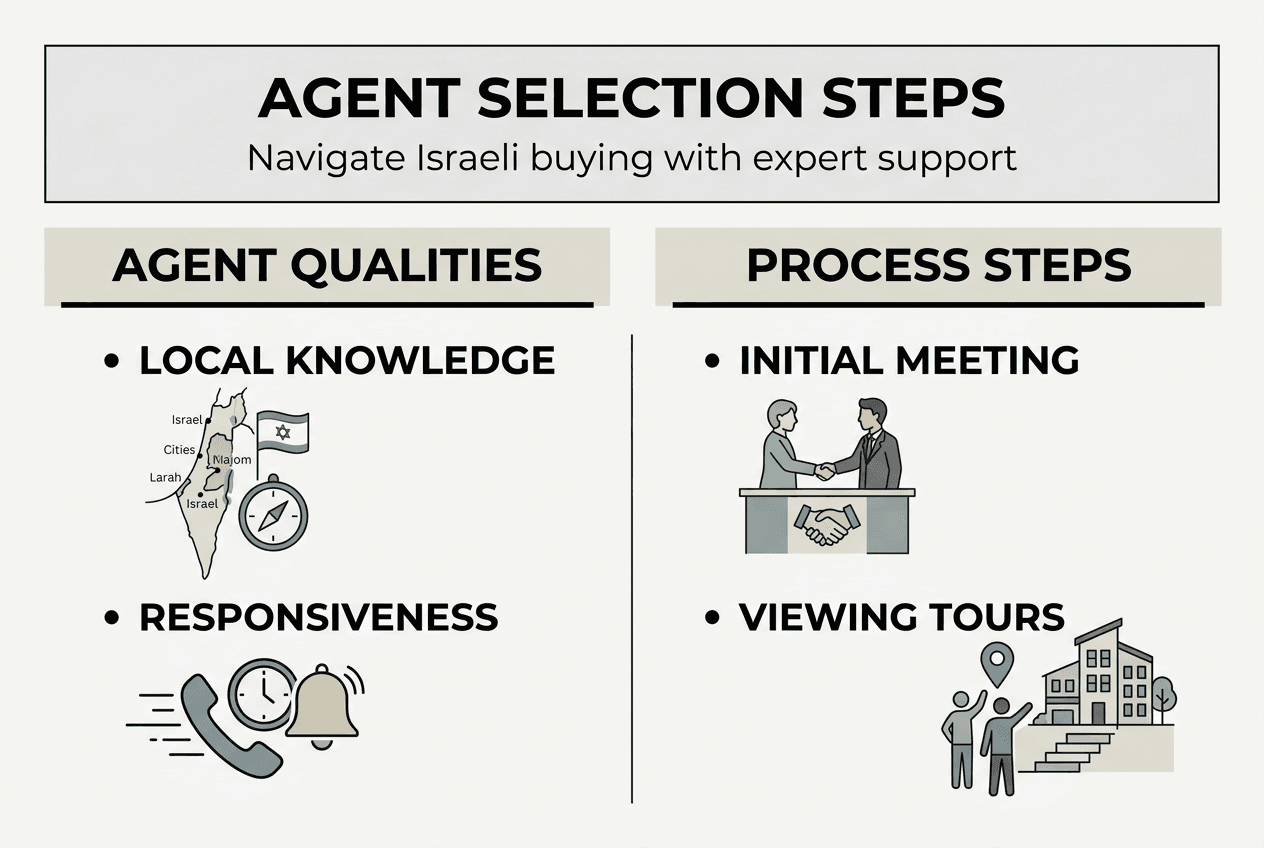
Follow these steps to evaluate potential agents:
Clear communication establishes the foundation for successful agent relationships. Israeli business culture tends to be more direct than typical US interactions, so expect straightforward feedback and candid assessments of properties and pricing. Establish your preferred communication channels early, whether email, WhatsApp, or scheduled video calls, and set expectations for response times given time zone differences.

Effective engagement with agents familiar with religious neighborhoods ensures smoother transactions and better property matches. These professionals understand community hierarchies, know which rabbis or community leaders to consult for neighborhood questions, and can navigate cultural sensitivities that might affect property selection or negotiation approaches.
When choosing a real estate agent in Israel, prioritize those who demonstrate patience with your questions and provide detailed explanations of unfamiliar processes. The role of Israeli real estate agents extends beyond property showings to include market education, negotiation strategy, and coordination with lawyers and mortgage brokers.
Pro Tip: Schedule a preliminary video call to discuss your requirements, budget, and timeline before committing to work with an agent, ensuring compatibility and mutual understanding.
The property purchase process in Israel follows a structured sequence that your agent manages from initial search through final closing. Understanding each step helps you anticipate requirements and avoid delays that could jeopardize your transaction.
The standard purchase process includes:
Detailed knowledge of negotiation and closing procedures reduces buyer risks and delays, especially for US buyers unfamiliar with local protocols. Your agent’s expertise in negotiating real estate in Israel proves invaluable during price discussions, as Israeli sellers often expect back and forth negotiations rather than accepting initial offers.
| Negotiation Approach | Characteristics | Best Used When |
|---|---|---|
| Aggressive lowball | Opening offer 15 to 20 percent below asking price | Property has been listed for several months |
| Moderate negotiation | Opening offer 5 to 10 percent below asking price | Market conditions are balanced |
| Competitive bidding | Offer at or above asking price | Multiple buyers interested in hot properties |
Common mistakes that experienced agents help you avoid include:
Your agent manages communication with municipality offices to ensure all paperwork is properly filed and registered. They coordinate with your lawyer to review contracts, verify that sellers have clear title, and confirm that all taxes and fees are paid before transfer. This coordination prevents legal complications that could emerge months or years after purchase.
Partnering with experienced professionals who understand both US buyer needs and Israeli market realities makes all the difference in your property search. Yigal Realty specializes in serving observant families and investors seeking homes in Beit Shemesh and surrounding religious communities. Our agents provide dedicated support throughout every stage, from initial market education through final closing and beyond. We offer access to exclusive listings like the Trilogy House residential project and other premium developments tailored to observant lifestyles. Visit Yigal Realty to explore current opportunities and connect with agents who will guide you through legal, financial, and cultural considerations with expertise and care.
Israeli agents typically charge 2 percent of the purchase price plus VAT, paid by the buyer at closing. This fee covers property search, negotiation, contract coordination, and support through registration. Some agents offer flexible payment structures for international clients.
Yes, but foreign buyers face stricter requirements including higher down payments, typically 30 to 50 percent of property value. Israeli banks evaluate US income and credit differently than domestic borrowers. Working with mortgage brokers experienced in foreign buyer loans improves approval chances.
Properties near synagogues, mikvahs, and religious schools command premium prices. Community standards regarding modesty, Shabbat observance, and family size influence property features and neighborhood dynamics. Agents familiar with these nuances help identify the best fit for your religious practice and family needs.
From initial offer to final closing, expect 60 to 90 days for most transactions. Delays can occur due to mortgage processing, currency transfers, or legal document preparation. New construction purchases may involve longer timelines with staged payments throughout the building process.
You will need a valid passport, proof of income for mortgage applications, bank statements showing funds for down payment and closing costs, and tax identification numbers. Your lawyer will also require power of attorney if you cannot be present in Israel for closing. Agents coordinate document collection to ensure nothing is missed.