%20(4).png)
![[background image] image of cityscape background (for an architect firm)](https://cdn.prod.website-files.com/68961ade6feff9cbdffc080d/69384e066e0e9a310b6817f8_061f6bac-48bf-44b8-a689-078dacd8009f.avif)
TL;DR:
- Religious community property includes land and buildings owned by faith-based institutions for worship and community activities. It is governed mainly by RLUIPA and private covenants, which can limit or influence land use and ownership rights. Families buying in these neighborhoods should conduct thorough due diligence on restrictions and legal frameworks to prevent unexpected limitations.
Religious community property is defined as land or buildings owned or used by a faith-based institution to support its religious mission, worship activities, and communal life. If you are a family or individual exploring a home purchase or investment in a faith-based neighborhood, understanding this concept shapes every decision you make. The term is informal but widely used. The recognized legal category is “religious land use,” governed by frameworks like the Religious Land Use and Institutionalized Persons Act (RLUIPA). Faith-based real estate includes land and buildings held by religious institutions for community-serving purposes, often prioritizing long-term impact over short-term profit.
Religious community property covers a wide range of real estate types. Synagogues, churches, mosques, and temples are the most visible examples. Beyond houses of worship, the category extends to schools, community centers, housing developments for congregation members, and even commercial buildings whose income funds religious missions.
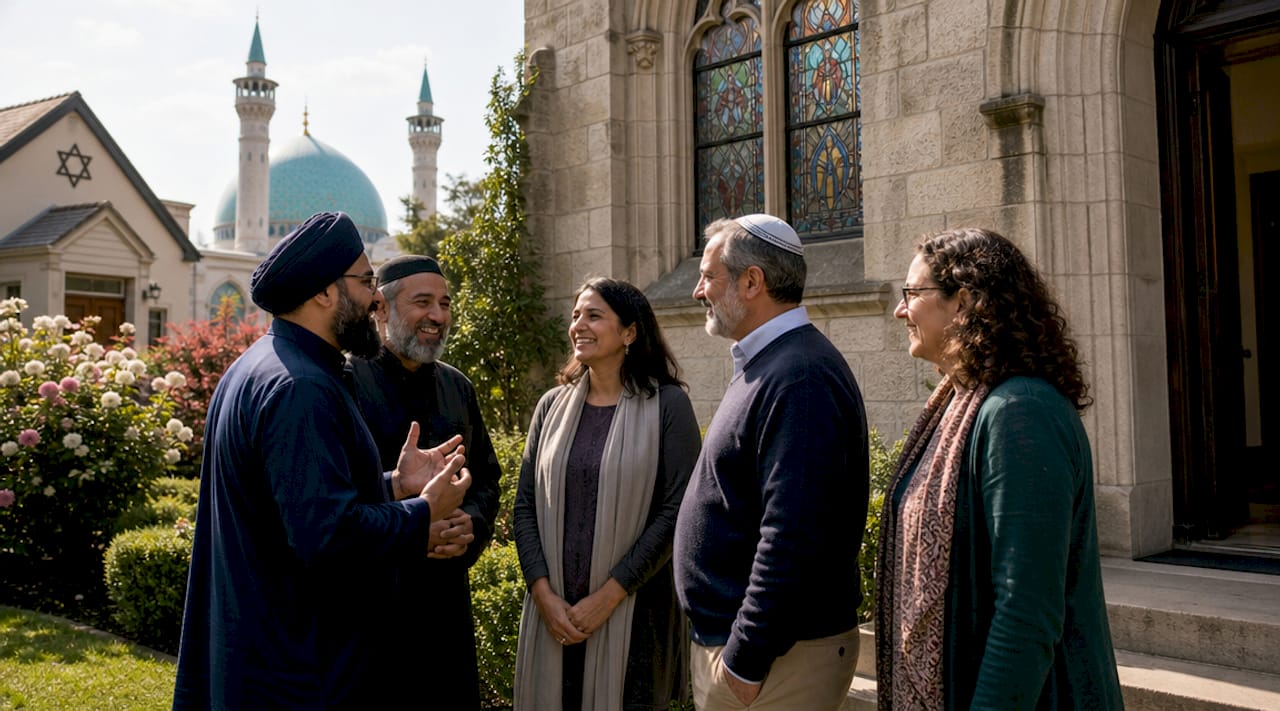
Faith-based entities often hold assets in land-scarce areas where secular developers would not invest. That makes these properties significant anchors for entire neighborhoods. A single religious institution can shape the character of a block, a street, or a whole district.
The definition of religious community property also includes residential developments built specifically for observant families. In cities like Beit Shemesh, entire neighborhoods are designed around the needs of religious communities, with proximity to synagogues, kosher infrastructure, and faith-aligned schools built into the planning. These are not incidental features. They are the product of deliberate religious property ownership decisions made by institutions and developers working together.
Understanding religious property means recognizing that these assets serve a dual purpose. They are financial holdings, and they are sacred spaces. That dual nature changes how they are bought, sold, managed, and regulated.

The legal framework for religious land use in the United States centers on RLUIPA, enacted in 2000. RLUIPA’s Equal Terms provision requires that religious organizations not be treated on less favorable terms than comparable secular entities in land use decisions. Courts apply a four-part test to assess these claims, focusing on whether similar secular uses are permitted “by right” in the same zoning district. That protection is real, but it is not absolute.
The legal aspects of religious property get complicated fast. Three key areas create the most friction:
Pro Tip: Before purchasing any property in a faith-based neighborhood, request a full title search and review all recorded covenants. A private deed restriction can override zoning permissions and limit how you or a religious institution uses the land.
Religious institutions must evaluate accessory use distinctions carefully before expanding beyond traditional worship functions. Courts defer to local zoning authorities unless a decision is arbitrary or unreasonable. That deference means the burden of proof falls on the religious organization, not the municipality.
Religious property ownership is rarely simple. Religious organizations often act as owners, managers, users (tenants), or some combination of all three, each role carrying distinct responsibilities and legal obligations. Clarifying which role applies in any given arrangement is the first step toward sound decision-making.
Four common property relationship structures appear in religious community settings:
Clarifying your role as owner, tenant, or partner is critical because each arrangement affects control and obligations differently. For families buying into a faith-based neighborhood, this matters too. A home adjacent to a religious institution that operates under a sale-leaseback may face different neighbors and different land use patterns over time than one adjacent to a fully owner-occupied campus.
Values-based management is the standard in well-run religious communities. Decisions about property use, renovation, and sale are filtered through the institution’s mission and community identity, not just financial return. That orientation tends to produce stable, well-maintained neighborhoods, which is a direct benefit for residential buyers nearby.
Buying or investing near religious community property offers real advantages, but it also requires clear-eyed evaluation. Community identity and values alignment are the foundation. A neighborhood built around a shared faith creates social cohesion, shared infrastructure, and a stable population that tends to stay long-term.
The benefits for families include:
The challenges are equally real. Zoning restrictions can limit what you build or renovate on your own lot if it sits within a religiously designated area. Private covenants recorded decades ago may restrict uses you assumed were permitted. Accessory use disputes between institutions and municipalities can create noise, traffic, or legal uncertainty in the surrounding blocks.
Pro Tip: Ask your real estate agent to pull the zoning classification and any recorded deed restrictions for every property you consider in a faith-based neighborhood. Understanding religious property rights before you sign protects you from surprises after closing.
Community identity in religious neighborhoods directly influences property values and desirability. Strong communal bonds and shared infrastructure tend to support price stability over time. For investors, that stability is a feature, not a limitation. For families, it means the neighborhood you buy into today is likely to look similar in ten years.
The phrase “community property” means two very different things depending on context. Understanding the distinction prevents costly confusion.
In marital law, community property refers to assets acquired during a marriage that are jointly owned by both spouses. Nine U.S. states, including California, Texas, and Arizona, use community property laws to govern spousal ownership and inheritance. This legal framework has nothing to do with religious institutions or faith-based neighborhoods.
Religious property ownership involves a completely separate set of protections and restrictions, including RLUIPA, private covenants, and mission-driven management structures. The two concepts share a word but operate under entirely different legal systems.
| Feature | Marital community property | Religious community property |
|---|---|---|
| Who it applies to | Married spouses | Religious institutions and faith-based communities |
| Governing law | State marital property statutes | RLUIPA, zoning codes, private covenants |
| Ownership basis | Joint spousal acquisition | Institutional mission and religious use |
| Inheritance rules | Spousal succession by default | Governed by institutional bylaws and deeds |
| Key protections | Spousal rights in divorce or death | Equal Terms protection under RLUIPA |
For families buying in faith-based neighborhoods, the relevant framework is religious land use law, not marital community property law. Mixing up the two leads to misplaced expectations about ownership rights, inheritance, and property use.
Religious community property is a distinct legal and social category governed by RLUIPA, private covenants, and mission-driven management, not by marital community property statutes.
| Point | Details |
|---|---|
| Core definition | Religious community property is land or buildings held by a faith institution for worship, mission, and communal life. |
| Legal protection | RLUIPA protects religious land use but requires proof of a substantial burden, not just inconvenience. |
| Covenant risk | Private deed restrictions can limit religious and residential use even when zoning permits it. |
| Ownership roles | Institutions may act as owners, tenants, or sale-leaseback partners, each with different control and obligations. |
| Buyer takeaway | Values alignment and community stability are real financial benefits for families buying in faith-based neighborhoods. |
I have worked with families who approached faith-based neighborhoods the same way they would approach any real estate purchase: price per square foot, commute time, school ratings. That framework misses the most important variable.
Religious community property carries institutional history. A synagogue that has anchored a neighborhood for 50 years shapes the social fabric in ways that no market analysis captures. When that institution makes a decision about its property, whether to sell, lease, or redevelop, the ripple effects reach every home on the surrounding blocks. Families who understand that dynamic make better decisions. They ask the right questions before they buy, not after.
The uncomfortable truth is that most buyers in faith-based neighborhoods do not read the deed restrictions. They assume that because a neighborhood feels cohesive and values-aligned, the legal framework will protect that character. Sometimes it does. Sometimes a private covenant from 1962 limits what the local yeshiva can build next door, and no one finds out until a construction permit triggers a dispute.
My advice is simple. Treat the legal aspects of religious property with the same seriousness you give to the mortgage. Get a title search. Read the covenants. Ask your agent specifically about investing in religious area property and what due diligence looks like in that context. The families who do this work upfront are the ones who thrive in these communities long-term.
— Spiros
Yigal-realty specializes in residential properties in Beit Shemesh and surrounding areas, with deep experience serving observant and religious communities. Their team understands the values alignment, zoning nuances, and community dynamics that define faith-based neighborhoods. Whether you are a first-time buyer or an experienced investor, Yigal-realty provides project guidance, local market insight, and flexible support through every stage of the purchase process. For families who want a real estate partner that speaks their language, both culturally and practically, Yigal-realty is the right starting point. Learn more about properties for religious communities or visit the Yigal-realty main site to connect with an agent directly.
Religious community property is land or buildings owned or used by a faith-based institution for worship, community services, or mission activities. It is governed by religious land use law, not standard residential property rules.
RLUIPA protects religious land use from discriminatory zoning but requires the institution to show a substantial burden on religious exercise. Minor inconveniences or added costs do not meet that legal threshold.
Yes. Courts have confirmed, as in Ginsberg v. Yeshiva of Far Rockaway, that private residential covenants are generally enforceable against religious institutions even when zoning would otherwise permit the use.
Marital community property is a state law concept governing jointly owned spousal assets. Religious community property refers to faith-institution-held real estate governed by RLUIPA, zoning codes, and institutional bylaws. The two are legally unrelated.
Families should request a full title search, review all recorded deed restrictions, and confirm the zoning classification. Understanding accessory use rules and any pending land use disputes protects buyers from unexpected restrictions after closing.