

Your tax status in Israel comes down to one test: is your center of life here, or somewhere else? If you’re an Israeli tax resident, the Tax Authority taxes your worldwide income, wherever it’s earned. If you’re a foreign resident, Israel only taxes income sourced inside the country, like rent on an apartment in Beit Shemesh. Day-count formulas create a presumption either way, but that presumption can be argued against with the right paperwork.
TL;DR:
- The upcoming bill would make residency presumptions conclusive based on weighted days spent in Israel over three years, reducing flexibility for rebuttal arguments.
- Residency status determines whether income earned abroad is taxed in Israel, with residents taxed worldwide and foreigners only on Israeli-sourced income.
- Proper documentation like travel logs, housing contracts, and bank statements is critical to support your residency claim during audits, especially with the new draft bill coming into effect.
- Tax treaties generally override Israel’s domestic residency rules and can assign residence based on tie-breaker criteria such as permanent home, family, and habitual abode.
- property buyers and returning residents should seek written tax advice on residency implications before completing transactions to avoid unexpected withholding or capital gains consequences.
Israeli law doesn’t ask where you sleep most nights. It asks where your life is centered. The Income Tax Ordinance frames this as the “center of life” test, and it weighs several things together rather than any single factor in isolation, according to the statutory definitions themselves.
The factors examined include:
Alongside that qualitative test, the law creates day-count presumptions. Spend a substantial number of days in Israel in a tax year, or a combination of days across several years, and you’re presumed a resident. Partial days generally still count toward the total.
Here’s the part people miss: these presumptions are rebuttable. A frequent business traveler who hits 190 days in Israel but keeps a spouse, job, and home in London can still argue foreign residency, provided the paper trail backs it up. The day count opens the conversation. It doesn’t automatically close it.
The distinction is stark once you see it laid out. Israeli residents owe tax on worldwide income, including salary earned abroad, foreign rental income, and overseas capital gains. Foreign residents owe Israeli tax only on income produced or accrued inside Israel.
For someone holding property in Israel while living abroad, that typically means:
The core distinction in one line: a resident’s tax base is everything they earn anywhere; a foreign resident’s tax base is only what Israel touches directly.
Filing obligations track this split too. Residents typically file annual returns covering global income, while foreign residents often deal with withholding at source on Israeli rental or capital gains, sometimes with a separate filing to reconcile the final liability. Getting this wrong isn’t a paperwork slip. It changes what you owe.
Predictability is the whole point of the draft bill published in July 2025. Instead of the current rebuttable presumptions, it proposes conclusive presumptions built on weighted days of presence, meaning the day count alone would decide the outcome in many cases, with no room to argue center-of-life facts.
The reported thresholds include:
The draft bill proposes thresholds based on days spent in Israel and weighted days across a three-year window. These include situations influenced by a spouse’s residency status
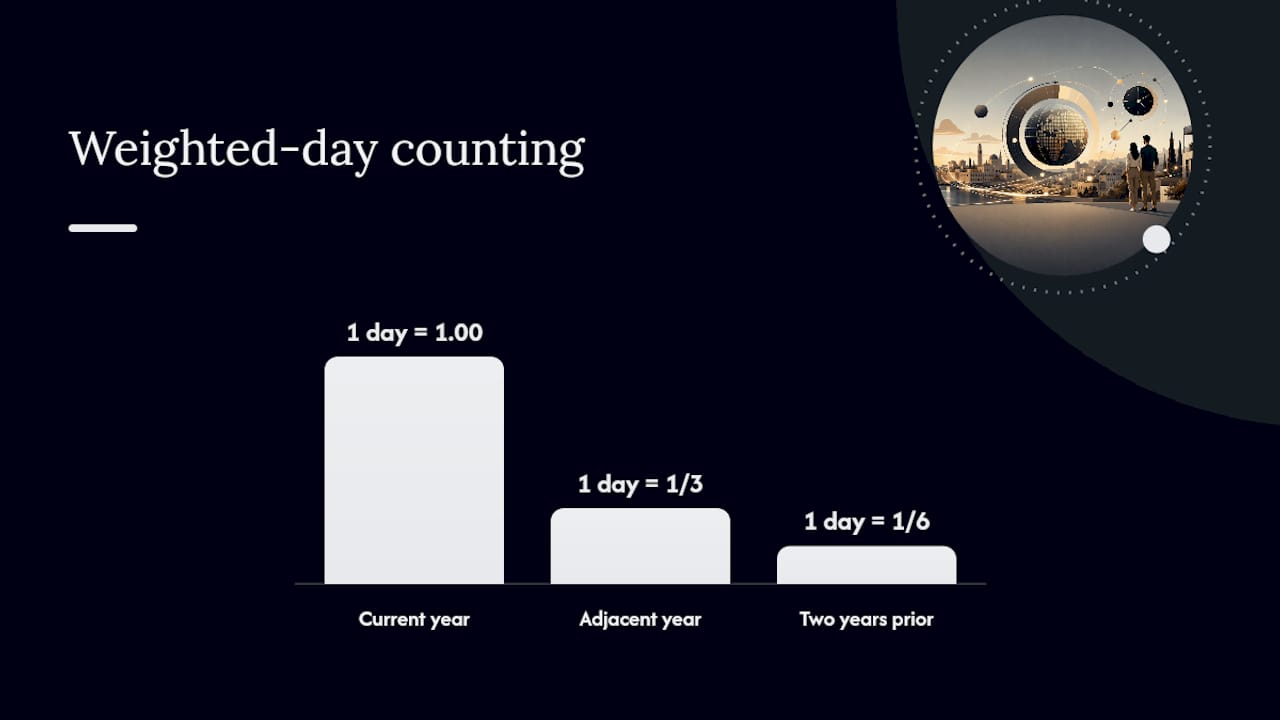
The weighting itself is the clever part. A day in the current tax year counts in full, a day in the adjacent year counts as one-third, and a day in the year two removed counts as one-sixth, according to the government’s own explanatory materials. Short, repeated visits stack up faster than most people expect under this formula.
Pro Tip: If you split time between Israel and another country and your day counts sit anywhere near these thresholds, start tracking weighted days now, before the bill becomes law. Retroactive reconstruction of travel history is far harder than keeping a running log.
Frequent travelers, dual-residence families, and anyone relying on center-of-life arguments to stay classified as a foreign resident should watch this bill closely. Once presumptions turn conclusive, the flexibility to argue your way out of a day count disappears in the cases the bill covers.
Yes, when a treaty applies, it takes precedence over domestic presumptions for treaty-based relief. If a bilateral tax treaty determines you’re a resident of another country, that finding governs the treaty relief calculation even when Israeli day-count rules would otherwise call you a resident.
Tie-breaker tests under most treaties, mirroring the gov.il draft materials, typically run in this order:
A common scenario: someone crosses Israel’s day-count threshold but has a permanent home, family, and business exclusively in a treaty country. The tie-breaker can assign residence to that other country for treaty purposes. If you hold dual residence exposure, read the specific treaty text and get professional advice before assuming either outcome.
Israeli tax audits on residency status hinge almost entirely on paperwork. The International Bar Association’s guidance is blunt about it: the burden of proof sits with the taxpayer, and contemporaneous records beat reconstructed memory every time.
Build a file that includes:
Weighted-day math (once the draft bill takes effect) requires tracking partial days across a rolling three-year window, not just the current year. Log dates as you travel rather than trying to rebuild a calendar months later.
Pro Tip: Before closing a major transaction, ask your employer for a formal statement confirming your work location, and ask a landlord or property manager for signed lease documentation. Written third-party confirmation carries more weight in an audit than your own records alone.
New immigrants and long-term returning residents can elect an acclimation period, temporarily deferring tax residency status for up to a year while they settle in, with notification timing that matters and shouldn’t be missed.
Other situations worth flagging:
Residency status changes the math on any Israeli property purchase. It affects the withholding rate on rental income, the capital gains calculation on a future sale, and the net return an international buyer actually walks away with. Clear documentation upfront, before a purchase closes, cuts transaction risk substantially. Coordinate the closing date with written tax advice, not after the fact. Anyone buying in Beit Shemesh or nearby communities while still sorting out residency status should treat that advice as part of the deal, not an afterthought. For buyers weighing how residency requirements intersect with property ownership, the two decisions are rarely separable.
Residency and tax planning are legal questions. Finding the right property in Beit Shemesh, at the right price, in a building that fits an observant family’s needs, is a different problem entirely, and it’s the one Yigal-realty solves. They offer concierge project guidance, local market insight, and personalized support built specifically for international buyers and returning residents navigating an unfamiliar market from a distance.
The smart sequence: get written tax advice on your residency status and its effect on withholding and capital gains, then let Yigal-realty handle the property side, from expatriate purchase logistics to early access on new developments like Rotshtein Heights. Reach out through the concierge guidance page to start a conversation about current availability and timing that fits your tax planning.
For primary text, start with gov.il’s draft bill page, which carries the government’s own explanatory notes. For a practitioner’s breakdown of the proposed thresholds, Shibolet & Co.'s analysis is thorough. For international context on treaty interaction, the IBA’s guidance covers documentation standards in depth.
Most guides treat residency status as a compliance checkbox. It isn’t. For anyone buying property here, it’s the variable that decides whether a rental generates real income or gets eaten by withholding you didn’t plan for. The draft bill makes this more urgent, not less: once conclusive presumptions replace the current rebuttable framework, the window to argue your way into a favorable status narrows for a lot of people who assumed they had room to maneuver. Get the tax opinion in writing before you sign anything, not after.
— Spiros
This article is general information, not a substitute for advice from a qualified financial advisor. Consult a qualified financial professional about your own circumstances before acting on anything here.
Someone whose center of life, measured by home, family, work, and economic ties, sits outside Israel and who does not meet local day-count presumptions counts as a foreign resident.
Citizenship is a legal and civic status tied to your passport; tax residency depends entirely on where your center of life is located, so an Israeli citizen living abroad is not automatically an Israeli tax resident.
Anyone whose center of life is in Israel, or who meets the 183-day rule or the 30-plus-425-day rule over three years, is presumed an Israeli resident unless they successfully rebut that presumption with documentation.
A senior returning resident is generally someone who lived abroad for an extended period before returning to Israel, and who may qualify for an acclimation election deferring full tax residency status for a limited period.
Yigal-realty focuses on property guidance and local market access, not tax advice; coordinate residency and tax planning with a qualified professional, then use Yigal-realty’s concierge project guidance for the purchase itself.