

Your first job is to get the property’s Gush and Chelka, plus the contractual delivery date, in writing. Then check official permit status and scanned committee files instead of relying on builder updates alone, and set a rhythm: weekly time-stamped photos or video, monthly record checks. Success means every milestone is backed by a document you can verify yourself.
TL;DR:
- Confirm the official subparcel before searching records; marketing apartment numbers can differ and may direct you to the wrong unit.
- Request scanned permits, committee decisions with conditions, contractor and insurer details, and a fresh Tabu extract; keep dated copies in one shared folder.
- Request time stamped photos or video weekly, check official planning records monthly, compare Tabu extracts quarterly, and hire an independent inspector at major stages.
- After month one, compensation is comparable rent for months two to four, 1.25 times for months five to ten, and 1.5 times thereafter.
- Buyer caused delays and force majeure are exceptions; indexation covers at most half of payments, leaves 20% of the price unlinked, and stops at delivery.
Not every update from a developer tells you where the project really stands. Several types of milestones matter, and each answers a different question.
If you want background on how developments move from permit to occupancy, our property development guide for homebuyers walks through the sequence.
Treat your file as evidence. If a dispute arises, a dated folder of official documents carries far more weight than a chain of chat messages.
Store everything in one secure, shared folder with dated file names. Ask the developer to send documents as scans rather than screenshots, and keep the originals of anything you sign.
The Sale (Apartment) Law gives buyers a compensation schedule for delayed delivery, and your records are what make a claim practical. Here is how the tiers work after the first month past the contract date.
After one month past the contract delivery date, compensation equals the rental value of a comparable property for months 2–4, 1.25 times that rental value for months 5–10, and 1.5 times for month 11 onward. The tiers mean a long delay gets progressively more expensive for the developer.
Indexation is limited too. A payment may be linked to the Construction Input Index, but no more than half of any payment can be linked, 20% of the contract price must remain unlinked, and indexation must stop by the delivery date. The same rules and delay schedule appear in the Knesset’s legislative summary, which also lists the exceptions: delays caused by the buyer and force majeure.
Those exceptions are why monitoring permit and committee milestones matters. If a delay comes from a missing approval, your record shows when it happened and who was responsible. Our explainer on compensation for delayed delivery goes further, and a local lawyer should confirm how it applies to your contract.
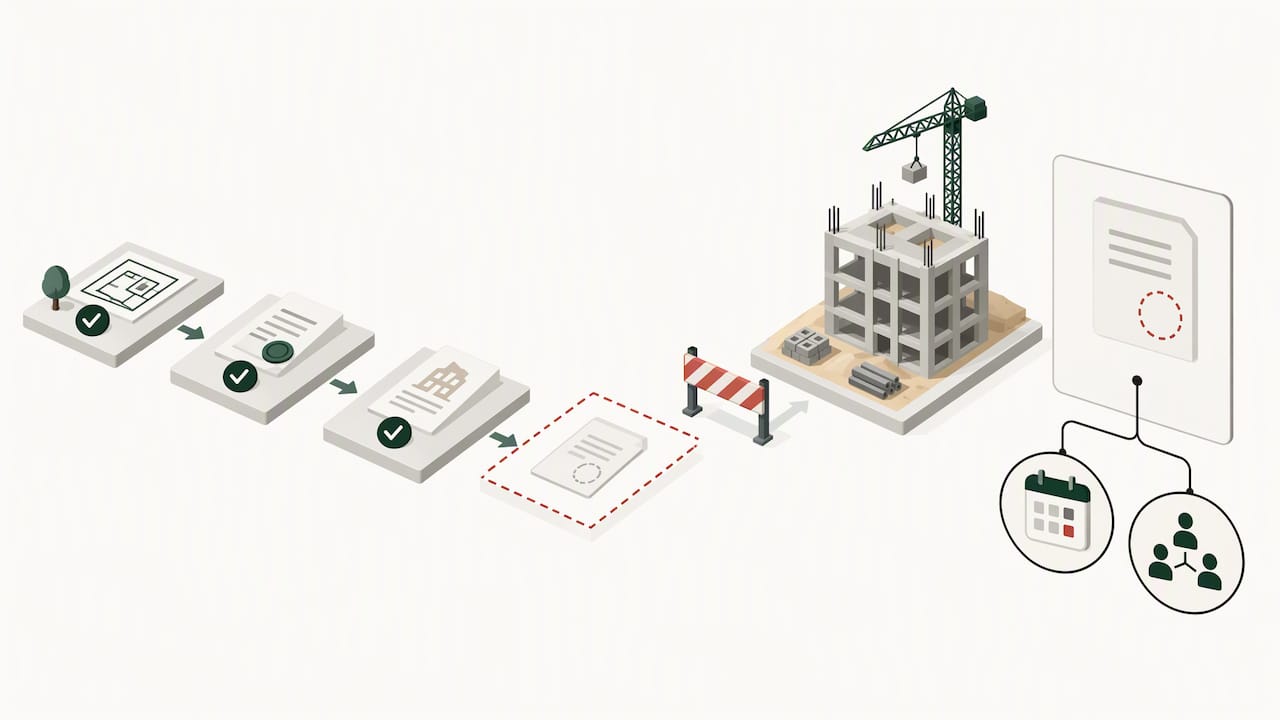
Consistency beats intensity. This is the rhythm we recommend.
Pro Tip: Agree on the update format in writing before you sign. A builder who commits to dated media and document scans from day one rarely tries to avoid them later.
Our tips for international buyers cover the practical side of working across time zones.
In my experience, the planning database and municipal systems tend to show a bottleneck earlier than a developer’s newsletter does. A committee condition or a pending approval appears in the file long before it becomes a “minor schedule adjustment” in a message. The most common misstep I see is tracking the wrong unit: buyers search by the marketing apartment number, get nothing useful, and assume all is fine. Confirm the correct sub-parcel early so every query returns the right records. And pair the paperwork with someone on the ground. A document tells you something is wrong, but a local contact can act on it the same week.
— Spiros
If you would rather not run this routine alone, we do it with you. Our concierge project guidance provides personalized guidance through the process. If you are considering a specific development, such as Neve Amim, contact us and we will walk you through how we can help.
They appear in your purchase contract or can be requested from the developer in writing. You can then use them in the national planning database to find permit records and scanned files.
The marketing apartment number is a sales label, while the sub-parcel (Tat-Chelka) is the official identifier in the land registry. They often differ, so confirm the sub-parcel with a Tabu extract before you search permit records.
After one month past the contract delivery date, the Sale (Apartment) Law sets rising tiers based on the rental value of a comparable property, described in the compensation guide. Delays caused by the buyer or force majeure are exceptions.
Ask for time-stamped media weekly, check official permit and committee records monthly, and review a fresh Tabu extract quarterly. Add an independent inspection at major construction stages.
Official records do not depend on the developer’s schedule or sales mood. Here is the route we use.
Pro Tip: The Tabu sub-parcel number is often different from the apartment number in the sales brochure. Confirm it early, or your searches will return records for the wrong unit.
You can also use the Ministry of Construction and Housing’s registration status checker to see where registration stands. For more on titles, see our homebuyer’s guide to property title in Israel.