%20(4).png)
![[background image] image of cityscape background (for an architect firm)](https://cdn.prod.website-files.com/68961ade6feff9cbdffc080d/69384e066e0e9a310b6817f8_061f6bac-48bf-44b8-a689-078dacd8009f.avif)
Selective buying in specific Beit Shemesh neighborhoods is the sensible investor move in 2026. The master plan behind the city’s growth is real and long-term, but the national market has cooled enough to hand buyers more leverage than they had two years ago. Focus on neighborhoods with confirmed infrastructure and rental demand, get mortgage pre-approval before you negotiate, and treat long listing times as an opening, not a warning sign. Local real estate agents can help narrow the list fast.
TL;DR:
- Mortgage pre-approval and written delivery schedules are essential for negotiating favorable terms in Beit Shemesh’s current cooling market.
- Prices vary significantly by neighborhood, with new builds typically ranging from ₪2.3 million to ₪3.6 million and rental yields around 2.7%.
- The Givat Sharett redevelopment project will substantially increase housing density, influencing supply and prices in the coming decade.
- Longer listing times suggest sellers are more flexible, but buyers should scrutinize permits, developer guarantees, and neighborhood demand before buying.
- Strong long-term growth is supported by the master plan’s population target and ongoing infrastructure developments, but near-term risks include market cooling and infrastructure delays.
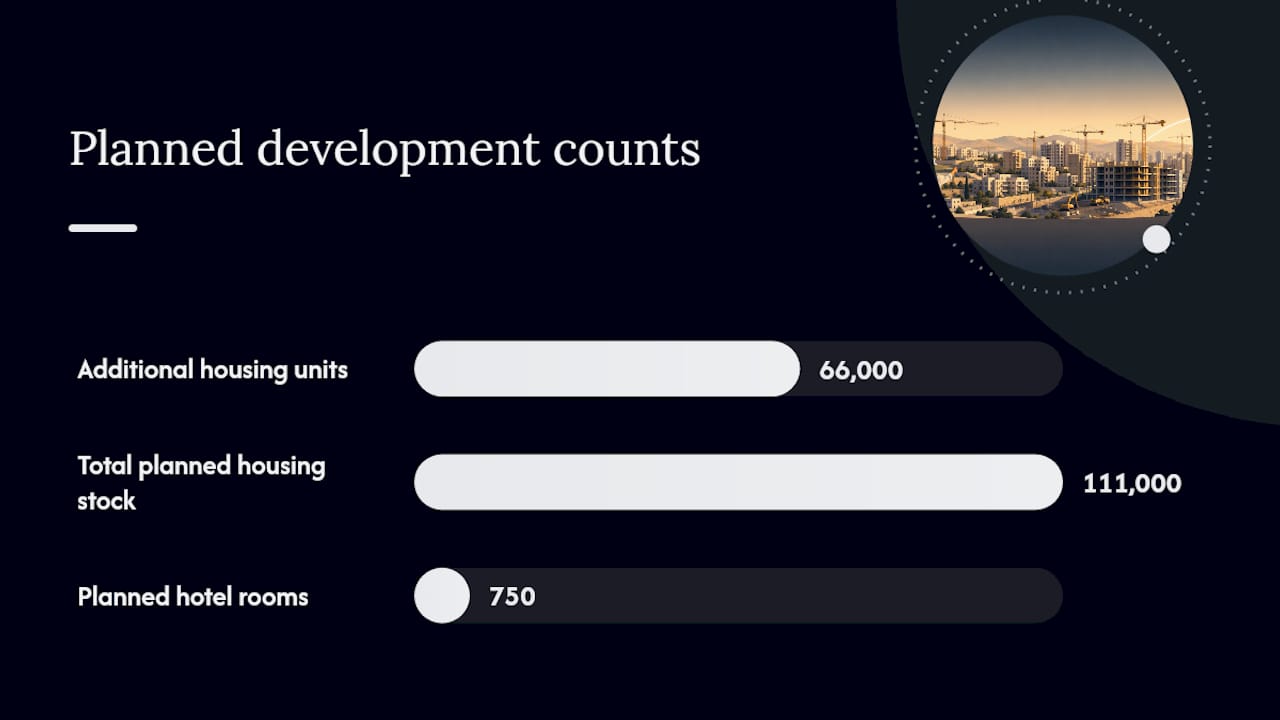
The single biggest fact shaping this market is the BS/3000 master plan, which the Jerusalem District Committee advanced to guide the city’s growth toward more than 500,000 residents. The plan calls for roughly 66,000 additional housing units on top of existing stock, bringing the total planned inventory to around 111,000 units, alongside 2.3 million square meters of employment and commercial space and 750 hotel rooms.
That kind of commitment does not show up overnight. It shows up over 15 to 20 years, in phases, as infrastructure and zoning approvals clear one district at a time. For an investor, it means two things at once: the long-term demand case for Beit Shemesh is unusually well documented for an Israeli secondary city, and the short-term picture is much choppier than the headline numbers suggest.
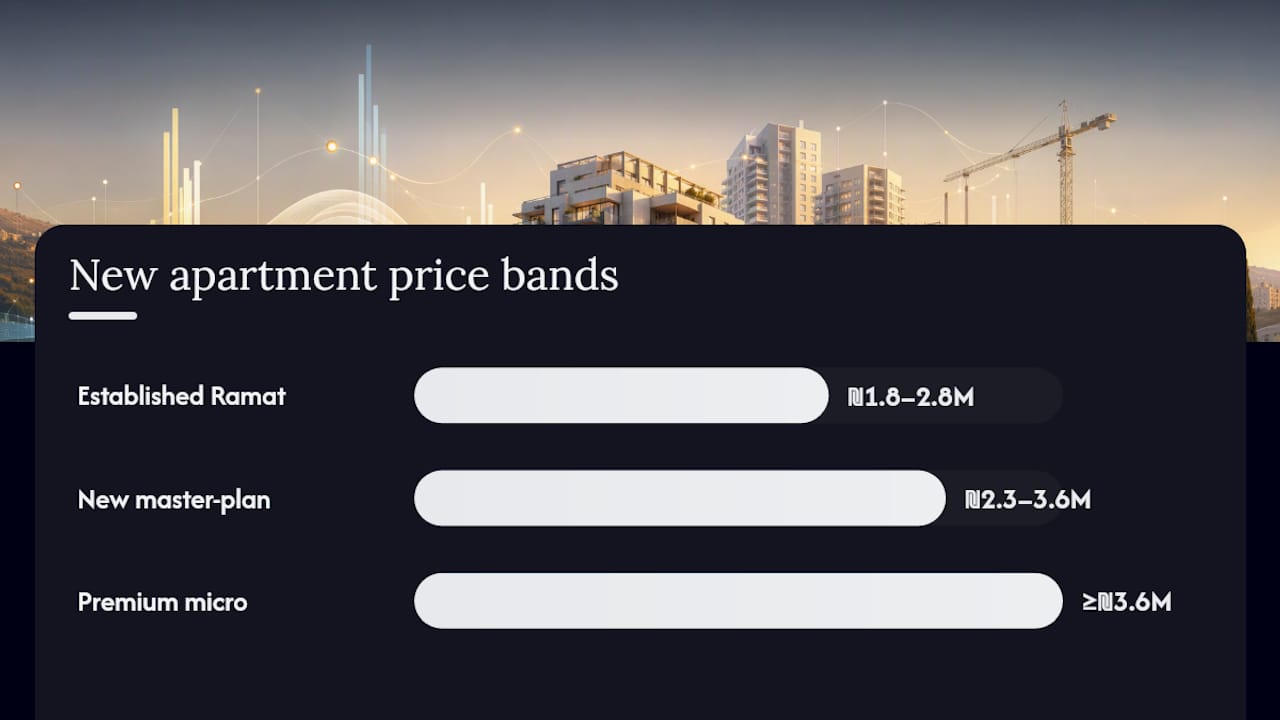
Nationally, the housing market has cooled. In Beit Shemesh, that cooling shows up as longer listing periods and more room to negotiate, a shift Ynet’s real estate coverage has tracked through 2026, with many Ramat Beit Shemesh apartments now asking somewhere between ₪1.8 million and ₪2.8 million. Sellers who once could hold firm on price are now more willing to move.
Beit Shemesh by the numbers:
For investors, the municipal infrastructure commitments embedded in BS/3000, roads, schools, transit connections, matter because they are what eventually convert raw land into livable, rentable neighborhoods. Areas near confirmed infrastructure tend to appreciate faster than areas still waiting on approvals.
Price ranges vary sharply by neighborhood, and lumping the whole city into one average number is where a lot of buyers go wrong. Market observers tracking new construction put typical asking prices for 4-room new builds somewhere between ₪2.3 million and ₪3.6 million, depending on the neighborhood and finish level.
Rough asking-price bands for 3 to 4-room new apartments:
Rent tells a parallel story. Aggregated listing data puts the median monthly rent in Beit Shemesh around ₪6,500, with a 3-room median closer to ₪5,132. Run those numbers against a ₪2.3M purchase and you land in the low single digits for gross yield, which lines up with the 2.8% to 3.5% gross yield range many market reports cite for standard apartments citywide, with some micro-markets possibly pushing higher.
What pushes a specific listing above or below its neighborhood band? Floor level matters more than most buyers expect. Top floors with private roof access or a mamad configuration command a premium, ground floors with a garden sometimes do too. A neighborhood-fit guide for religious families is worth reading before you anchor on a number, since community proximity often explains price gaps that finish quality alone can’t.
The project pipeline is where near-term supply risk and long-term upside both live, and it pays to know which projects are already under construction versus which are still working through approvals.
The most consequential active project is the Givat Sharett urban renewal plan, a pinui-binui redevelopment that will demolish roughly 468 aging units and replace them with 3,270 new units spread across mixed mid-rise and high-rise blocks, plus new commercial space and community institutions. That’s a near-sevenfold density increase in a single neighborhood, which will reshape both supply and price dynamics there over the next decade.
Projects and pipeline signals worth tracking:
Practically, watch municipal planning committee approvals and building permits before a project ever reaches a sales office, since that’s where real delivery timelines get set. Developer marketing pages and broker project lists tend to surface new launches first, often ahead of the major listing portals picking them up. A rundown of current Beit Shemesh housing developments is a useful starting point for matching a specific project against its actual approval stage.
Run every serious opportunity through the same three-part check before you sign anything.
Pro Tip: *A listing that has sat on the market for more than 90 days is not a red flag, it is an invitation.
Red flags worth walking away from: developers who won’t commit a written delivery date, permits described as “expected soon,” and finish specifications that sound better than the walkthrough model shows.
Mortgage readiness is your biggest negotiating lever this year. Sellers facing longer listing times respond to buyers who can close fast, and pre-approval before you negotiate consistently produces better outcomes than shopping with financing still unresolved.
Ownership costs to budget beyond the purchase price:
Run the math on a representative 3-room unit: at a median rent near ₪5,132 a month against a ₪2.3M purchase price, gross yield lands around 2.7%.
Some real estate agencies work exclusively in Beit Shemesh and the surrounding area, with involvement in projects including Givaat Zev and Trilogy House. That local focus translates into practical help: matching a buyer’s budget and community priorities to the right neighborhood, negotiating on behalf of investors who can’t be on the ground, and flagging early-access opportunities before a project reaches public listing portals. For investors evaluating new construction specifically, understanding developer guarantees and deposit protections up front is the single check that most reduces completion risk.
Three things support long-term upside: the BS/3000 population target, active urban renewal in Givat Sharett, and steady Anglo-community demand. Three near-term constraints: national cooling, longer listing times, and uneven infrastructure delivery. Conservative investors should wait for confirmed permits; growth-focused buyers should move now while sellers are flexible.
— Spiros
Local real estate agencies offer direct access to project pipelines like Givaat Zev and Trilogy House before they hit the wider market, plus neighborhood matching and negotiation support built specifically around Beit Shemesh’s Anglo and religious communities. You get a shorter path from “interested” to “under contract,” backed by agents who work this single city daily instead of splitting attention across the whole country. If you’re ready to see which current projects fit your budget and timeline, request a project list from Yigal Realty and get a tailored rundown of what’s available right now.
Follow the Jerusalem District planning approvals, Realta’s rent data, and local real estate coverage from Ynet and Semerenko Group for ongoing project and pricing updates.
The largest is the Givat Sharett pinui-binui redevelopment, replacing roughly 468 older units with 3,270 new units in phases, alongside ongoing zoning expansion under the BS/3000 master plan.
New 4-room apartments generally run ₪2.3 million to ₪3.6 million depending on neighborhood and finish, which works out to a wide per-square-meter range since unit sizes and premiums vary significantly by location.
Aggregated listing portals and developer project pages are the standard starting points, but working with a local firm like Yigal Realty often surfaces new-project launches before they appear on the broader portals.
The biggest current stories are the BS/3000 master plan’s advance toward a 500,000-resident target and the national market’s cooling trend, which is giving buyers more negotiating room on listings that have been sitting longer than usual.