

Yes, apartments near yeshiva Beit Shemesh are available now for both sale and rent, with 3-room units typically asking amounts within a moderate price range and 4-room units ranging higher depending on the building and distance to the yeshiva. Before signing anything, verify the actual recorded sale price through the Israel Tax Authority database. If you want a shortlist within walking distance of a specific yeshiva, we can help you find one.
TL;DR:
- Buyers should verify recorded sale prices in the Israel Tax Authority database, as asking prices often differ significantly from actual transaction values.
- Proximity to a yeshiva impacts price, with units within five minutes commanding higher premiums than those farther away, depending on building age and floor level.
- The choice between new-build and resale units depends on whether families prioritize modern finishes and amenities or established neighborhoods with historical prices.
- Confirm the building’s eruv boundaries, mamad status, and walkability conditions to ensure daily convenience and compliance.
- Understanding local transaction histories and neighborhood-specific factors can give buyers a stronger negotiating position and more accurate valuation.
Walking distance to a yeshiva changes the math on almost every listing in Beit Shemesh. A unit five minutes from Yeshivat Netzach Yisrael or a similar institution tends to carry a premium over the same square footage ten minutes away, and new-build projects price differently than resales in older buildings.
Here is a representative snapshot of what a buyer or renter searching near yeshivot in Beit Shemesh might find right now:
A recent market snapshot reported specific Beit Shemesh sale examples alongside a national home-price uptick of 0.3% in February-March 2026. That national figure, drawn from the Times of Israel housing snapshot, shows how modest national movement can mask sharper local swings near high-demand areas like yeshiva clusters.
Price per square meter varies more by building age and floor than by room count alone. A fourth-floor walk-up resale and a ground-floor new-build with a mamad can carry very different numbers even on the same street. For a deeper look at how these figures compare across the city, our analysis of Beis Shaam apartment prices breaks down several specific streets.
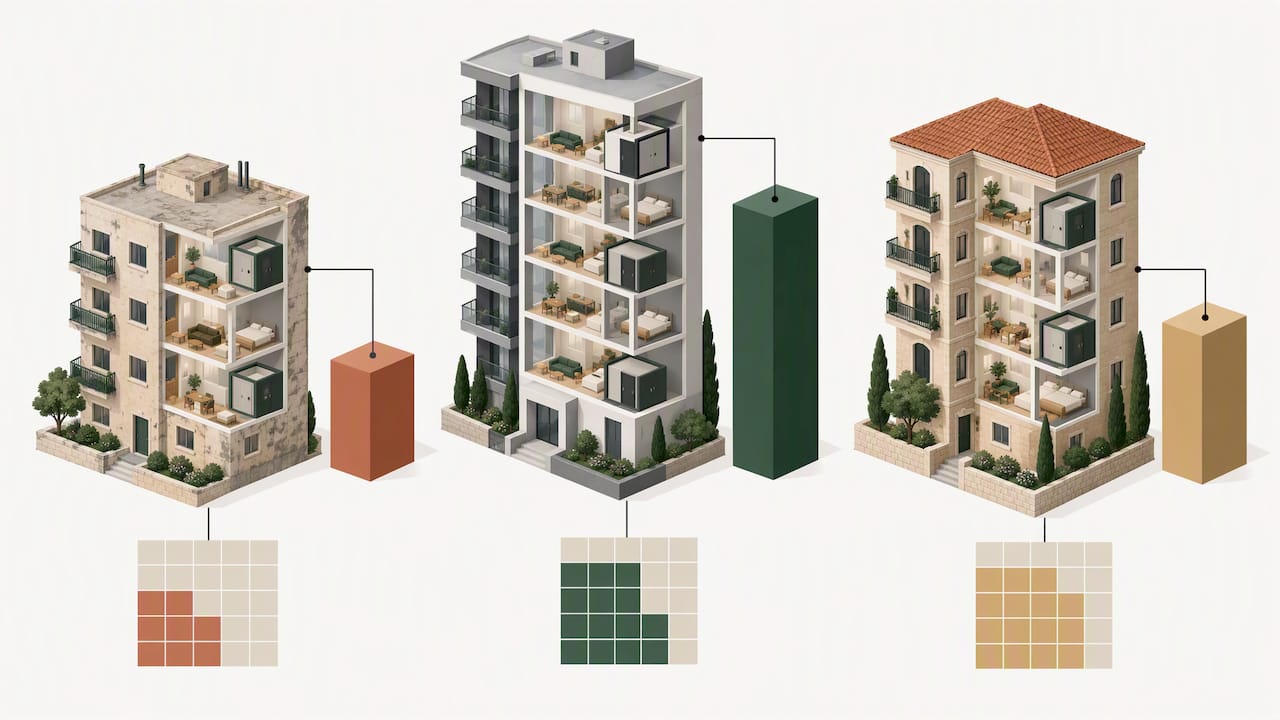
Asking prices and recorded sale prices are two different numbers, and the gap between them is often where buyers either save money or overpay. The Israel Tax Authority’s real estate database lets anyone query recorded sales by address or by block-and-lot, showing what a unit actually sold for rather than what it was listed at.
A few things worth knowing before you query it:
That snapshot, along with an earlier housing snapshot from October 2025 noting an uptick in French and British buyers, both draw on the tax authority’s registry to compile real sale figures rather than relying on advertised prices alone.
Before comparing numbers, confirm the basics: floor level, whether the unit has a mamad (protected room), parking allocation, and exact square footage, since these details shift price per square meter more than almost anything else. Our guide to understanding property listings in Beit Shemesh walks through how listing terminology maps onto these registry details.
Finding a unit close to a yeshiva is only step one. Here’s a practical order of operations once you’ve found a listing worth pursuing:
On negotiation: use the registered sale price from the tax database as your opening reference point, not the asking price. A fair response window from a motivated seller in this market tends to run a few days rather than weeks.
Pro Tip: Ask the current owner or agent about existing pickup arrangements or carpools to the yeshiva before you sign, since an established arrangement can save months of logistics.
Families searching near a specific yeshiva rarely choose on price alone. Walking safety, an established minyan nearby, and proximity to other families with children at the same yeshiva often outweigh a few thousand shekels in asking price.
Viewings and signed contracts on well-priced units near popular yeshivot tend to move quickly once a buyer has pre-verified financing and reviewed the registry data in advance. Waiting to check tax records until after falling in love with a unit is the most common reason a deal stalls.
Pro Tip: Ask any agent showing you a unit near a yeshiva how many comparable sales they’ve tracked in that specific building, not just the street, since building-level history tells you more than a neighborhood average.
— Spiros
Beit Shemesh neighborhoods near major yeshivot vary more than their proximity to a single institution suggests. Ramat Beit Shemesh Bet and Gimmel cluster multiple yeshivot and seminaries within walking distance of each other, along with a dense concentration of synagogues and mikvaot serving different communities within the same few blocks.
Kosher food access is generally strong near these clusters, with grocery stores, bakeries, and takeout options catering to a range of kashrut standards. Eruv coverage extends through most of the established religious neighborhoods, though continuity at the edges can vary block by block, so confirming the specific boundary near a prospective apartment is worth the extra few minutes.
Older sections of Beit Shemesh closer to the historic downtown offer a different character, with a longer-established mixed community and slightly shorter commutes to some yeshivot, at the cost of older building stock. Our guide to popular neighborhoods in Beit Shemesh breaks down which pockets sit closest to which yeshiva clusters and what amenities each one offers.
Most families living near a yeshiva in Beit Shemesh walk rather than drive, which is part of why proximity commands a price premium in the first place. For those slightly further out, local bus routes connect Ramat Beit Shemesh neighborhoods to the city center and to Jerusalem, with several lines running frequently during peak morning and evening hours.
Parking near older buildings close to yeshivot can be tight, especially in neighborhoods built before car ownership became as common as it is today. Newer developments tend to include dedicated parking, which is worth factoring in if you plan to drive even occasionally.
For buyers commuting to Jerusalem for work while a spouse or children walk to a local yeshiva, Beit Shemesh’s rail and bus links to Jerusalem add a second layer to the location decision, since a unit near both a yeshiva and a transit stop serves two needs at once.
Neighborhoods clustered around major yeshivot in Beit Shemesh skew heavily toward religious families, many of whom chose the area specifically for its concentration of yeshivot, seminaries, and affiliated community institutions. English-speaking olim make up a visible share of several neighborhoods, alongside longer-established Israeli families.
Daily life near these clusters tends to revolve around synagogue schedules, yeshiva hours, and a dense informal network of carpools, meal shares, and community support that builds up around institutions with large student populations. This density is part of what draws families to pay a premium for proximity in the first place, rather than proximity alone.
Community size and character shift noticeably between neighborhoods even a short drive apart, so spending time in a specific pocket before committing is worth the effort beyond just checking listing photos.
Families choosing an apartment near a yeshiva for one child still need to think about schooling for the rest of the household. Beit Shemesh hosts a range of elementary and secondary schools serving different religious and educational approaches, from Haredi-affiliated institutions to religious-Zionist and English-curriculum options.
Several neighborhoods near the major yeshiva clusters also host girls’ seminaries and elementary schools within similar walking distance, which matters for families with children across different age groups and tracks. Checking the specific school zoning and bus routes for younger children, separate from the yeshiva commute itself, is worth doing before finalizing a neighborhood choice.
Purchasing near a yeshiva in Beit Shemesh follows the same legal framework as any Israeli residential purchase, with a few details worth double-checking given the density of new developments in these areas. You’ll need a signed purchase agreement, a lawyer to review the contract and registered lien status, and documentation confirming the seller’s clear title.
Purchase tax brackets for single-residence buyers under the temporary 2025-2028 schedule define specific exempt and taxed thresholds, detailed in the current purchase-tax guidance. Budgeting for this tax early, before you fall in love with a specific unit, avoids an unpleasant surprise at closing.
For renters, a standard lease should specify maintenance responsibilities, deposit terms, and any building-specific rules around shared spaces like a sukkah balcony or building-wide eruv access points. A lawyer’s review before signing is standard practice regardless of whether you’re buying or renting.
The conventional advice on this topic focuses almost entirely on walking distance, as if five minutes versus ten minutes were the deciding factor. It rarely is. The bigger variable is whether the registered sale price supports the asking price at all, and whether the building itself has the eruv continuity, mamad, and community fit a family actually needs day to day.
Buyers who check the tax registry before falling for a listing negotiate from a stronger position than buyers who fall in love with a unit first and justify the price after. The most overrated factor is a round-number walking time claimed by a listing agent. The most underrated factor is building-level transaction history, which tells you far more about fair value than a neighborhood average ever will.
If you’re searching near a specific yeshiva, verify first, then view, not the other way around.
— Spiros
Finding the right unit near a specific yeshiva takes more than scrolling listings. We offer concierge project guidance designed for buyers and families relocating to Beit Shemesh, including verified listings, scheduled viewings, and a check of tax records before you make an offer.
Reach out through our concierge project guidance page to start a conversation about what’s available near your yeshiva right now.
Asking prices for 3-room resale units near yeshivot generally run within a moderate range, varying by location and condition, with 4-room units pricing higher depending on building age and distance. Always confirm the actual recorded sale price through the Israel Tax Authority database before comparing listings.
Query the building’s address or block-and-lot directly in the Israel Tax Authority’s real estate database, which shows registered sale prices rather than advertised asking prices. This is the most reliable way to confirm whether a current listing is fairly priced.
Purchase tax depends on the current temporary bracket schedule for single-residence buyers, detailed in the 2026 purchase-tax guidance, which defines exempt and taxed thresholds through 2028. Budgeting for this tax early helps avoid surprises at closing.
Both options exist near most yeshiva clusters, with new-build projects offering modern finishes and elevator access while resale units often sit closer to established, older neighborhoods. The right choice depends on your budget, timeline, and whether proximity or building condition matters more to your family.