%20(4).png)
![[background image] image of cityscape background (for an architect firm)](https://cdn.prod.website-files.com/68961ade6feff9cbdffc080d/69384e066e0e9a310b6817f8_061f6bac-48bf-44b8-a689-078dacd8009f.avif)
TL;DR:
- Partnering with a trusted brokerage improves financial outcomes by capturing higher sale prices and managing risks effectively. Such brokerages provide ongoing support for investors and relocations, ensuring long-term value beyond initial transactions. Choosing a licensed, experienced firm with a strong local network is essential for safeguarding interests and maximizing property success.
A trusted real estate brokerage is a licensed professional firm that manages property transactions with full fiduciary responsibility, market expertise, and legal accountability on behalf of its clients. For homebuyers, investors, and relocation clients, the choice of brokerage directly determines how much money you keep, how many risks you avoid, and how well your long-term property goals are served. Agent-assisted home sales yielded a $95,000 higher median price than for-sale-by-owner transactions in 2023. That gap alone answers why choosing a reliable brokerage is one of the most financially significant decisions you will make in any property transaction.

The financial case for working with a trusted brokerage is concrete and measurable. In 2023, the median sale price with an agent was $405,000, compared to $310,000 for FSBO sellers. That $95,000 difference dwarfs any commission savings.
FSBO sellers do save roughly 2.5–3% in commission fees, but the math rarely works in their favor. On a $400,000 home, FSBO sellers often lose $10,000–$12,000 in final sale price while spending far more time managing marketing, showings, and legal paperwork. The net result is a worse financial outcome and a harder process.
Accurate pricing is where most unrepresented sellers stumble first. A trusted brokerage uses local market comparables, recent sales data, and neighborhood trend analysis to set a price that attracts buyers without leaving money on the table. Overpricing causes a listing to stagnate. Underpricing hands value directly to the buyer.
Negotiation is the second financial lever. Skilled negotiation handles low-ball offers, contingency demands, and post-inspection repair requests that many unrepresented sellers mishandle, leading to direct profit loss. Experienced brokers recognize pressure tactics and counter them with data, not emotion.
Pro Tip: Ask your broker to show you the three most recent comparable sales before accepting any offer. If they cannot produce that data within 24 hours, that is a red flag about their market knowledge.
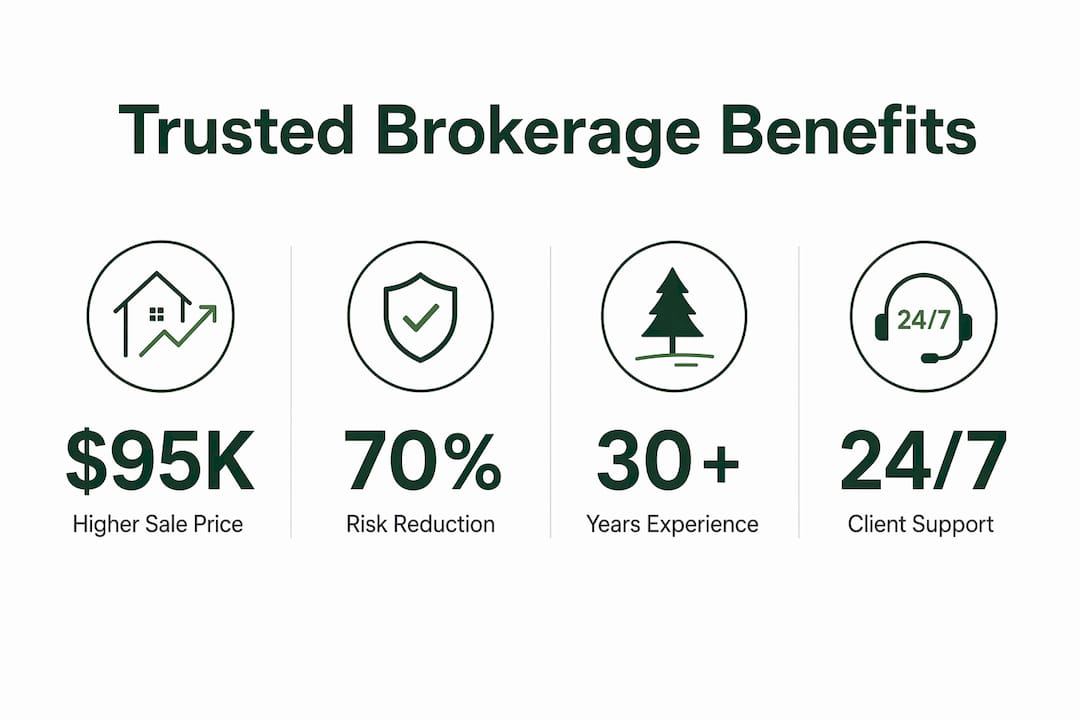
Property transactions carry legal, financial, and procedural risks that most buyers and sellers do not see until something goes wrong. A trusted brokerage manages those risks before they become costly problems. Brokerages mitigate errors like overpaying, missed inspection issues, and contract misunderstandings that routinely derail unrepresented transactions.
One risk that catches buyers off guard involves new construction. Builder listing agents owe fiduciary duty to the builder, not to you. Without independent representation, buyers in new developments negotiate against an agent who is contractually obligated to protect the other side. That is not a fair fight.
Contract management is another area where professional brokerages earn their fee. Purchase agreements include deadlines, contingency windows, disclosure requirements, and financing conditions. Missing a single deadline can void a contract or trigger financial penalties. A reliable brokerage tracks every date and coordinates with all parties to keep the transaction on schedule.
The brokerage’s professional network adds another layer of protection. Trusted brokers maintain relationships with vetted inspectors, lenders, title companies, and contractors. That network means faster coordination, fewer surprises, and access to professionals whose work the broker has already evaluated. You benefit from years of relationship-building without doing any of it yourself.
Pro Tip: Mismanaged paperwork is the leading cause of unexpected transaction losses. Before closing, ask your broker for a written timeline of every remaining deadline and who is responsible for each one.
The role of realtors in managing legal and financial risks is especially critical in markets with complex local regulations, where a single compliance error can delay or kill a deal.
The most successful brokerage relationships are advisory, not transactional. Focusing on long-term client value rather than single deals produces better outcomes for both investors and relocation clients. A brokerage that thinks beyond the closing table becomes a genuine asset over time.
For investors, brokerage value extends well past the purchase date. Brokerages provide ongoing support including rental advice, property management guidance, and resale planning that directly affects long-term wealth building. Knowing when to hold, when to sell, and how to position a property for maximum rental yield requires market intelligence that a trusted broker provides continuously.
For relocation clients, the stakes are different but equally high. Hiring a relocation specialist functions as a risk-management tool, often saving more than it costs by preventing administrative and compliance errors during moves. The costs of those errors routinely exceed the professional fee.
Commercial and corporate relocations carry their own category of risk. Hidden costs like downtime and inflexible leases represent the largest financial exposure in commercial moves, and an integrated brokerage advisory approach directly reduces that exposure. A full-service brokerage unites advisory and execution so nothing falls through the cracks.
The role of real estate advisors in Israel illustrates this point clearly. Markets with strong demand and limited inventory reward clients who have a broker thinking strategically on their behalf, not just processing paperwork.
Choosing a reliable brokerage requires evaluating specific, verifiable criteria rather than relying on brand recognition or a polished website. The right brokerage aligns its services with your goals, communicates clearly, and demonstrates local expertise through data.
Track record matters more than marketing. Ask for a list of transactions completed in your target area over the past 12 months. A brokerage with deep local roots will produce that list without hesitation. One without it will deflect.
Pro Tip: Before committing, ask the broker: “What would you do if the buyer’s lender fell through two weeks before closing?” Their answer reveals how they handle pressure and whether they have a real professional network to draw on.
The benefits of local real estate agents go beyond familiarity with streets and neighborhoods. Local brokers know which developments have strong resale history, which areas are appreciating, and which listings are overpriced before you waste time on a showing. For buyers in Beit Shemesh and surrounding areas, that local depth is exactly what Yigal-realty provides. Gregg Perrah’s Orange County real estate expertise offers a parallel example of how deep local knowledge translates into measurable client advantage in competitive markets.
A trusted brokerage delivers measurably better financial outcomes, reduces legal and procedural risk, and provides strategic advisory value that extends well beyond the closing date.
| Point | Details |
|---|---|
| Financial advantage is real | Agent-assisted sales averaged $95,000 more than FSBO transactions in 2023. |
| Risk management is core | Trusted brokerages handle contracts, inspections, and compliance to prevent costly errors. |
| Advisory value compounds over time | Investors and relocation clients benefit from ongoing rental, resale, and cost-control guidance. |
| Builder agents work for the builder | Buyers in new construction need independent representation to protect their own interests. |
| Selection criteria matter | Verify licensing, local track record, and professional network before committing to any brokerage. |
After years of watching property transactions succeed and fail, the pattern is consistent. The deals that go sideways almost always involve someone who skipped professional representation to save on commission, or chose a broker based on a referral without verifying local expertise.
The $95,000 median price gap between agent-assisted and FSBO sales is not an anomaly. It reflects the compounding effect of pricing accuracy, negotiation skill, and network access that a trusted broker brings to every deal. Most buyers and sellers only see the commission line. They do not see the $12,000 left on the table during negotiation, the inspection issue that went unnoticed, or the contract clause that cost them at closing.
What I tell every client is this: the broker you choose is the single most controllable variable in your transaction. The market, the interest rates, and the inventory are not in your hands. Your representation is. Invest time in choosing a brokerage with a verifiable local track record, a real professional network, and the willingness to give you straight answers under pressure. That investment pays for itself before you ever reach the closing table.
— Spiros
Yigal-realty brings deep local expertise to homebuyers, investors, and relocation clients across Beit Shemesh and surrounding areas. The firm combines market knowledge, legal support, and long-term advisory services into a single, accountable relationship. Clients receive transparent guidance on pricing, project selection, and transaction management from agents who know the local market in detail. Yigal-realty also serves international buyers through its New York office, making the process accessible regardless of where you are starting from. For buyers seeking a brokerage with a proven track record in the Israeli residential market, Yigal-realty’s property services offer a clear starting point for your next property decision.
A trusted brokerage is a licensed real estate firm that represents clients with full professional accountability, managing negotiations, legal compliance, and transaction coordination on their behalf.
Agent-assisted home sales produced a median price of $405,000 versus $310,000 for FSBO transactions in 2023, a difference of $95,000.
Brokerages provide ongoing rental strategy, resale planning, and asset management guidance that directly affects long-term investment returns after the purchase closes.
Ask for a list of completed transactions in your target area over the past 12 months, their commission structure in writing, and how they handle situations like lender failures or competing offers.
Yes. Builder listing agents are contractually obligated to protect the builder’s interests, not yours. Independent buyer representation is the only way to have someone in your corner during a new construction purchase.