%20(4).png)
![[background image] image of cityscape background (for an architect firm)](https://cdn.prod.website-files.com/68961ade6feff9cbdffc080d/69384e066e0e9a310b6817f8_061f6bac-48bf-44b8-a689-078dacd8009f.avif)
To become a licensed real estate agent in Colorado, you must complete approved broker pre-licensing education (or hold an eligible real estate degree), pass both the national and Colorado state exam portions through PSI, complete a fingerprint-based criminal-history background check, secure Errors & Omissions insurance, affiliate with a brokerage, and submit your application to the Colorado Division of Real Estate.
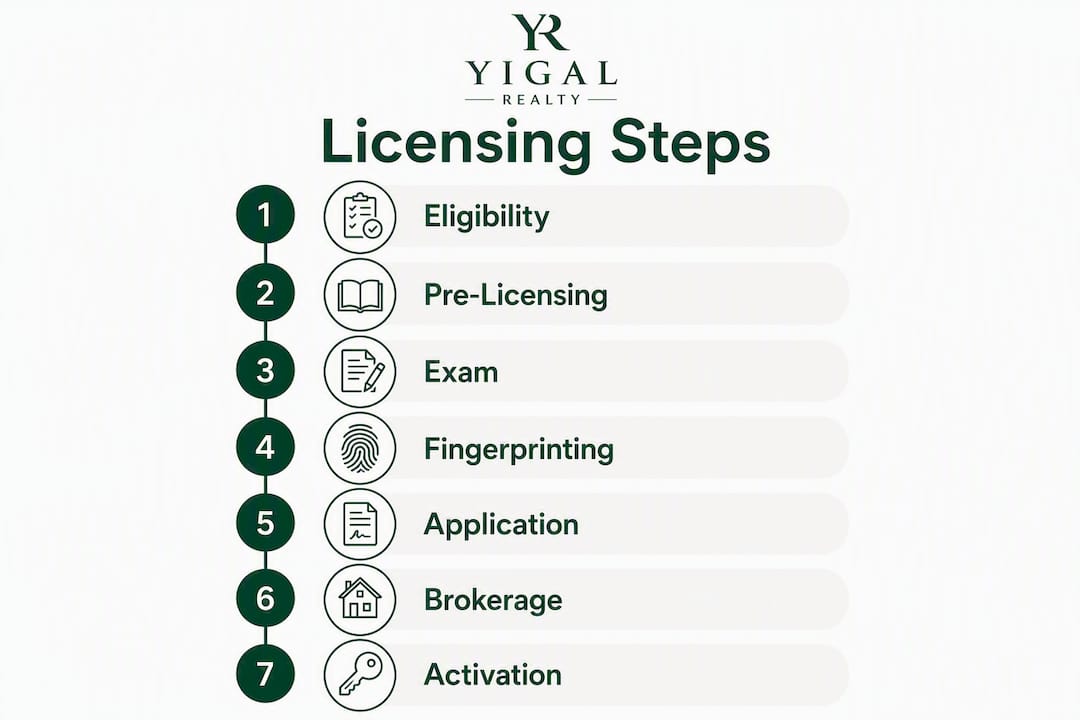
Here are the exact steps, in order:
Your next action: Within the next 24–72 hours, verify your eligibility on the Division of Real Estate’s broker licensing page and identify an approved pre-licensing school to enroll in.
One quick note on terminology: Colorado does not issue a “real estate agent” license. The state’s entry-level credential is called a Real Estate Broker (Associate Broker level). When you search for courses, look for broker pre-licensing programs, not agent programs.
Before you spend a dollar on coursework, confirm you qualify. Colorado’s broker license application requirements set the baseline:
Beyond those basics, the documents you need depend on your situation.
First-time licensees should gather a government-issued photo ID, your Social Security number, and your high school diploma, GED certificate, or official transcripts. If you plan to substitute a qualifying college degree for the 168-hour coursework, you’ll need official transcripts from an accredited institution showing a major course of study in real estate.
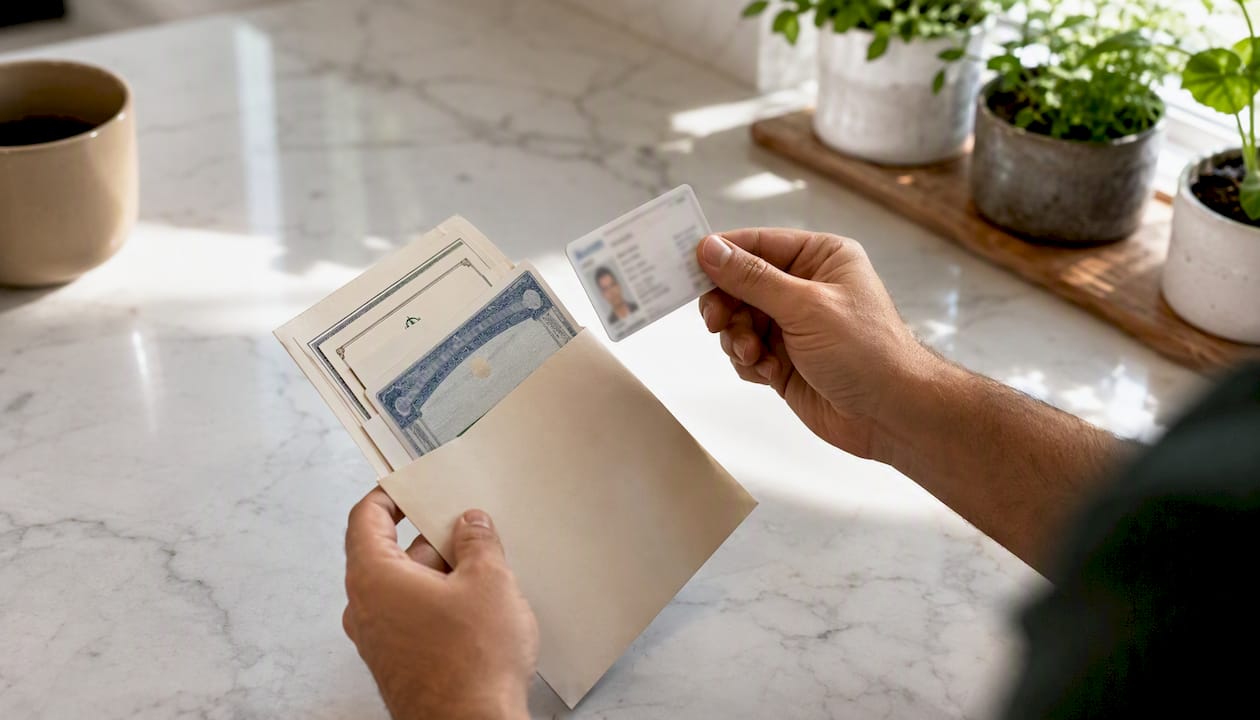
Applicants licensed in another state must also supply a certified license history from every jurisdiction where you hold or have held a license. That certificate must be dated within 90 days of your application submission, so don’t order it too early.
Military spouses and attorneys may qualify under separate provisions. The Division’s application requirements page lists the specific documentation for each category.
Pro Tip: Order your certified license history or official transcripts the moment you decide to pursue licensure. Processing times at state licensing boards and universities can run several weeks, and a 90-day validity window moves faster than it looks.
Colorado requires qualifying broker education from either a nationally accredited community college or university, or a school approved by the Colorado Department of Private and Occupational Schools (DPOS). The coursework is divided across six mandatory subject areas.
The two largest blocks, Real Estate Law and Practice and Colorado Contracts and Regulations, together account for 96 of the 168 hours. Expect those to be the most exam-relevant as well.
Degree substitute path: If you hold a degree with a major course of study in real estate from an accredited college or university, you may submit official transcripts instead of completing the 168 hours. The Division confirms this substitution in its broker license application requirements.
Courses are available in-person and via distance learning. Before enrolling, verify the school appears on the Division’s approved provider list. A certificate of completion from an unapproved school will not satisfy the requirement, and the Division will reject your application.
Proof of completion: Once you finish, obtain a certificate of completion from the school. If you used a college degree, request official transcripts directly from the institution. Both documents go into your application packet.
Pro Tip: Keep the original completion certificate in a dedicated folder alongside your exam confirmation and fingerprint receipt. Reconstructing lost documents mid-application is a common, avoidable delay.
Colorado uses PSI as its exam vendor. Once you’ve completed your pre-licensing education, contact PSI Candidate Care to schedule your test. You can register online through PSI’s website or by phone.
The exam has two distinct portions:
You can take both portions on the same day or on separate days. Each passing result is valid for one year from its pass date. If you pass one portion but don’t finalize your license application before that year expires, you’ll need to retake the expired portion. Don’t let the clock run out.
What to bring to the testing center:
Study checklist before exam day:
PSI may offer remote proctoring for some exams. Check the PSI website for current availability in Colorado, as options can change.
Colorado requires a fingerprint-based criminal-history background check for every initial license applicant. The Division of Real Estate explicitly warns that background-check delays are one of the most common reasons applications take significantly longer to process.
Fingerprints are submitted through IdentoGO or other Colorado Bureau of Investigation (CBI)-approved vendors. The process:
Processing times vary. In some cases results come back within days; in others, weeks. You have no control over that timeline once prints are submitted, which is exactly why doing this step early matters.
Out-of-state applicants should check the Division’s fingerprint background check page for instructions specific to applicants who cannot visit a Colorado-based vendor in person.
Pro Tip: Submit your fingerprints while you’re still in the middle of your coursework, not after you finish. The background check can run concurrently with your studies, and having it complete before you apply eliminates one of the biggest sources of idle waiting time.
Once your education, exam, and fingerprinting are complete, you’re ready to file. The Division’s applications, documents, and fees page lists everything required for a new broker application. A complete packet includes:
The Division states that a complete application can be processed and a license issued within ten business days once review is finished and no additional review is required. That ten-business-day window only starts when your packet is genuinely complete. Missing a single document resets the clock.
Common reasons applications stall:
On that last point: if your payment check is returned or a card transaction is denied, the Division may cancel your application entirely. Reinstatement is not guaranteed and may require additional fees. Pay by a method you know will clear.
If your application comes back incomplete:
New licensees in Colorado cannot practice real estate independently. You must affiliate with a licensed employing broker or brokerage to activate your Associate Broker license. The Division also requires proof of active Errors & Omissions insurance before your license can be issued.
E&O insurance protects you and your clients against claims arising from mistakes or omissions in your professional services. For a detailed breakdown of what E&O covers and how it differs from general business insurance, the Insurance Requirements for Commercial Real Estate guide is a useful reference. Most brokerages either provide group E&O coverage or require you to carry your own individual policy. Confirm which arrangement applies before you sign with any firm.
Choosing a brokerage: what actually matters
The commission split gets most of the attention, but it’s rarely the most important factor for a new agent. Consider:
Questions worth asking in a brokerage interview: How many transactions do new agents close in their first year? What does the onboarding process look like? Is E&O coverage included or separate?
Pro Tip: Arrange your E&O coverage before you submit your application. The Division requires proof of an active policy, and waiting until after approval creates an unnecessary gap that delays license activation.
Getting licensed is the start, not the finish. Here’s what the first year actually looks like:
The first year is heavily administrative. Expect to spend significant time on paperwork, CRM setup, and learning your brokerage’s transaction management system before you close your first deal.
Getting from zero to an active license typically takes a few months when each step moves without major delays. The three biggest bottlenecks are fingerprint processing, exam scheduling availability, and application completeness. A single missing document can add weeks.
Once the Division receives a complete application and no additional review is required, a license can be issued promptly.
These are ranges based on commonly available market pricing. Exact fees for the exam and application are set by PSI and the Division respectively; confirm current amounts on the Division’s applications, documents, and fees page before budgeting.
Budget at least $1,500–$3,000 total to cover education through your first year of active practice, including association and MLS fees.
Colorado accepts certified license history from all U.S. states and territories. There is no formal reciprocity agreement that waives all requirements, but your out-of-state experience can reduce what you need to do.
The key rule: your certified license history must be dated within 90 days of your application submission. Order it early, but not so early that it expires before you’re ready to apply.
What out-of-state licensees typically need:
If you hold an active, non-expired license in another U.S. jurisdiction with at least two years of experience, you may only need to pass the Colorado state portion. This can cut months off your path to active practice.
Special cases:
Most delays are preventable. These are the errors that show up repeatedly:
Pro Tip: Start the fingerprinting process and order any certified documents (license history, transcripts) before you finish your coursework. Running these tasks in parallel with your studies is the single most effective way to shorten your total time to licensure.
Becoming a licensed real estate broker in Colorado requires completing 168 hours of approved pre-licensing education, passing both exam portions through PSI, submitting fingerprints early to avoid delays, securing E&O insurance before activation, and filing a complete application with the Colorado Division of Real Estate.
| Point | Details |
|---|---|
| 168-hour education requirement | Complete all six mandatory course areas or substitute an eligible real estate degree with official transcripts. |
| Fingerprint timing matters | Submit fingerprints during coursework, not after, to avoid weeks of idle waiting on background-check results. |
| E&O insurance is a gating item | The Division requires proof of an active E&O policy before it will issue your license. |
| Exam portions expire in one year | Each passing result is valid for one year from its pass date. Don’t let the clock run out. |
| Budget $1,500–$3,000 total | Account for education, exam, fingerprinting, application, E&O, and first-year association and MLS fees. |
Most people preparing for their license exam spend their energy on the coursework and the test. That’s the right focus for passing. But the license itself is where the real learning begins, and the gap between “licensed” and “productive” is wider than most new brokers expect.
The paperwork load in a real estate transaction is substantial. Contracts, disclosures, addenda, and compliance checklists pile up fast, and your brokerage’s transaction management system will have a learning curve. New agents who underestimate this often find their first few deals stressful not because of the client relationship, but because of the administrative side.
Lead generation is the other underestimated challenge. A license gives you the legal right to practice; it does not give you clients. Building a pipeline from scratch takes consistent effort over months, not weeks. The agents who succeed early almost always have a mentor or a brokerage with structured support. That’s not a soft benefit. It’s a practical one.
Choosing a brokerage with real training infrastructure is worth more in year one than a higher commission split. You can renegotiate your split once you have volume. You can’t recover the deals you lost while figuring out the basics alone.
At Yigal-realty, we see firsthand how much the quality of early support shapes an agent’s trajectory. The agents who invest in mentorship and choose their brokerage based on training rather than split percentage tend to close their first deal faster and build more durable practices.
| Resource | What It’s Used For |
|---|---|
| Broker Steps for Initial Licensure | Official step-by-step overview of the full licensing process from the Division |
| Broker License Application Requirements | Eligibility rules, document checklist, and degree-substitute details |
| Broker Qualifying Education | Approved school list, 168-hour course breakdown, and delivery format rules |
| Applications, Documents and Fees | Application forms, fee schedule, and processing time expectations |
| Fingerprint Background Check | Vendor instructions, scheduling guidance, and out-of-state applicant options |
| Colorado Real Estate Manual — Chapter 2 | Full statutory education rules, credential definitions, and experience requirements |
| Colorado Division of Real Estate — Home | Central hub for all Division programs, news, and regulatory updates |