%20(4).png)
![[background image] image of cityscape background (for an architect firm)](https://cdn.prod.website-files.com/68961ade6feff9cbdffc080d/69384e066e0e9a310b6817f8_061f6bac-48bf-44b8-a689-078dacd8009f.avif)
TL;DR:
- A buyer’s agent exclusively advocates for the buyer’s interests throughout the home-buying process.
- They differ from listing agents by prioritizing negotiation strength, transparency, and community-specific needs.
- Engaging a knowledgeable agent helps avoid risks, especially in specialized communities like Beit Shemesh.
Most homebuyers walk into a property transaction assuming their agent is looking out for them. That assumption can cost you dearly. In reality, the agent showing you homes may legally represent the seller, not you. This distinction is not a technicality. It shapes every negotiation, every disclosure, and every decision made along the way. This article explains exactly what a buyer’s agent is, how they differ from listing agents, why the difference matters especially in observant communities like Beit Shemesh, and how to make the most of that relationship from your first meeting to closing day.
| Point | Details |
|---|---|
| Exclusive representation | A buyer’s agent works only for the buyer, protecting your interests at every step. |
| Role clarity | Buyer’s agents and listing agents serve different sides in property transactions. |
| Personalized service | A skilled agent tailors guidance to your needs, especially in niche communities like Beit Shemesh. |
| Expert negotiation | Your agent handles complex negotiations and paperwork so you can buy confidently. |
Let’s clear something up right away. Not every real estate agent you meet is working for you. Some agents represent the seller, some represent both parties, and only one type is legally committed to putting your interests first: the buyer’s agent.
A buyer’s agent is a real estate professional whose client is the buyer, not the seller, and who helps the buyer find, evaluate, and purchase a property while representing the buyer’s interests exclusively. That word “exclusively” matters more than most people realize. It means this agent’s job is to get you the best deal possible, uncover potential problems with a property, and advocate for you when negotiations get tense.
Here’s what a buyer’s agent typically handles on your behalf:
“A buyer’s agent is a real-estate professional whose client is the buyer (not the seller) and who helps the buyer find, evaluate, and purchase a property while representing the buyer’s interests.” — NerdWallet
The role of real estate advisors goes far beyond simply opening doors. A skilled buyer’s agent reads a neighborhood, knows local developers, understands contract language, and spots risks that you might completely miss as a buyer. In markets like Beit Shemesh, where community fit, proximity to synagogues, and school zoning can be just as important as square footage, having someone who knows the local landscape is invaluable.
The short version: a buyer’s agent is your advocate, your researcher, your negotiator, and your guide. All in one.
With the role defined, the next step is understanding how a buyer’s agent stacks up against a listing agent. This is where many buyers get confused and where that confusion can become expensive.
A buyer’s agent represents the purchaser’s interests, while a listing agent represents the seller’s interests. That is the fundamental legal and ethical divide between these two roles. A listing agent’s goal is to sell the property at the highest possible price with the best terms for the seller. A buyer’s agent’s goal is the exact opposite: to help you buy at the fairest price with the strongest protections for you.

| Feature | Buyer’s agent | Listing agent |
|---|---|---|
| Represents | The buyer | The seller |
| Goal | Best deal for buyer | Best deal for seller |
| Negotiates for | Buyer’s price and terms | Seller’s price and terms |
| Discloses | Property risks to buyer | Seller’s goals to seller |
| Loyalty | Buyer’s financial interest | Seller’s financial interest |
Here is how this plays out in practice:
For buyers in Beit Shemesh, especially those relocating from overseas or making aliyah (immigrating to Israel), this distinction matters enormously. Many buyers from English-speaking countries are unfamiliar with how Israeli real estate agents operate. Without a dedicated buyer’s agent, you may find yourself relying on an agent who is collecting a fee from both sides and whose true loyalty is divided. Knowing who your agent actually works for is not just useful. It is essential.
Understanding the mechanics is key, but buyer’s agents also adapt to the specific needs of their clients. There is no one-size-fits-all approach, and a skilled agent reads the situation and adjusts accordingly.
Buyer’s agents specialize in property search, evaluation, and negotiation on the buyer’s behalf, and can focus on investment goals such as rental yield or capital growth. That flexibility is what makes them useful across very different buyer profiles.
Here is how their role shifts depending on who they are working with:
| Buyer type | Key needs | How agent helps |
|---|---|---|
| First-time buyer | Clarity and confidence | Guides through every step |
| Investor | Yield and growth potential | Evaluates financial performance |
| Observant family | Community fit and lifestyle match | Screens for religious amenities |
| International buyer | Local knowledge and legal guidance | Navigates Israeli market nuances |
Pro Tip: If you are an observant buyer moving to Beit Shemesh, ask your buyer’s agent to specifically map out which neighborhoods have an established eruv, a mikveh within walking distance, and schools aligned with your educational philosophy. The right agent already has this information ready.
You can learn more about the full scope of real estate guide services and how they adapt to different client needs. If you are still deciding whether representation makes sense for your situation, reading about why buyers use an agent in Israel can give you a clearer picture of the value on offer.
The bottom line is that a good buyer’s agent does not give you a generic service. They shape their approach around who you are, what you need, and what success looks like for your family or your portfolio.
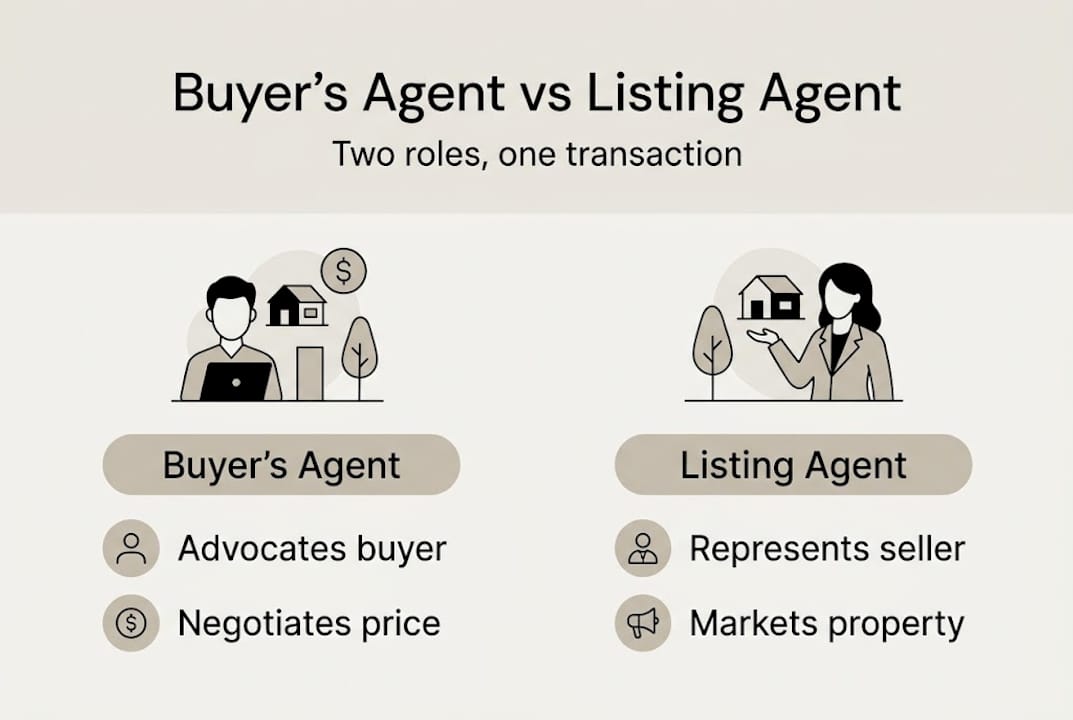
Now, let’s see exactly how your relationship with a buyer’s agent unfolds, step by step. Knowing the process in advance removes uncertainty and helps you stay in control at every stage.
Pro Tip: Watch for these red flags during the process. If an agent pressures you to skip the inspection to speed up closing, or avoids answering direct questions about a property’s history, those are signs they may not be fully representing your interests. A genuine buyer’s agent welcomes your questions at every stage.
Understanding how to choose a real estate agent in Israel before you start this process will help you find someone whose approach matches your needs. And once you are in the market, knowing the benefits of local real estate agents gives you a stronger sense of what good representation actually looks like in practice.
Bringing it all together, it is worth considering a perspective rarely discussed among new buyers. Most articles about buyer’s agents focus on negotiation tactics and market knowledge. Those things matter. But in communities like Beit Shemesh, the most important value a buyer’s agent provides is something harder to quantify: cultural alignment.
When an observant family is searching for a home, they are not just buying a property. They are choosing a community. Which synagogue will they walk to? Are there suitable schools for each age group? Is the neighborhood stable and growing, or is it in transition? Will their children be able to make friends who share similar values? A buyer’s agent who has lived in or worked deeply within these communities understands those questions are not secondary. They are central.
Relying only on a listing agent in this context is genuinely risky. A listing agent’s goal is to close the sale, not to make sure the neighborhood is a good fit for your family’s lifestyle. They may not know about eruv boundaries, and they have no incentive to tell you if the closest school has a two-year waiting list.
Personalized guidance from someone who knows using a realty agent in Israel in this context can prevent mistakes that take years to undo. Buying the wrong home in the wrong neighborhood is not just a financial error. For an observant family, it can mean social isolation, mismatched schooling, or a fundamental mismatch with daily life. The right buyer’s agent prevents that.
If you are considering a move or investment in Beit Shemesh or the surrounding area, a knowledgeable local agent can make all the difference. At Yigal Realty, we specialize in matching buyers with properties that fit not just their budgets but their lives. Whether you are a first-time buyer navigating the Israeli market, an investor looking for strong returns, or an observant family searching for a community that truly feels like home, our team brings the local knowledge and personal commitment you need. Explore your options and connect with an agent through our local buyer’s agent service and take the next step with confidence.
Usually, the buyer pays the buyer’s agent’s fee directly in Israel, and this fee is typically negotiated and agreed upon before the property search begins. It is important to clarify this in writing before signing any representation agreement.
Yes, buyer’s agents often have access to off-market or private listings, especially when they specialize in targeted communities like Beit Shemesh. This access alone can open doors that standard property portals simply cannot.
Even when you have already found a property, a buyer’s agent can represent your interests through negotiation, due diligence, and the full closing process. Skipping representation at that stage often leaves money and protections on the table.
Buyer’s agents with knowledge of observant communities can match buyers to neighborhoods based on synagogue proximity, school options, eruv coverage, and community culture. This specialized insight is difficult to find outside of agents who work specifically in those markets.
A buyer’s agent can identify properties that meet specific investment goals, as agents prioritize capital growth or rental yield based on the investor’s strategy. They filter out emotionally appealing properties that underperform financially and focus your search on assets with real returns.