

Before you sign anything, verify five things: the elevator’s Shabbat-mode certification, an audit of shared automatic systems, kosher kitchen and timer readiness, walking distance to the synagogue and mikveh, and building management’s willingness to accommodate Shabbat needs. If any of those come back uncertain, add a technical and halachic condition precedent to the contract, or hold off signing until an audit clears them. שיקולי שבת בבחירת דירה should shape your search from the first viewing, not surface as a surprise after closing.
TL;DR:
- Verify that the building has a certified Shabbat mode for elevators and ensure lighting and water systems are halachically safe before signing the contract.
- Confirm that the property’s technical specifications and maintenance logs are documented and that any automated systems are properly certified and demonstrable in person.
- Ensure the building management and residents’ committee are cooperative and have a track record of accommodating Shabbat needs through documented policies and recent meeting minutes.
- Include specific contractual conditions for technical and halachic compliance, such as escrow clauses and written guarantees from developers, to avoid relying on verbal promises.
- Consider hiring a halachic and technical expert during planning, and utilize concierge services to efficiently screen properties and facilitate necessary audits before purchase.
Most buyers walk through an apartment looking at square footage and light. Observant buyers need a second list running at the same time, one that has nothing to do with finishes and everything to do with how the building behaves on Saturday.
In the kitchen, check whether there’s room for a dedicated hotplate or mayḥem, separate counter space for Shabbat dishes, and outlets positioned for safe, unattended use over 25 hours. Ask whether storage exists for items considered muktzah, since a kitchen designed without that in mind turns into a daily negotiation.
On the building side, confirm the elevator has a genuine Shabbat mode (not just a sticker claiming one), check whether hallway and stairwell lighting uses motion sensors, and ask how the intercom, entry gate, and garbage chute operate. Pumps and water boosters that cycle on timers can also create issues if they’re not accounted for.
Walk the route to the nearest synagogue and mikveh yourself, at the time of day you’d actually make that walk, and note whether it crosses a busy road or an unlit stretch. If eruv status matters to your family, confirm it directly rather than assuming.

Before you make an offer, request the building’s technical specifications, developer confirmations on system types, and maintenance logs.
Pro Tip: Bring a printed checklist to every viewing. Agents remember buyers who ask specific, informed questions, and you’ll get straighter answers on system details when it’s clear you already know what to look for.
Modern Israeli buildings run on more automation than most buyers realize, and that automation is exactly where halachic problems hide. Motion-sensor lighting in stairwells, automatic gates at the entrance, keypad or app-based intercoms, and centralized water heaters or boosters on digital timers can all trigger actions on Shabbat that a resident never intended.
Reporting on hidden building technology has flagged this repeatedly: buyers who don’t ask the right technical questions during purchase often discover the problem only after moving in, when adapting a finished building costs far more than adapting it on paper. A full audit typically checks:
Israeli regulation requires buildings with two or more elevators to include a Shabbat-compatible elevator, but the rule existing on paper and the feature working correctly are two different things. Ask the seller or developer to demonstrate Shabbat mode in person and provide written confirmation of certification, not a verbal assurance.
Smart-home planning guides recommend using timers and pre-programmed scenarios for lighting, climate control, and water heating, set up in advance with halachic oversight so the system serves the household instead of creating new violations to work around.
An apartment can have every technical box checked and still be a poor fit if the building’s management won’t cooperate. Shared systems, from rooftop sukkah access to timer schedules for common-area lighting, require the va’ad bayit or building committee to sign off, since these decisions affect every resident, not just observant ones.
Before committing, talk to current residents about how the building actually runs. Ask for recent va’ad meeting minutes or a look at the resident WhatsApp group’s norms around noise, guests, and shared-space scheduling. Coverage on communal living in Israeli buildings notes that many practical Shabbat accommodations depend entirely on resident cooperation, not on anything written in a lease.
Watch for these warning signs:
A building with an active, cooperative va’ad bayit will usually make future adaptations easier and cheaper than a building where every request becomes a fight.
The single biggest mistake observant buyers make is treating Shabbat compatibility as a conversation instead of a contract term. Verbal assurances from an agent or seller carry no weight once you own the keys.
If adaptations aren’t delivered as promised, your contract should spell out remedies, whether that’s release of escrowed funds, a staged sign-off process, or a right to cancel. If you’re renting rather than buying, tenant guidance resources can help when a lease doesn’t address these protections directly. For buyers weighing new construction, a developer’s obligations during planning are usually easier to lock in before the building is finished.
Pro Tip: Never rely on a broker’s summary of what the developer “said.” Get the technical commitments in writing, attached as an addendum to the purchase agreement, before you transfer any deposit.
Some of the best solutions cost very little and don’t require anyone’s permission but your own. A fixed, kosher-certified hotplate solves most cooking needs without touching electronics on Shabbat itself. Mechanical or battery-powered Shabbat clocks let you preset lighting and appliances without relying on a smart-home hub that might not cooperate.
Inside the apartment, plan for a separate set of Shabbat utensils, a spot to store items that become muktzah, and a living-room layout that can actually seat your household plus guests for a Friday-night meal. If your refrigerator has a Sabbath mode setting, confirm it works as advertised before you rely on it. None of these fixes require construction. They just require thinking about Shabbat before move-in day instead of after.
An agent who specializes in observant communities does more than show listings. A specialized agent may pre-screen properties for known Shabbat-related issues, coordinate technical audits with qualified engineers, and help arrange rabbinic consultation before you are locked into a contract.
That kind of support matters most on complex projects, new developments still in planning, or when you don’t have the technical background to evaluate a building’s systems yourself. If you’re managing a straightforward resale in a well-established, observant-friendly building, self-managing the checklist may be enough.
Whichever route you take, ask any agent for:
Every location trade-off feels manageable at the viewing. It stops feeling manageable six months later, when the elevator’s Shabbat mode turns out to be decorative and the va’ad bayit won’t approve a fix. Demand planning-stage adaptations wherever you can, and put a recognized halachic authority or Zomet in the loop before you sign, not after you’ve moved boxes in.
— Spiros
Running a full technical and halachic audit on your own takes time most buyers don’t have, especially if you’re relocating from overseas or juggling a full-time job while apartment hunting. Concierge project guidance services exist to help screen properties for Shabbat-relevant issues before viewings, arrange technical audits and halachic consultations, and assist in negotiating contract clauses so they are included in purchase agreements.
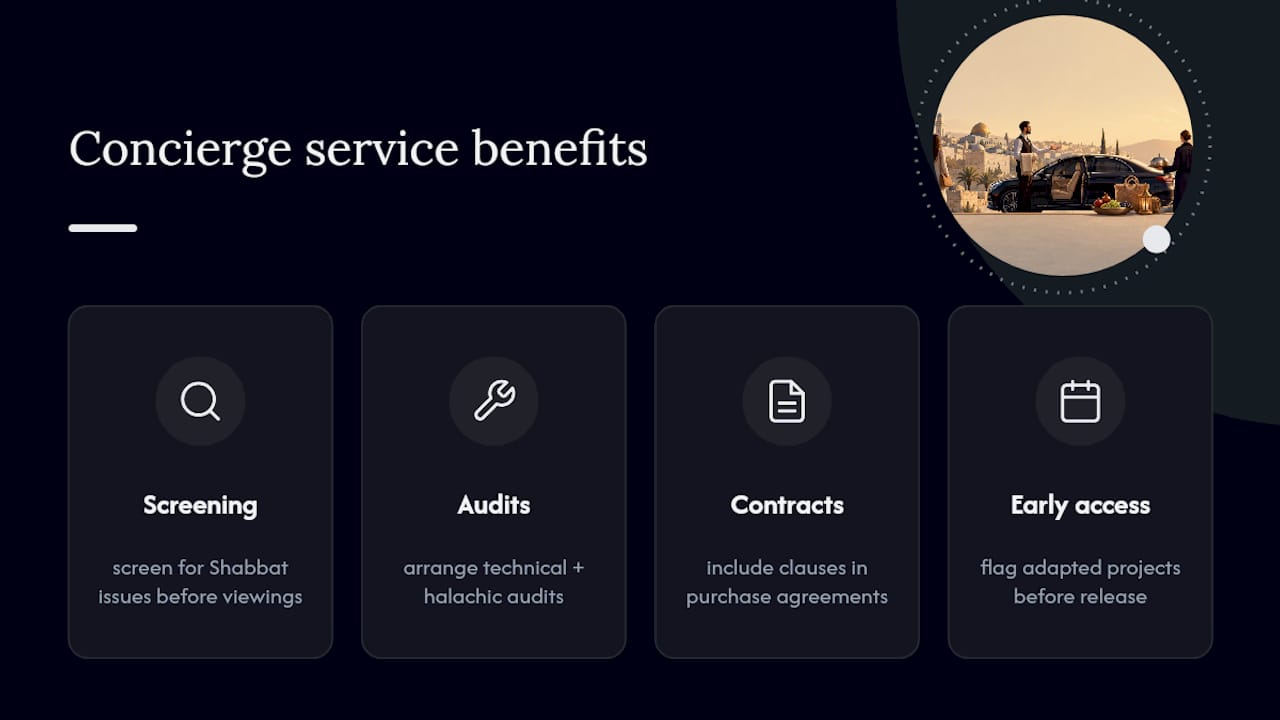
Early access to adapted developments is part of that service too. Projects like The Trilogy House get flagged to Yigal Realty clients before wider release, which matters when planning-stage adaptations are cheaper and easier to specify than anything done after the fact. If you’re weighing new construction against resale, reach out through Yigal Realty’s main site to start a conversation about which current projects fit your Shabbat requirements.
Only buildings with two or more elevators face the regulatory requirement for one to run in Shabbat mode. Always verify actual certification and demonstrate the mode in person rather than trusting a listing description.
Planning-stage adaptations across an entire building can cost in the tens of thousands of shekels total, which is much cheaper per unit than retrofitting after construction. Retrofits often also require resident consent that can be hard to secure after the fact.
Yes. Consulting a recognized halachic authority or an organization like Zomet before signing helps you correctly interpret technical audit results and avoid unplanned violations tied to melachah of building, which halachic sources treat as a distinct concern from simple electrical use.
Yigal Realty’s concierge guidance includes coordinating technical audits and rabbinic consultations for observant buyers, along with contract negotiation support. Current project details and contact options are available on Yigal Realty’s site.
The same checklist applies to rentals, though your contract leverage is usually smaller. If your lease doesn’t address Shabbat-related building issues, tenant guidance resources can help you understand your options before signing.