%20(4).png)
![[background image] image of cityscape background (for an architect firm)](https://cdn.prod.website-files.com/68961ade6feff9cbdffc080d/69384e066e0e9a310b6817f8_061f6bac-48bf-44b8-a689-078dacd8009f.avif)
Moving your family to a new home is one of the most logistically complex and emotionally loaded things you will ever do. The families who get through it well share one trait: they treat the children’s transition with the same seriousness as the truck reservation. This relocation guide for families covers every major phase, from setting your moving date and budget to helping a 12-year-old grieve the friends they are leaving behind.
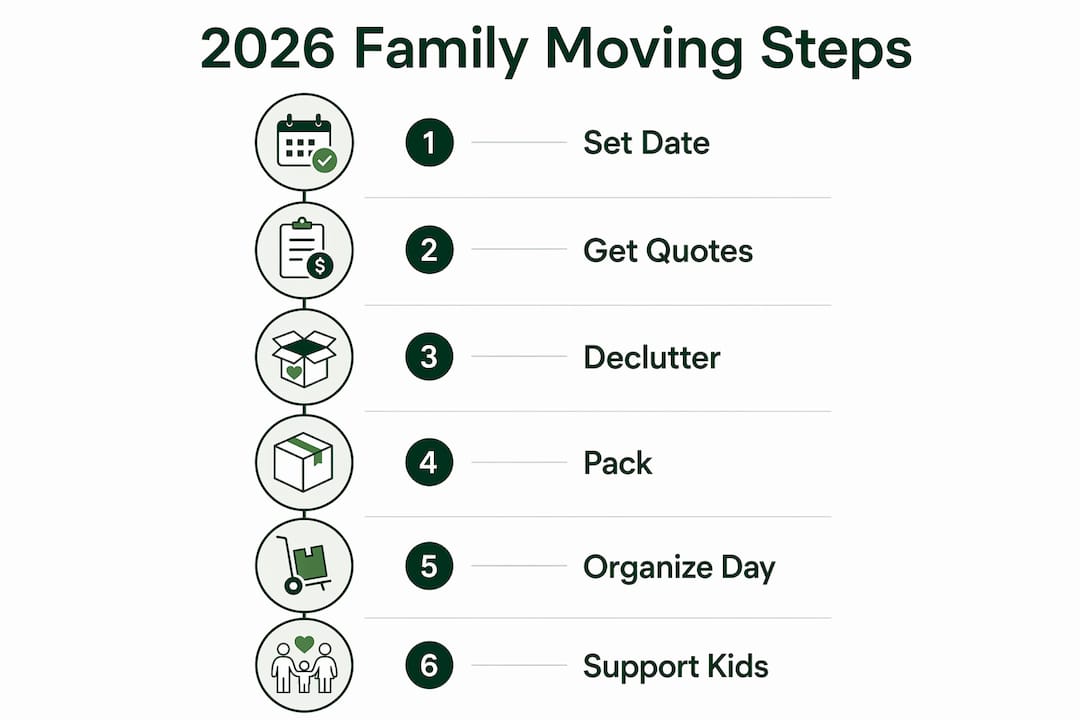
Here is what a well-run family move looks like, phase by phase:
Each phase builds on the last. Skip one and the next gets harder.
The single biggest mistake families make in early planning is picking a moving date based on convenience alone. School calendars should drive the decision. A summer move gives children 6–8 weeks to acclimate before a new school year starts, which is a meaningful buffer for social and academic adjustment. Mid-year moves are workable, but they require more deliberate support.
On the budget side, the numbers are higher than most families expect. Local full-service movers in 2026 typically charge between $1,200 and $2,500 for a two-bedroom home, while long-distance moves can range from $4,500 to $8,000 depending on distance and home size. These figures cover the base rate. Be prepared for additional charges like long-carry fees, stair charges, and parking permits. It’s wise to build a 15% buffer into your budget specifically for these extra expenses.
Your hiring options break down into three categories:
Get at least three written quotes before committing. Prices vary more than most people realize, and a long-distance moving company with family relocation experience will often flag logistics issues a general mover misses.
Pro Tip: Book movers on a Tuesday, Wednesday, or Thursday. Weekends and month-end dates carry a premium, and mid-week slots often come with more scheduling flexibility if your closing date shifts.
Decluttering before a move is not just about sentimentality. Full-service movers in 2026 often charge $0.50–$0.80 per pound, so every bag of clothes you donate before the truck arrives directly reduces your bill.
Work room by room, not in one overwhelming weekend session. A practical checklist:
For children’s items specifically, let them choose a set number of toys or books to keep rather than asking them to decide what to give away. Framing it as “what comes with us” rather than “what you lose” shifts the emotional weight considerably.
Yard sales work well for furniture and larger items. Facebook Marketplace and local buy-nothing groups move smaller goods faster. Donation pickups from organizations like Goodwill or Habitat for Humanity ReStores handle bulk loads without requiring you to transport anything.

Pro Tip: Start decluttering at least eight weeks before your move date. Families who wait until the final two weeks almost always end up packing things they meant to discard, which costs money and creates unpacking chaos on the other end.
Administrative tasks are the part of a family move that most parents underestimate until something goes wrong. A child who shows up to a new school without transferred immunization records gets turned away. A family that forgets to schedule internet installation arrives to a house with no connectivity on day one.
Work through this checklist in the six weeks before your move:
Records and documents:
Utilities and services:
Keeping all of this paperwork in a single accordion folder or a shared digital folder (Google Drive works well for this) means you can access anything during the chaos of moving week without digging through boxes.
Packing with kids in the house is its own project. The goal is to pack efficiently while keeping the home functional long enough that nobody is eating off paper plates for three weeks.
Recommended supplies for a family move:
The essentials kit deserves its own attention. Pack it last and load it into your personal vehicle, not the moving truck. It should contain two days’ worth of clothing for every family member, toiletries, phone chargers, snacks, children’s comfort items (a stuffed animal, a favorite blanket), pet food and bowls, and any medications. You will need all of this before the truck is unloaded.
Packing children’s favorite items last and unpacking them first in the new home is one of the most effective ways to ease the transition. A child who walks into their new room and sees their familiar bedding and toys already in place feels far less disoriented than one who sleeps in a bare room surrounded by boxes.

For pets, pack their supplies separately: food, bowls, leash, crate, litter box, and any medications. On moving day, keep pets in a quiet room or arrange for them to stay with a neighbor or pet sitter until the truck is loaded and gone.
Pro Tip: Pack and label by room, not by category. “Kitchen: pots and pans” is more useful to movers than “cookware.” It speeds up unloading and means boxes end up in the right room from the start.
Moving day has a way of expanding to fill every hour available, and then some. The families who get through it without a meltdown are the ones who planned the day like a project, not a hope.
Start with a written schedule the night before:
Assign roles clearly. One parent manages the movers and answers questions about box placement. The other parent manages the children. If you have older kids (10 and up), give them a real job: tracking the essentials kit, keeping younger siblings occupied, or checking rooms during the final walkthrough.
Moving day checklist before you lock the door for the last time:
Unexpected delays happen. The truck runs late, a piece of furniture won’t fit through a doorway, a child has a meltdown at the worst possible moment. Build two hours of buffer into your schedule and keep snacks and water accessible all day.
The logistics of a family move are solvable. The emotional side takes longer and requires more patience than most parents expect.
Adolescents aged 11–13 experience the most difficulty with relocations. Peer relationships and identity formation are at their most intense during these years, and the social loss of a move hits harder and lasts longer than it does for younger children. That does not mean younger kids are unaffected. It means middle schoolers need extra, deliberate support.
Most children show meaningful adjustment within a few months. Transient behavioral regressions are common and do not automatically signal a problem. What matters is the trajectory: gradual improvement over weeks, not a flatline or a decline.
Practical strategies that research consistently supports:
Watch for these warning signs. Behavioral changes like withdrawal, aggression, or persistent sleep disruption that last beyond 6–8 weeks post-move may indicate the need for professional support. Any expression of hopelessness or self-harm warrants immediate consultation with a pediatrician or child therapist.
Adjustment to relocation is a process that spans months, not a single event. Families who monitor children’s gradual coping with patience and stay available for conversation consistently see better outcomes than those who expect the transition to resolve itself quickly.
A successful family move requires equal attention to logistics and children’s emotional adjustment, with routines and honest communication doing more work than any single packing strategy.
| Point | Details |
|---|---|
| Time the move to school breaks | A move during school breaks can give children valuable time to settle before the new school year begins. |
| Budget for hidden fees | Local full-service movers in 2026 typically charge between $1,200 and $2,500 for a two-bedroom home, while long-distance moves can range from $4,500 to $8,000 depending on distance and home size. Additional charges for logistics like long-carry and stairs are common, so build a 15% buffer into your moving budget. |
| Declutter before packing | Movers often charge based on shipment weight; reducing how much you move directly lowers your moving expenses. |
| Restore routines on day one | Bedtime and morning rituals give children stability before a single box is unpacked. |
| Watch the 6–8 week mark | Behavioral changes persisting beyond 6–8 weeks post-move may signal a need for professional support. |
Families relocating to a new community, whether across town or across the country, benefit from working with real estate professionals who understand the specific needs of family buyers. Yigal-realty specializes in guiding families through residential transitions, with deep expertise in family-friendly neighborhoods and the practical realities of relocating with children. For families considering a move to Israel, the 2026 relocation resources at Yigal-realty cover everything from school enrollment to community fit.