%20(4).png)
![[background image] image of cityscape background (for an architect firm)](https://cdn.prod.website-files.com/68961ade6feff9cbdffc080d/69384e066e0e9a310b6817f8_061f6bac-48bf-44b8-a689-078dacd8009f.avif)
Finding a home that blends upscale finishes with religious observance is a challenge many affluent buyers face in Israel’s competitive real estate market. Luxury homes often feature infinity pools, private gyms, wine cellars, concierge services, underfloor heating, and spacious interiors tailored to discerning tastes. Yet for observant communities, properties must also integrate kosher kitchens, Shabbat elevators, and sukkah balconies without compromising elegance. This article explores must-have luxury property features designed specifically for religious buyers seeking premium Israeli residences that honor both lifestyle and halacha.
| Point | Details |
|---|---|
| Integrated luxury with halacha | Luxury homes in Israel blend upscale finishes with features that support observant living, proving refinement and religious practice can coexist. |
| Kosher kitchen emphasis | Kitchens with dual sinks, separate meat and dairy zones, and storage for Passover supplies are standard in religious luxury homes. |
| Shabbat compliant features | Shabbat elevators, hot water urns, and other halacha friendly systems enable ongoing religious observance without sacrificing luxury. |
| Outdoor religious amenities | Sukkah balconies and rooftop lounges offer spaces for religious celebrations while maintaining premium design. |
Premium residences across Israel’s top markets share a set of standard luxury features that define upscale living. These properties typically include infinity pools that overlook stunning landscapes, private gyms equipped with professional-grade equipment, and wine cellars designed for serious collectors. Smart home systems control lighting, climate, and security through integrated apps, while private theaters offer entertainment without leaving home. Many developments also provide concierge services that handle everything from maintenance to travel arrangements.
Interior finishes set luxury properties apart from standard construction. Underfloor heating ensures comfort during cooler months, while Caesarstone countertops and imported Italian tiles create visual impact. Spacious layouts with high ceilings and floor-to-ceiling windows maximize natural light and create an airy atmosphere. Master suites often include walk-in closets and spa-like bathrooms with soaking tubs and rainfall showers. These elements combine to deliver the refined living experience affluent buyers expect.
Outdoor amenities extend living space beyond interior walls. Expansive terraces with built-in grills and outdoor kitchens facilitate entertaining, while landscaped gardens provide private retreats. Some properties feature rooftop lounges with panoramic views of Jerusalem or the Mediterranean coast. Luxury real estate features also include secure parking for multiple vehicles, often with electric charging stations for modern sustainability needs.
Pro Tip: When evaluating luxury properties, prioritize features that match your daily lifestyle rather than chasing every amenity. A well-designed kosher kitchen may provide more long-term value than a rarely used home theater.
“The Israeli luxury market has evolved to meet sophisticated buyer expectations, with developers incorporating both international design standards and local preferences that reflect the country’s unique cultural landscape.” Israel luxury real estate trends
Key luxury amenities to expect:
Observant buyers need specialized features that enable strict adherence to halacha while maintaining luxury standards. Kosher kitchens with dual sinks, separate meat and dairy prep zones, hidden Passover kitchens, and Shabbat hot water urns are standard in religious luxury homes. These adaptations integrate seamlessly into high-end design, with custom cabinetry concealing separate cooking areas and dedicated storage for Passover dishes. Dual dishwashers and ovens allow simultaneous meat and dairy preparation without cross-contamination concerns.
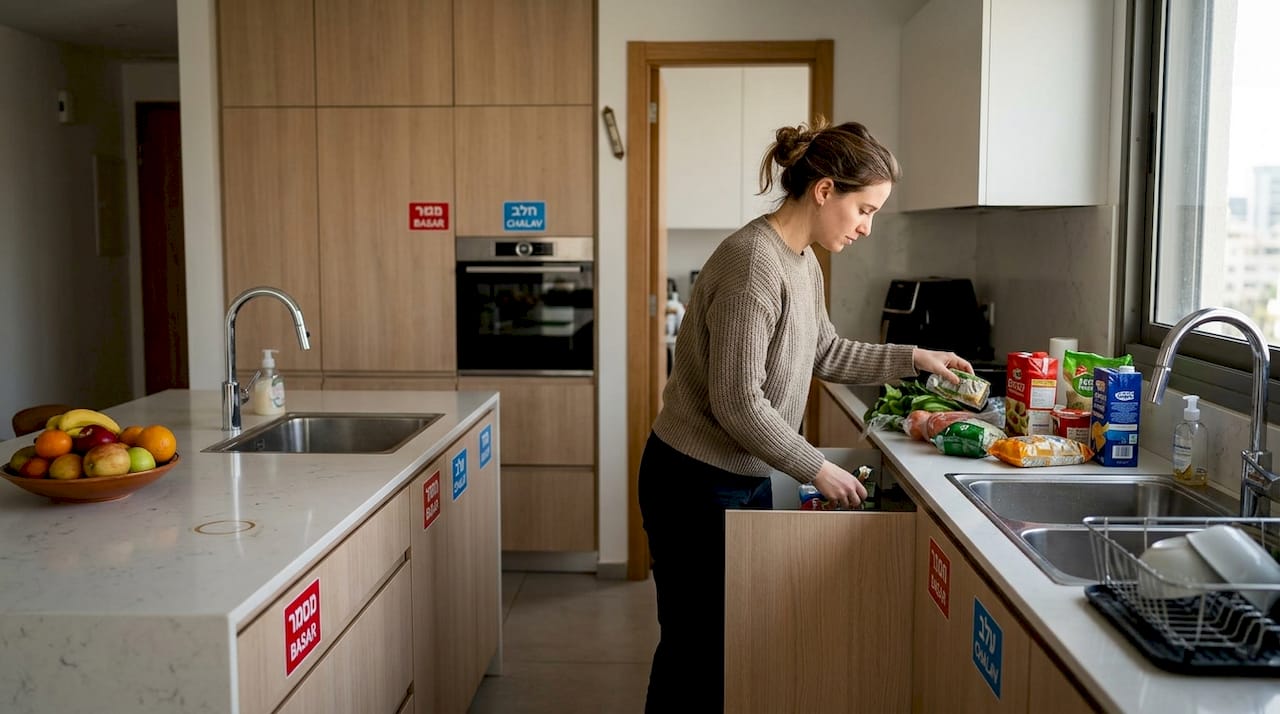
Hidden Passover kitchens represent a significant innovation in religious luxury design. These fully equipped secondary kitchens remain concealed behind cabinet panels or pocket doors throughout the year, emerging only during Passover week. They include separate sinks, countertops, and appliances dedicated exclusively to Passover use, eliminating the annual burden of kashering or covering surfaces. This feature particularly appeals to families who host large Seders and need substantial cooking capacity during the holiday.
Shabbat-compliant appliances extend religious observance throughout the home. Hot water urns maintain temperature without electronic controls that would violate Shabbat prohibitions. Specialized ovens and cooktops feature Shabbat modes that disable automatic shutoffs and indicator lights. Some properties include programmable timers for lights and climate control, allowing residents to preset systems before Shabbat begins. These technological adaptations enable comfortable modern living without compromising religious principles.
Pro Tip: Request detailed specifications for all religious features during property tours. Verify that kosher kitchen layouts meet your family’s specific kashrut standards, as interpretations can vary between communities.
| Religious Feature | Halachic Purpose | Typical Cost Addition |
|---|---|---|
| Dual Sink System | Separate meat/dairy preparation | NIS 8,000-15,000 |
| Hidden Passover Kitchen | Dedicated kosher for Passover space | NIS 40,000-80,000 |
| Shabbat Hot Water Urn | Continuous hot water without electronics | NIS 1,500-3,000 |
| Programmable Timers | Automated systems for Shabbat | NIS 5,000-12,000 |
Developers in religious communities now design these features as standard rather than custom additions. New home developments for religious families incorporate kosher kitchens from initial planning stages, reducing costs and ensuring proper integration. This shift reflects growing demand from affluent observant buyers who refuse to compromise on either luxury or religious observance. Properties in areas like Ramat Beit Shemesh and Har Nof lead this trend, with navigating Israeli real estate religious adaptations becoming easier as more developers recognize market demand.
Examples of luxury religious properties include developments like kosher kitchen examples that showcase how premium design and religious function coexist beautifully.
Exterior spaces in luxury religious properties serve both recreational and ritual purposes. Spacious sukkah balconies and terraces allow for outdoor religious observance; dedicated study rooms and guest suites support family and communal life. These balconies feature reinforced structures designed to support sukkah walls and schach, with built-in storage for sukkah materials during the rest of the year. Many properties include retractable awnings that provide shade while maintaining the open-sky requirement for sukkot.
Private or community mikvehs represent another significant religious amenity in upscale developments. Some luxury properties include private mikveh facilities within the residence or building, offering convenience and privacy for ritual immersion. Others ensure close proximity to beautifully appointed community mikvehs that meet the highest standards of both halacha and comfort. This accessibility is particularly valued by families who prioritize regular mikveh use as part of their religious practice.
Dedicated Torah study rooms create space for learning and prayer within the home. These rooms often feature built-in bookcases for seforim, comfortable seating, and excellent natural lighting. Some properties include separate entrances for chavruta partners or small study groups, enabling homeowners to host learning sessions without disrupting family privacy. Guest suites accommodate extended family during holidays and simchas, a crucial consideration for observant families who frequently host relatives for Shabbat and Yom Tov.
Community amenities in religious luxury developments extend beyond individual units. Synagogues within walking distance eliminate Shabbat transportation concerns, while communal sukkot provide backup options during the holiday. Some developments feature shared event spaces for bar mitzvahs and kiddushim, reducing the need for external venues. These communal features strengthen neighborhood bonds while supporting religious lifestyle needs.
Pro Tip: Verify balcony load capacity and sukkah regulations with building management before purchase. Some luxury towers restrict sukkah construction due to aesthetic concerns or structural limitations.
| Outdoor Feature | Religious Function | Luxury Integration |
|---|---|---|
| Reinforced Sukkah Balcony | Supports temporary holiday structure | Premium railings and built-in storage |
| Private Mikveh | Ritual immersion privacy | Spa-like finishes and climate control |
| Torah Study Room | Learning and prayer space | Custom millwork and natural lighting |
| Guest Suites | Holiday and Shabbat hosting | En-suite bathrooms and separate entrances |
Property types for observant buyers increasingly include these outdoor and communal features as standard offerings. Developments like Arnona luxury tower features demonstrate how modern architecture accommodates religious needs without sacrificing contemporary aesthetics. The integration of these elements reflects sophisticated understanding of observant buyer priorities, where religious functionality and luxury design must coexist seamlessly.
Modern technology enables religious observance in ways previous generations couldn’t imagine. Shabbat elevators and Zomet systems for lights, doors, and intercoms are essential in religious high-rises, with costs shared among residents. Buildings with multiple elevators typically dedicate one to Shabbat mode, automatically stopping at every floor without button activation. This system allows observant residents to access their apartments without violating prohibitions against operating electronics on Shabbat.
Zomet technology represents cutting-edge halachic innovation for modern living. The Zomet Institute develops electronic adaptations that comply with Jewish law while maintaining functionality. These systems modify intercoms, automatic doors, and lighting controls to operate through indirect activation or delayed response mechanisms. For example, a Zomet-approved intercom might use audio modulation rather than direct electrical circuits, allowing Shabbat use under rabbinic supervision. Similarly, motion-sensor lights can be adjusted to delay activation, preventing immediate response to movement.
Implementation costs for these technologies are typically shared among building residents. Shabbat elevator programming and maintenance usually adds NIS 400 to 500 per apartment annually, a modest expense for the convenience provided. Zomet system installation for building-wide intercoms and access controls might cost NIS 50,000 to 100,000 total, divided among all units. These investments ensure that luxury high-rise living remains accessible to observant families who might otherwise be limited to ground-floor residences.
Smart home systems in religious properties require careful configuration to maintain Shabbat compliance. Programmable thermostats, lighting controls, and security systems can be preset before Shabbat begins, then operate automatically throughout the 25-hour period. Some systems include “Shabbat locks” that disable manual override functions, preventing accidental violations. Voice-activated controls are disabled on Shabbat, while scheduled automation continues uninterrupted.
Pro Tip: Ask for references from current observant residents about the reliability of Shabbat elevators and Zomet systems. Real-world experience often reveals operational issues not apparent during property tours.
These technological solutions transform luxury high-rise living for religious communities. Families no longer face the choice between modern amenities and religious observance. Homebuyer guidance Beit Shemesh emphasizes verifying these systems before purchase, as retrofitting older buildings can be prohibitively expensive. New luxury developments now include these features from initial construction, recognizing that observant buyers represent a significant and growing market segment willing to pay premium prices for properties that meet both luxury and religious standards.
Yigal Realty specializes in premium Israeli properties that seamlessly blend luxury amenities with religious adaptations. Our portfolio includes developments like Trilogy House luxury homes, where sophisticated design meets kosher kitchen layouts, Shabbat elevators, and expansive sukkah balconies. We understand that affluent observant buyers refuse to compromise on either upscale finishes or halachic compliance, which is why we curate properties that deliver both. Our team provides personalized guidance throughout the buying process, from identifying properties with the specific religious features your family needs to navigating Israeli real estate regulations. Explore the Yigal Realty portfolio to discover luxury homes designed for your lifestyle and values, with expert support every step of the way.
Luxury homes include high-end finishes like imported stone countertops, underfloor heating, and smart home systems. Spacious layouts with premium amenities such as infinity pools, private gyms, and wine cellars define upscale properties. For religious buyers, integrated kosher kitchens and Shabbat compliance features add essential value without compromising elegance.
They enable strict adherence to dietary laws through separate meat and dairy preparation zones with dual sinks and appliances. Hidden Passover kitchens eliminate the annual burden of kashering surfaces, providing dedicated space for holiday cooking. These features integrate seamlessly into luxury design, maintaining aesthetic appeal while supporting religious observance.
They operate automatically on Shabbat, stopping at every floor without requiring button activation. This allows observant residents to access apartments in high-rise buildings without violating prohibitions against operating electronics. Shabbat elevators are essential for religious families seeking luxury apartment living above ground-floor units.
Reinforced sukkah balconies with built-in storage accommodate temporary holiday structures while maintaining year-round aesthetic appeal. Dedicated Torah study rooms with separate entrances enable learning and prayer within the home. Guest suites provide space for hosting extended family during Shabbat and holidays, a crucial consideration for observant households.
Kosher kitchen features including dual sinks and hidden Passover kitchens typically add NIS 50,000 to 100,000 to construction costs. Shabbat elevator service and Zomet systems cost NIS 400 to 500 per apartment annually in shared maintenance fees. These investments ensure that luxury properties meet both upscale standards and religious requirements without compromise.