

Choosing a unit inside a building comes down to one rule: pick the apartment whose physical layout actually fits how you plan to live or invest, then verify every claim in writing. Before you sign anything, check three things: the signed technical specification with the correct flat number, the orientation and shading of every window, and how much street noise or elevator dependence the unit carries. In Israel, that signed specification carries legal weight; if the delivered apartment does not match it, you may have grounds for a contractual nonconformity claim.
TL;DR:
- Verifying the signed technical specification is crucial, including unit number, floor, and features, as deviations can legally justify remedies.
- Prioritize factors like balcony orientation, storage, parking, and room layout based on personal needs or rental appeal, rather than just floor level or view.
- Check window shading and orientation carefully, especially for west-facing windows, to prevent overheating and ensure effective sun protection.
- Assess noise and privacy by visiting the building at different times, paying attention to bedroom directions and proximity to noise sources.
- Document all mismatches with photos and secure written amendments before signing the purchase contract to maintain legal recourse.
Not every factor matters equally, and the right answer depends on who is buying. A young family in Beit Shemesh cares about different things than an investor buying a rental unit sight unseen from New York. Matching the unit’s traits to the buyer’s actual use case is where most people go wrong. They chase a “good floor” or “nice view” without asking whether that floor works for their household.
Floor choice is the clearest tradeoff. Higher floors usually mean better views and more privacy from street noise, but they also mean total dependence on the elevator, longer waits during peak hours, and more exposure to solar heat if the building has poor shading. Lower floors offer faster exits, less elevator reliance, and easier moving days, at the cost of more street noise and less privacy.
A few factors deserve equal weight alongside floor level:
Investors should weigh these differently, favoring layouts with broad rental appeal over personal preference.
Israeli law requires the seller to provide a complete, signed technical specification, known as the mifrat teḥni, and fill in every applicable field accurately. Deviations between what gets delivered and what the specification promises can constitute a nonconformity under the law of sale for apartments, giving buyers a legal basis to demand a fix or compensation. This document, not the sales brochure or the model apartment, is your actual contractual anchor.
Before signing, work through these steps in order:
Knesset legislative text on the apartment specification form outlines warranty and inspection periods that support these remedies, so don’t treat this as boilerplate paperwork.
Pro Tip: Ask the developer for the specification in advance of your site visit, not during it. Reading it cold on-site under sales pressure is how buyers miss mismatched storage numbers and parking assignments.
If contract language feels unfamiliar, a guide to Israeli real estate contracts can help you understand what each clause actually obligates the developer to do.
Walk the unit with a checklist, not just an impression. A room-by-room pass catches problems a general walkthrough misses.
Mapping the door, bedrooms, and elevator core onto the same floor plan lets you compare candidate units side by side using identical criteria instead of a gut feeling for each one separately. A property inspection checklist built for Israeli buyers can structure this walkthrough for you.
Orientation decides how hot your apartment gets every summer afternoon, and in Beit Shemesh that is not a minor comfort issue. Design guidance recommends keeping most vertical facades within 15 to 30 degrees of true north or south for predictable daylight; east and west-facing glazing is notoriously harder to shade, since the sun hits those windows at a low angle exactly when shading devices are least effective.
Ask the developer these specific questions in writing, per window, not as a blanket claim about the building:
Window performance varies opening by opening, so insisting on shading details for each exposed window rather than accepting “the building is well-shaded” protects you from a west-facing bedroom that turns into a greenhouse every June.
Bedroom placement relative to the street matters more than most buyers realize, since nighttime noise carries outsize health risks compared to daytime exposure. A unit that seems quiet on a Tuesday afternoon visit can sit directly above a garbage collection route or a busy bus stop at 6 a.m.
Before committing, take these steps:
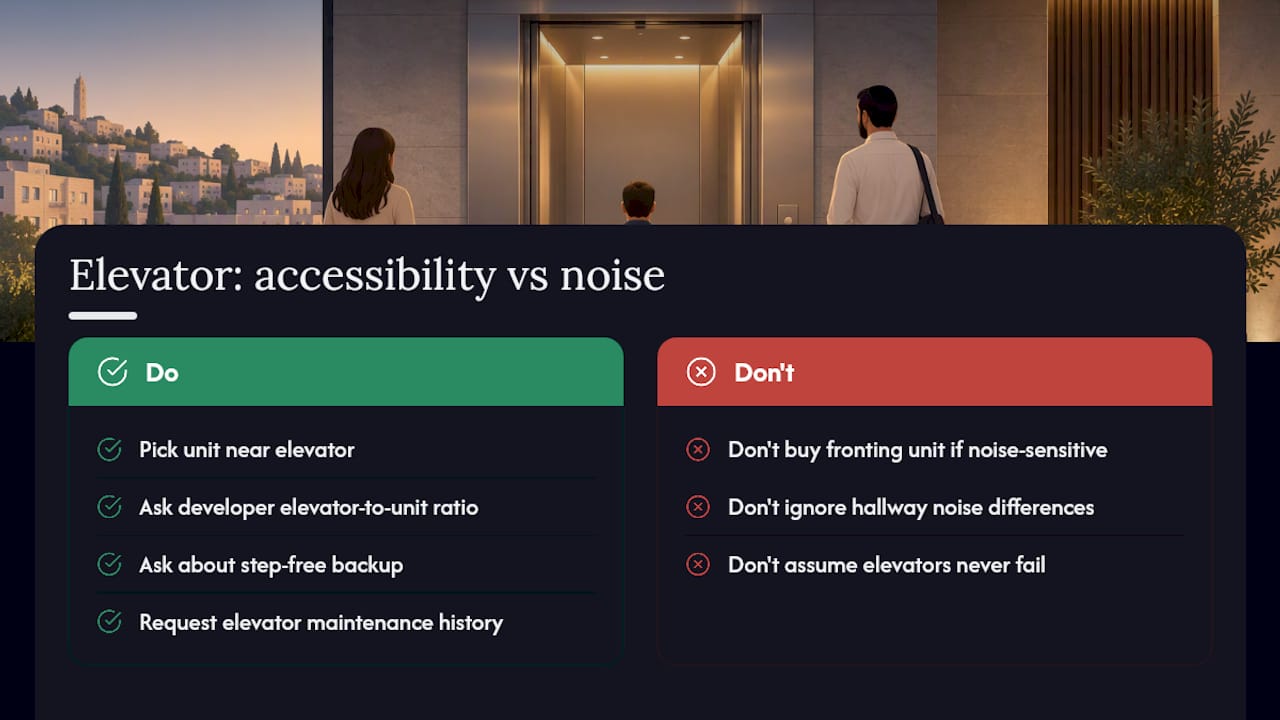
It depends on who is living there. Proximity to the elevator is a real convenience for elderly residents, families with strollers, or anyone moving furniture, and it matters for observant households who may need reliable step-free access on Shabbat and holidays. The downside is noise: units directly facing the elevator lobby pick up mechanical hums, door chimes, and hallway chatter that a unit two doors down never hears.
Ask the developer how many elevators serve the building relative to the number of units, and whether your floor has any step-free alternative if the elevator is down for maintenance.
Pro Tip: If accessibility is a priority, ask to see the elevator maintenance history for similar buildings from the same developer. Frequent outages turn a convenience into a daily problem fast.
For households planning ahead for aging in place, this room-by-room guide to accessibility upgrades offers useful context on comparing floor levels for long-term mobility needs.
Yes, and conflating the two is a common mistake. An owner-occupier should weigh privacy, natural light, storage capacity, and household-specific needs, like space for a Sukkah or proximity to communal ritual facilities, heavily into the decision. An investor should instead prioritize broad tenant appeal: flexible layouts, low-maintenance finishes, and realistic rather than aspirational premiums for floor or view.
International investors evaluating Beit Shemesh from abroad can find sharper guidance in this investment guide for international buyers.
Before you hand over a deposit, confirm these items exist in writing:
This homebuying checklist for observant buyers covers the documentation trail in more depth if you want a printable version to bring to your final walkthrough.
Most buyers we talk to fall into two camps: families who want a specific floor for daily-life reasons, and investors who want the fewest surprises after closing. Both groups underestimate how often the show apartment differs from the signed specification. Local, on-the-ground verification through concierge guidance closes that gap before it becomes an expensive argument after handover.
— Spiros
Using a local service can help with contract review for buyers purchasing in the Beit Shemesh area. Concierge project guidance services can include reviewing the signed technical specification against the actual unit, checking orientation and shading on-site, assessing the noise context around the building, and supporting buyers in negotiating specification corrections before signing. For observant and international buyers unfamiliar with Israeli contract norms, an on-the-ground check can help promote a smoother closing and reduce the risk of disputes later. Projects like Rotshtein Heights and Olmaya are examples of current developments where this kind of verification applies directly. Start by gathering your unit’s floor plan, marketing brochure, and any spec draft you’ve received, then reach out through our concierge project guidance page to schedule a review before your next site visit.
It’s the legally binding document, known in Israel as the mifrat teḥni, where the seller lists every material detail of the apartment, from flooring to window type to storage allocation. Under the law of sale for apartments, deviations between this document and the delivered unit can be claimed as a contractual nonconformity.
There’s no universal best floor. Lower floors suit families who want fast exits and less elevator dependence, while higher floors suit those prioritizing privacy and view, provided the building has strong shading to manage solar heat.
Visit the building at multiple times of day, including early morning, and check whether bedrooms face the street or a mechanical area. Nighttime noise exposure carries real health risks, so bedroom placement deserves more scrutiny than any other room.
Pricing for Yigal-realty’s concierge project guidance isn’t published; details are available directly through the concierge project guidance page after an initial consultation.
Document the mismatch with photos and compare it against your signed specification immediately. Under Israeli law, this discrepancy can qualify as a nonconformity, and acceptance milestones written into your purchase contract give you a clear path to demand correction or compensation.